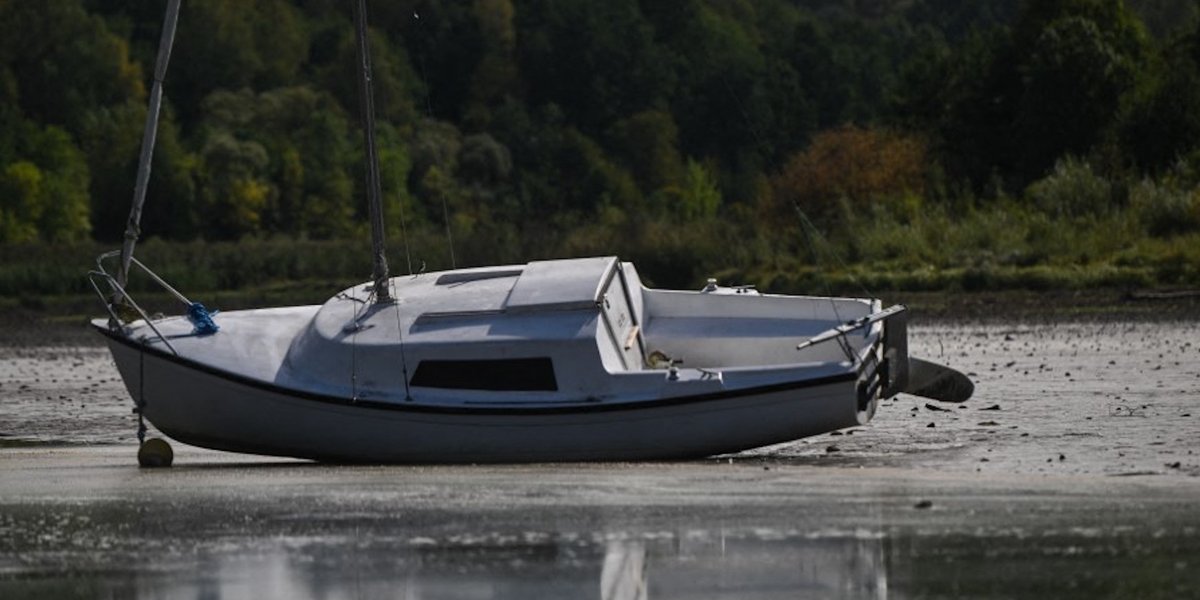
More than three years after the ecological disaster in the Oder River, fish and mussel populations are gradually recovering. German experts are cautiously optimistic but warn that full restoration of the river's ecosystem will take several more years.
OpenCulture has compiled a list of 1,700 free online courses from top universities around the world. The courses span a wide range of academic subjects and are available at no cost. It represents one of the largest freely accessible collections of university-level education online.
Researchers have identified the source of mysterious repeating radio signals arriving from deep space, a breakthrough they describe as a potential "Rosetta stone" for understanding such cosmic signals. The discovery could be key to deciphering the nature and origin of fast radio bursts and similar phenomena. The findings were published by a team of radio astronomy researchers.
A NASA Office of Inspector General report finds that launch infrastructure at Kennedy Space Center in Florida is aging and nearing capacity, unable to meet growing demand from SpaceX's Starship and Blue Origin's New Glenn programs. The report warns that the dated facilities threaten access to space for NASA, other government agencies, and commercial partners. The Wallops Flight Facility in Virginia is also covered, but Kennedy's shortfalls are flagged as the most critical.
NASA's infrastructure at Kennedy Space Center, the crown jewel of US spaceports, is aging and approaching its limit due to increased demand from private companies, including SpaceX and Blue Origin, a new report finds. "NASA’s launch infrastructure is vital to providing the agency, other government agencies, and commercial partners access to space for their most complex and expensive missions," states the report, published by the NASA Office of Inspector General. "Nevertheless, NASA’s launch infrastructure is dated and often does not provide the capacity to meet the growing demands of the agency and its partners." The report covers NASA's launch facilities at the Kennedy Space Center in Florida and Wallops Flight Facility in Virginia. However, the most noteworthy information in the report concerns the Florida spaceport, where demand from SpaceX's Starship and Blue Origin's New Glenn launch vehicles is expected to stress NASA.Read full article Comments
A new study suggests the Euphrates River originally consisted of two separate rivers that merged due to tectonic activity around five million years ago. This geological shift altered both rivers' courses, eventually giving rise to the Fertile Crescent, the cradle of some of the earliest known civilisations. The finding sheds new light on the geographical origins of ancient Mesopotamian culture.
A mysterious ocean species nicknamed "Seasquatches" has been rediscovered off the California coast after being considered lost for a decade. These creatures can grow larger than three feet across and move faster than researchers expected. The rediscovery is considered a significant find given how elusive the species has proven to be. Scientists are now studying the newly found population.
NASA's Wallops Flight Facility in Virginia is set to launch a sounding rocket on June 24 between 5:30 and 9:30 a.m. EDT, with a backup on June 25. The Terrier-Improved Malemute rocket will carry student-developed experiments from the RockSat-X and RockOn programmes to an altitude of approximately 99 miles before splashing down in the Atlantic Ocean. The programmes are designed to give students hands-on aerospace training.
3 min readPreparations for Next Moonwalk Simulations Underway (and Underwater) NASA’s Wallops Flight Facility in Virginia is scheduled to launch a sounding rocket carrying student-developed experiments for the agency’s RockSatX and RockOn programs Wednesday, June 24, between 5:30 and 9:30 a.m. EDT, with a backup day on Thursday, June 25. Students watch as their experiments launch aboard a sounding rocket for the RockSat-X program from NASA’s Wallops Flight Facility Aug. 11, 2022, at 6:09 p.m. EDT. The Terrier-Improved Malemute rocket carried the experiments to an altitude of 99 miles before descending via a parachute and landing in the Atlantic Ocean.NASA Wallops/Terry Zaperach The RockSat and RockOn programs provide technical training and hands-on experiences that prepare and equip students to enter the United States aerospace industry. For the first time, NASA will combine both the RockSat and RockOn missions into one rocket, which will carry experiments developed by nearly 250 participants from 38 university and community college teams. “The challenge was finding ways to fit as many experiments onto one sounding rocket as we could,” said Victoria Stoffel, workforce development lead at NASA Wallops. “The Sounding Rocket Program Office team found creative ways to fit nearly 50 experiments into one rocket. We are grateful to the Wallops teams for making this happen for the students to get the most from this experience.” The RockOn teams work together to build their experiment onsite, getting hands-on experience putting together a circuit board from scratch and launching it into space. The more advanced RockSat program teams design and build their experiments, going through design reviews modeled on larger NASA missions. Each team can experience what it’s like working on a real NASA mission, from development to launch. The RockSat student experiments range from taking measurements of weather and radiation in Earth’s upper atmosphere to testing technologies, such as heat shields, space-debris tracking, and robotic servicing, that could help future NASA missions. The Terrier-Improved Malemute suborbital sounding rocket, which will carry the experiments, is expected to reach an altitude of about 100 miles before descending by parachute into the Atlantic Ocean to be recovered. The launch may be visible in the Chesapeake Bay region. A launch visibility map for a Terrier-Improved Malemute sounding rocket launching from NASA’s Wallops Flight Facility in Virginia.NASA The Wallops Visitor Center’s launch viewing area will open June 24 at 4:30 a.m. for viewing. A livestream will begin approximately 10 minutes before launch on the Wallops YouTube channel. Launch updates also are available via the center’s Facebook page. For more information about NASA’s Sounding Rocket Program, visit: https://www.nasa.gov/soundingrockets By Jamie AdkinsNASA’s Wallops Flight Facility, Virginia List of RockSat Teams Capital Tech University, Maryland Clemson University, South Carolina College of the Canyons, California Colorado Space Grant Consortium University of Colorado Boulder Escuela de Troquelería y Herramentaje, Puerto Rico New Jersey Institute of Technology Northwest Nazarene University, Idaho Rockets of the Rockies, Colorado Red Rocks Community College Arapahoe Community College Temple University, Pennsylvania Tidewater Community College, Virginia University of Alabama Huntsville University of Delaware University of Hartford, Connecticut University of Hawaii Community Colleges University of Kentucky University of Nebraska Lincoln University of Puerto Rico University of Virginia Virginia Tech West Virginia Space Flight Design Challenge Blue Ridge Community College West Virginia Wesleyan College West Virginia University West Virginia State University Marshall University List of RockOn Teams University of Delaware Wilmington University, Delaware Chief Dull Knife College, Montana Grambling State University, Louisiana College of the Canyons, California Eastern Shore Community College, Virginia Salisbury University, Maryland Capitol Technology University, Maryland College of the Desert, California Flathead Valley Community College, Montana Delgado Community College, Louisiana Des Moines Area Community College, Iowa Langston University, Oklahoma University of Kentucky Saginaw Valley State University, Michigan Morgan State University, Maryland Pennsylvania State Harrisburg Middlesex College, New Jersey University of Colorado Wor-Wic Community College, Maryland Tidewater Community College, Virginia Montana Technological University University of Hartford, Connecticut University of Maryland Eastern Shore Share Details Last Updated Jun 22, 2026 EditorJamie AdkinsContactAbbey Interranteabbey.a.interrante@nasa.gov Related TermsWallops Flight FacilitySounding Rockets Explore More 1 min read NASA Wallops to Host Public Information Session May 13 Article 2 months ago 5 min read How NASA is Collecting Explosion Data for Next Generation Rockets Article 3 months ago 3 min read NASA’s DiskSat Technology Demo Launches to Low Earth Orbit Article 6 months ago
A recent study has found that zebrafish experience four distinct sleep substates, mirroring those observed in humans — including a daytime nap equivalent. This surprising similarity between fish and humans could help researchers better understand the biological foundations of sleep. The findings suggest that sleep mechanisms are evolutionarily ancient and widely conserved across species.
NASA's Swift space observatory is on a trajectory that threatens its destruction upon atmospheric re-entry, and the agency is assessing whether a rescue mission is feasible. Scientists note that a successful intervention would set a positive precedent for saving the aging Hubble Space Telescope. The situation was reported by Nature on June 22, 2026.
Japan has a rich system of visual symbols — from street pictograms to shop and packaging icons — that communicate meaning without words. The author examines how these symbols are deeply rooted in Japanese culture and aesthetics. The system is intuitive enough that even tourists with no knowledge of Japanese can understand them.
The Republic of Botswana will sign the Artemis Accords at a ceremony on June 25 at 9:30 a.m. EDT at NASA Headquarters in Washington. NASA Deputy Administrator Matt Anderson will host Botswana's Minister of Communications and Innovation David Tshere and State Department Senior Advisor Gregory Autry. The Artemis Accords, established in 2020 during the first Trump administration, set practical principles for lunar and space activities among participating nations.
Credit: NASA The Republic of Botswana will sign the Artemis Accords during a ceremony at 9:30 a.m. EDT Thursday, June 25, at NASA Headquarters in Washington. NASA Deputy Administrator Matt Anderson will host Botswana’s Minister of Communications and Innovation David Tshere and U.S. Department of State Senior Advisor for Space Gregory Autry for the event. This event is in person only. Media interested in attending must RSVP no later than 5 p.m. on Wednesday, June 24, to: hq-media@mail.nasa.gov. NASA’s media accreditation policy is online. In 2020, during the first Trump Administration, the United States, led by NASA and the State Department, joined with seven other founding nations to establish the Artemis Accords, responding to the growing interest in lunar activities by both governments and private companies. The accords introduced the first set of practical principles aimed at enhancing the safety, transparency, and coordination of civil space exploration on the Moon, Mars, and beyond. Botswana will be the 68th country to sign the Artemis Accords. Learn more about the Artemis Accords at: https://www.nasa.gov/artemis-accords -end- Camille Gallo / Jennifer Dooren Headquarters, Washington 202-358-1600 camille.m.gallo@nasa.gov / jennifer.m.dooren@nasa.gov Share Details Last Updated Jun 22, 2026 LocationNASA Headquarters Related TermsArtemis AccordsArtemisOffice of International and Interagency Relations (OIIR)
New research has mapped over 64,000 square miles (about 166,000 km²) of coral reefs that appear partially protected from the effects of ocean warming caused by climate change. The findings offer conservationists fresh avenues to prioritize protection efforts, focusing resources on reefs with the best survival prospects. Scientists hope the map will become a key tool in global coral ecosystem preservation.
Italian authorities investigating reports of an illegal excavation near Rome stumbled upon an ancient villa decorated with mosaics dating to the second century C.E. The area was frequented by Roman emperors including Marcus Aurelius and Antoninus Pius. The find was made unexpectedly during what began as a routine law enforcement investigation.
Archaeologists working in the state of Veracruz, Mexico have uncovered ruins whose characteristics do not match any previously known civilization. The site's features are unlike anything recorded from the region, suggesting it may belong to an unidentified culture. Researchers are continuing investigations to determine who built the structures and when.
NASA's Experimental Fabrication Branch at Armstrong Flight Research Center in Edwards, California, converts engineering concepts into mission-ready hardware for research aircraft. The branch supports advances in aviation safety, efficiency and sustainability, acting as a full-service manufacturing facility for cutting-edge flight technology. Its work underpins innovation before any experimental aircraft ever leaves the ground.
3 Min Read NASA’s Experimental Fabrication Branch Fuels Aircraft Innovation An engineering technician works in the Experimental Fabrication Branch at NASA’s Armstrong Flight Research Center in Edwards, California, on Thursday, March 14, 2023. The branch transforms engineering concepts into hardware for research aircraft and technology development, supporting advances in aviation safety, efficiency, and sustainability. Credits: NASA/Steve Freeman At NASA, innovation begins well before an aircraft takes flight. The Experimental Fabrication Branch at NASA’s Armstrong Flight Research Center in Edwards, California, transforms engineering concepts into mission‑ready hardware for research aircraft and technology development. This capability helps the agency deliver advancements that benefit the public by improving aviation safety, efficiency, and sustainability. The branch serves as a full‑service manufacturing, modification, and repair center for NASA Armstrong’s fleet of research and science aircraft. The team specializes in precision machining, sheet‑metal forming, aircraft tubing, welding, additive manufacturing, composite fabrication, and structural repairs and modifications. Their broad expertise allows them to build custom hardware for both aerospace and ground‑based applications. Ron Harris, an engineering technician, works in the Experimental Fabrication Branch at NASA’s Armstrong Flight Research Center in Edwards, California, on Thursday, March 14, 2023. The branch transforms engineering concepts into hardware for research aircraft and technology development, supporting advances in aviation safety, efficiency, and sustainability. NASA/Steve Freeman Engineering technicians in the branch bring decades of experience as master fabricators. They design and build unique components, rapid prototypes, and flight‑critical structures that meet NASA’s rigorous safety and performance standards. Whether shaping composite structures by hand or producing precision‑milled parts, the team builds every component with mission success in mind. Experimental Fabrication supports a wide range of NASA research efforts. When teams at NASA Armstrong designed the AIRVUE (Airborne Instrumentation for Real‑world Video of Urban Environments) sensor pod to support autonomous‑flight research, the fabrication team converted digital designs into a fully functional structure. They ensured the pod met strict safety requirements before deploying it for test flights. An engineering technician works in the Experimental Fabrication Branch at NASA’s Armstrong Flight Research Center in Edwards, California, on Thursday, March 14, 2023. The branch transforms engineering concepts into hardware for research aircraft and technology development, supporting advances in aviation safety, efficiency, and sustainability.NASA/Steve Freeman Beyond mission support, the Experimental Fabrication Branch contributes to NASA’s STEM engagement efforts. During local robotics competitions, technicians use mobile fabrication equipment to repair student‑built robots and demonstrate machining and welding techniques. These demonstrations introduce students to NASA’s technical career paths and show how advanced manufacturing supports aerospace research. The branch uses modern computer-aided design and computer-aided manufacturing tools, including Pro E/Creo, MasterCam, and SolidWorks, to convert digital models into hardware. This early integration of engineering and fabrication helps shorten development timelines and reduce design‑to‑hardware mismatches. Unlike environments where work transitions between multiple contractors, NASA Armstrong includes the fabrication team from early design through final assembly and aircraft installation. This continuous involvement strengthens coordination with engineering teams and flight operations. Alexis Moreno, an engineering technician, works with a fabrication machine in the Experimental Fabrication Branch at NASA’s Armstrong Flight Research Center in Edwards, California, on Monday, Nov. 6, 2023. The branch transforms engineering concepts into hardware for research aircraft and technology development, supporting advances in aviation safety, efficiency, and sustainability. NASA/Genaro Vavuris Recent projects, such as advanced wing‑model fabrication and custom lightweight aircraft floorboards, highlight the branch’s essential role in NASA Armstrong’s mission. Whether supporting experimental aircraft, enabling new technology demonstrations, or guiding students through hands‑on fabrication, the Experimental Fabrication Branch helps advance NASA’s mission for the benefit of all. Share Details Last Updated Jun 22, 2026 EditorDede DiniusContactSarah Mannsarah.mann@nasa.govLocationArmstrong Flight Research Center Related TermsArmstrong Flight Research Center Explore More 5 min read NASA, USGS Scientists Go Rock Hounding in California’s High Desert Article 2 weeks ago 4 min read NASA’s X-59 Aircraft Flies Supersonic for First Time Article 2 weeks ago 6 min read NASA’s X-59 Prepares for First Supersonic Flight Article 4 weeks ago Keep Exploring Discover More Topics From NASA Armstrong Flight Research Center Aircraft Flown at Armstrong Armstrong Flight Operations Armstrong Mission Operations
A data-driven analysis was conducted to statistically determine the best dog treat available on the market. Rather than relying on subjective reviews, the project applies statistical methods to rank products objectively. The study illustrates how analytical tools can be used for everyday consumer decisions.
Astronomers using NASA's Chandra X-ray Observatory have possibly identified a supernova remnant near the center of the Milky Way, in an image released June 11, 2026. If confirmed, it would be one of the closest supernova remnants ever found to the galaxy's central supermassive black hole. Supernova remnants spread essential elements — iron, oxygen, silicon — that are critical for planet formation and life.
Using data from NASA’s Chandra X-ray Observatory, astronomers may have found a supernova remnant in an intriguing neighborhood in the middle of our galaxy.X-ray: NASA/CXC/UCLA/Z. Zhu et al.; ESA/XMM-Newton; Optical: PanSTARRS; Radio: MeerKAT; Infrared (JWST): NASA/ESA/CSA/STScI; Image Processing: NASA/CXC/SAO/L. Frattare and P. Edmonds Using data from NASA’s Chandra X-ray Observatory, astronomers may have found a supernova remnant – seen in this June 11, 2026, image – in an intriguing neighborhood in the middle of the Milky Way galaxy. Supernova remnants are the expanding remains of exploded stars and provide elements like iron, oxygen, and silicon that are critical for the formation of planets and for life as we know it to form and flourish. This new supernova remnant, if confirmed, would be one of the closest ever discovered to the supermassive black hole at the central region of our home galaxy, an exotic region crammed with massive stars, long threads of magnetic fields and dense clouds of gas orbiting rapidly around the Galactic Center. Read more about this discovery. Image credit: -ray: NASA/CXC/UCLA/Z. Zhu et al.; ESA/XMM-Newton; Optical: PanSTARRS; Radio: MeerKAT; Infrared (JWST): NASA/ESA/CSA/STScI; Image Processing: NASA/CXC/SAO/L. Frattare and P. Edmonds
Researchers have discovered that spermine molecules inside cells bind to iron, preventing ferroptosis — a form of iron-dependent cell death. Cancer cells exploit this mechanism as a survival strategy to shield themselves from destruction. The finding, published in Nature on 22 June 2026, opens up potential new approaches for treating both cancer and tissue damage by targeting this protective pathway.
Forty years after the first demonstration of superconductivity at 35 kelvin, the underlying mechanism of high-temperature superconductivity remains one of physics' greatest unsolved puzzles. The landmark discovery triggered decades of materials research and fundamentally changed scientists' understanding of quantum states of matter. A review published in Nature on 22 June 2026 reflects on the progress made and the questions still unanswered.
The LOFAR radio telescope has detected 613 pairs of short solar radio bursts, with the second signal arriving approximately four seconds after the first. Researchers conclude that the delayed second pulse is simply a reflected and scattered copy of the original burst. The finding reveals a previously unknown mechanism in solar radio activity.
Comments
Loading…
Swipe up
⚡
You're all caught up
You've seen all the latest stories. Check back later for more.
Comments