Full text
Citroen teases a new 2CV concept, ahead of its debut on October 11.
The modern reincarnation of the iconic French car will be electric.
A production version is expected in 2028, with a sub-€15k price tag.
Citroen is ready to shake up the Paris Motor Show with the return of the legendary 2CV. The model is back after a 36-year hiatus, in the form of a fully electric city car with styling references to the original and a focus on affordability. The new 2CV will initially debut as a concept, but a production version is expected to follow in 2028.
var adpushup = window.adpushup = window.adpushup || {que:[]};
adpushup.que.push(function() {
if (adpushup.config.platform !== "DESKTOP"){
adpushup.triggerAd("0f7e3106-c4d6-4db4-8135-c508879a76f8");
} else {
adpushup.triggerAd("82503191-e1d1-435a-874f-9c78a2a54a2f");
}
});
The much-anticipated return of the 2CV was officially confirmed earlier in 2026, following years of rumors and speculation which were often dismissed by the company. This means that the French castle has fallen, with a new 2CV joining other reincarnations of iconic designs from the past such as the rival Fiat 500 and the discontinued VW Beetle.
More: Fiat Is Reviving Its Most Polarizing Model With An SUV That Doubles As A Pickup
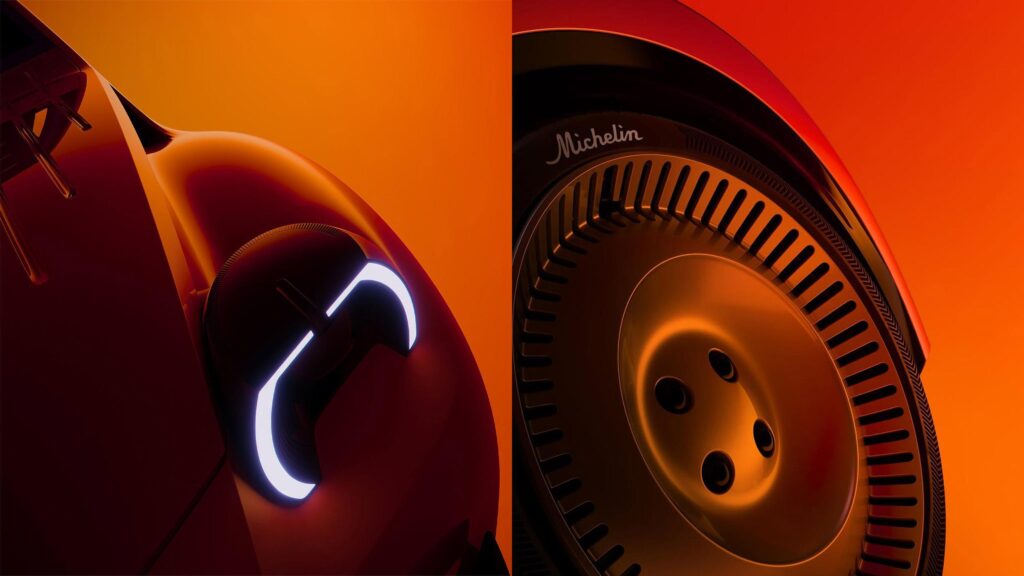
One week before its unveiling, which is scheduled for October 11 in Paris, the French automaker has published a few teasers of the concept on its social media channels. Citroen Design Director, Pierre Leclercq, has also shared some of them on his profile, with the caption “exciting time”.
var adpushup = window.adpushup = window.adpushup || {que:[]};
adpushup.que.push(function() {
if (adpushup.config.platform !== "DESKTOP"){
adpushup.triggerAd("89c65a14-4682-4807-a4bb-5436c5361bee");
} else{
adpushup.triggerAd("f25825bd-1260-4574-84ce-2b26e315fad8");
}
});
Citroen / Instagram
The teasers depict the grooved hood and the semi-circular LED headlights that stick out of the bulbous fenders. We can also see the retro door handles and wheels, as well as the indicators on the C-pillar. An earlier teaser suggests that the new 2CV will adopt a similar silhouette to its predecessor , and wear an illuminated double-chevron emblem on its nose.
More: Cheap Thrills: Stellantis Adds Extra Plastic And Mobile Office To Base Vans
The company said that the new concept “revives an icon of the brand and brings the spirit of the 2 CV into the modern world to make mobility simpler, more accessible, more human and more desirable.”
The urban EV will likely have a smaller footprint than the Citroen C3 subcompact crossover hatchback, effectively serving as a replacement for the discontinued C1 and C2 urban dwellers.
var adpushup = window.adpushup = window.adpushup || {que:[]};
adpushup.que.push(function() {
if (adpushup.config.platform !== "DESKTOP"){
adpushup.triggerAd("bb7964e9-07de-4b06-a83e-ead35079d53c");
} else {
adpushup.triggerAd("9b1169d9-7a89-4971-a77f-1397f7588751");
}
});
Affordability Is The Key
Citroen / Facebook
Citroen didn’t reveal information about the technical specifications of the concept, other than confirming the fully electric powertrain. The new 2CV is expected to ride on a bespoke platform, designed under the upcoming regulations of European Union for affordable EVs. The same underpinnings will reportedly be used by an upcoming Fiat, continuing the tradition of the smaller Citroen Ami and Fiat Topolino, as well as the larger Citroen C3 and Fiat Grande Panda twins.
Review: Stellantis Gave Citroen C3 And Fiat Grande Panda The Same Bones, But Not The Same Soul
During interviews with media earlier this year, Citroen CEO, Xavier Chardon, revealed that the production model should be priced from under €15k ($17k) before subsidies. This would make it the most affordable car by Citroen, as the even cheaper Ami is classified as a heavy quadricycle.
var adpushup = window.adpushup = window.adpushup || {que:[]};
adpushup.que.push(function() {
if (adpushup.config.platform !== "DESKTOP"){
adpushup.triggerAd("b25ecba7-3bbb-4ea7-a3a8-dbea91695c07");
} else {
adpushup.triggerAd("e46c436a-adeb-4b5e-a2c7-56bc36561c10");
}
});
When the model goes on sale, it will face competition from other brands in Europe’s ultra-affordable EV segment. This will be slightly cheaper compared to traditional A-Segment hatchbacks such as the Renault Twingo , Nissan Pixo, Dacia Spring, Honda Super-N, BYD Dolphin Surf, and the upcoming VW ID. Up. At the same time, contestants will be safer and more refined than the dirt-cheap heavy quadricycles.
Filling The Shoes Of An Icon
1980 Citroen 2CV Charleston
The original Citroen 2CV made its debut at the 1948 Paris Motor Show, although the brief for its creation was submitted in the ’30s. This “umbrella on wheels”, also known as the “Tin Snail” was engineered to carry two farmers, a 50 kg (110 lb) sack of potatoes, or a basket of eggs across a plowed field at 60 km/h (37 mph) without breaking a single shell.
More: Citroen Makes Budget Models More Expensive With Stylish New Outdoor Edition
Over its remarkable 42-year production run, the iconic model – named after the two taxable horsepower of its engine – received many incremental updates but retained its signature shape and the unique interconnected suspension setup. By the time the final example rolled off the factory in 1990, Citroen had produced 5.1 million units worldwide.
Other Concepts and Special Editions In Paris
Besides the 2CV, Citroen will unveil another concept at the Paris Motor Show, described as “a surprise that will set visitors’ hearts beating.” The brand’s stand will also include the C3 Aircross Marine Nationale Concept , the new Outdoor lineup (Ami, C3, and C3 Aircross), the Collection series (C3, C3 Aircross, and C4), the C5 Aircross Emeraude special edition, and the GEN4 Formula E racer.
View this post on Instagram
A post shared by Citroën (@citroen)










Comments