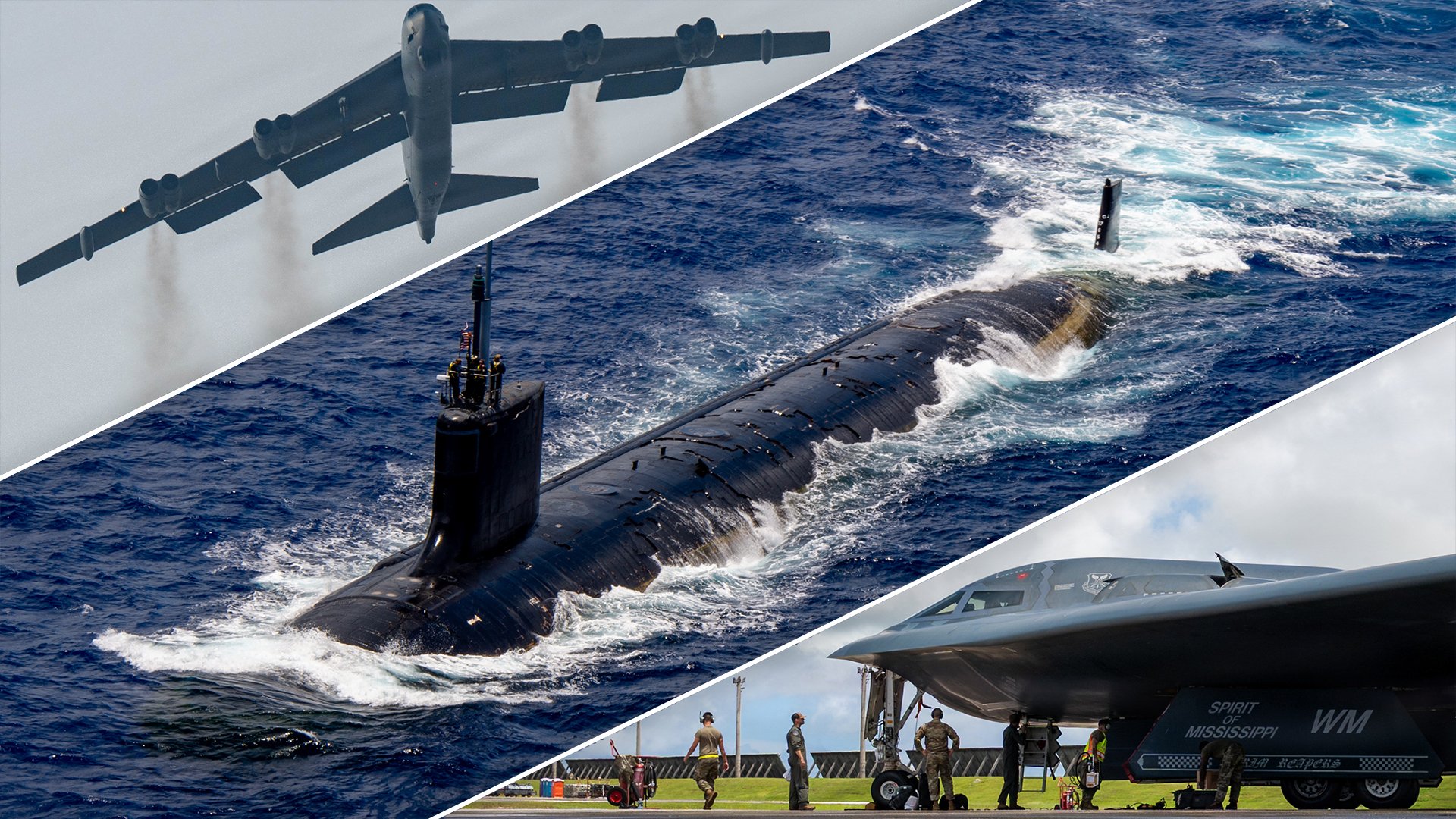
Report: Chinese rare earth elements threaten key U.S. weapon systems
The Special Competitive Studies Project think tank, founded by former Google CEO Eric Schmidt, published a report analyzing U.S. defense industry dependence on China for critical minerals: antimony, gallium, germanium and tungsten. The AI-powered analysis covered nearly 9 million parts and 3,000 weapons systems. It concludes that a cut in supplies from China could seriously damage America's most advanced weapon systems.
Full text
A new report from the think tank founded by former Google CEO Eric Schmidt quantifies the grim realities of the U.S. defense industrial base’s dependence on China for critical rare earth minerals. It also details which weapons systems might face the most impact if that delicate supply relationship breaks down.
The white paper, exclusively obtained from the Special Competitive Studies Project, uses AI intelligence from the supply chain tech firm Exiger to assess how many unique components, identified by National Item Identification Number, or NIIN, contain critical minerals, such as antimony, gallium, germanium and tungsten.
America’s arsenal depends on a steady flow of rare earths, and especially its most advanced weapons. U.S. Air Force photo by Tech Sgt. Thomas Barley Tech. Sgt. Thomas Barley
From an assessment of almost nine million parts and 3,000 U.S. military weapon systems, the company identified more than 28,000 unique components across 1,400 weapons systems containing just these four rare earths. The isolation of these parts is relevant in particular because of a near-term crisis: the expiration of a suspension on Chinese export controls set to take effect in November. Disruption to weapons fielding plans, as well as operational readiness and sustainment activities, according to the white paper, is very much a possibility. Yet according to Kit Conklin, chief strategy and global affairs officer at Exiger, the crisis is already here.
In an interview with TWZ , he pointed to Japan, which is facing the prospect of a manufacturing halt after China choked off supply of some rare earths to the tune of more than 80% earlier this year.
“There’s no question that right now it’s a crisis for a lot of companies that are trying to get licenses approved by China and just not getting the licenses,” Conkling said. “So there’s there’s real risk to current production, and when I think about us and scaling, whether it’s the drone industrial base or trying to scale our interceptor capacity to 1000, 2000, 3000 interceptors a year, I mean, these are real choke points that we have that are impacting our ability to deliver these to the warfighter right now.”
Among the weapons systems most at risk for supply chain and manufacturing disruption, according to the data, is the vital Virginia -class submarine, which requires more than 300 critical NIINs containing the four elements, including 190 parts requiring germanium.
USS Virginia (SSN 774), the leader of the Virginia class that serves as the backbone of the U.S. Navy’s fast attack submarine force. U.S. Navy photo by General Dynamics Electric Boat U.S. Navy
Germanium, used in optics, night vision systems, EO/IR equipment and more, is a byproduct of zinc ore . In January, the Pentagon announced an $18 million investment in the country’s only germanium production facility in St. George, Utah to expand refining capacity “sevenfold” to more than 20 metric tons annually by an unspecified deadline.
China controls some 68% of the world’s refined germanium. It has a far greater chokehold on gallium, used in semiconductors and solar cells, and especially advanced radars, controlling up to 99% of production . Each Virginia -class sub requires 50 unique parts containing gallium.
China controls about half the production of antimony, used to harden ammunition and to manufacture optics and electronics; and up to 80% of the supply of tungsten, used in manufacturing tools, warheads and heat-resistant components.
While it doesn’t break down components by weight, the report notes that the rare earth requirements for the Virginia -class sub are also considerable by mass: each sub required 9,200 pounds of the elements, while an F-35 Joint Strike Fighter jet requires 900 pounds.
Special Competitive Studies Project
The Virginia -class submarine is America’s only in-production fast-attack nuclear-powered sub that has been in service since 2004. 23 of these critical vessels are in service today , or roughly half of the total planned program, with the remaining boats yet to be built. It’s notable in the context of the paper because it has multiple points of exposure to supply chain disruption. Another of these exposure points: its 1,700 mission or safety-critical parts requiring casting, forging or extrusion. As the report lays out, supply chain bottlenecks around limited metal casting, forging and extruding capacity are delaying production timelines and putting manufacturing at risk.
China, again, produces about half of the world’s casting output and “is often the sole option for large castings,” the paper found. The analysis shows that more than half, or nearly 8,000, unique supply items containing steel castings have delivery lead times of more than 36 weeks. More than 9,400 items containing extruded aluminum, about 47% of these parts, have lead times that long.
A large metal casting for a port crane. Voestalpine Foundry Group
“ Virginia -class submarines, already threatened by U.S. reliance on China for critical minerals, are reportedly also three years behind schedule, potentially due in part to the lack of domestic large-scale casting capacity,” the report finds. An analysis of Navy construction timelines published earlier this year does indeed find that 10 of the 12 Virginia subs now under construction face delays of 36-44 months.
Alarmingly, a recent war game simulation found that the U.S. could not replace ships, planes and missiles lost to combat specifically due to casting and forging shortfalls, the report notes. That’s despite a $2 billion Pentagon initiative launched in 2024 aimed at revitalizing this industry.
Beyond submarines, the report shows that aircraft, including some of the nation’s workhorse fighter jets, face outsized production and sustainment risk due to rare-earth elements and casting/forging dependencies.
The B-2 Spirit bomber – the nation’s only nuclear-armed stealth bomber until fielding begins on the B-21 Raider sometime next year – requires 782 parts containing the four rare-earth elements isolated in the report.
Special Competitive Studies Project
The F/A-18 Hornet family of fighters flown by the Navy and Marine Corps, including the Navy’s Growler electronic warfare variant, tops the list for dependency on steel castings, with 3,800 individual parts requiring the process. Following is the KC-135 Stratolifter tanker, with 2,570 parts. All 10 of the systems requiring the most metal castings for production are aircraft, the analysis shows. The legacy Hornet and the KC-135 have been out of production for decades, while the Navy’s Super Hornet will see its production line go cold in 2027. Any ongoing demand for castings for these systems would thus be in spares and repair parts.
Special Competitive Studies Project
Military aircraft also represent the highest-need category among weapons systems requiring cadmium plating, a process used to make aerospace components corrosion-resistant. The domestic supplier base has shrunk due to EPA safety limitations established in 2008. All of the top 10 weapons systems requiring the most cadmium-plated parts are aircraft, with the KC-135 topping the list with 2,780 unique components. The C-130 Hercules transport, B-52 Stratofortress bomber and Galaxy C-5 transport all have more than 2,000 parts.
Special Competitive Studies Project
The B-52, which is undergoing service life extension to take it into the 2050s – past its century mark – may run into modernization delays not only over cadmium-plated and steel-casted components, but also due to overly rigid military specifications, which increase lead time and delays. The white paper cites the bomber’s rib airfoil and fuel vent valve components, which both have lead times of more than 400 days due in part to production being burdened with dozens of mil-spec compliance requirements, which the authors say have not kept pace with today’s commercial practices.
“The requirement for a part to meet so many mil-specs, if not reasonably necessary, may limit the number of possible suppliers of that part, potentially increasing its lead time and bottlenecking production,” they write. “For the B-52, this could inhibit current modernization efforts intended to keep the airplane operational through the 2050s.”
A B-52H Stratofortress undergoing programmed depot maintenance is towed into a hangar at Tinker Air Force Base, Oklahoma, July 28, 2025. U.S. Air Force photo by Paul Shirk Paul Shirk
A final risk the paper addresses is workforce shortages and dangers from limited suppliers creating single points of failure. Across defense, the number of small suppliers has decreased by 43% in the last decade, it notes. It cites, as a case study, the February 2025 fire that forced the closure of SPS Technologies in Jenkintown, Penn. – a fastener maker that produced components for more than 1,000 weapons systems and was deemed critical for 90, including the Nimitz -class carrier, the F/A-18 fighter and the M1 Abrams tank. For systems including the Tomahawk Land Attack Missile and the MH-60 Black Hawk helicopter, the facility was a single-source supplier.
With operations offline until at least 2028, the supply chain has been “actively disrupted” due to the outage of just one facility, according to the paper.
“This case underscores the risk of single sourcing in the defense industrial base and the need to qualify alternate sources to avoid such significant chokepoints,” the authors write.
The paper hails work that has already begun to invest in domestic critical minerals production and shore up the defense industrial base. But it does hint that these efforts may be too late to avoid a crash if China shuts off or severely reduces exports. The paper notes that, on average, it takes the U.S. 29 years to open a new mine. The U.S. has one established domestic mine: The Mountain Pass Rare Earth Mine and Processing Facility, just outside of Las Vegas. Initially established in 1952 and reopened in 2018 after a long hiatus, it now produces more than 50,000 tons of rare earth oxides annually . Last year, for the first time in seven decades, a new domestic rare-earth mine opened in Wyoming , stating plans to start producing ores extracted from coal, including gallium and germanium, by 2029 . Production is projected to total 456 tons of rare earths per year. The project had been in development for more than a decade before opening.
The Mountain Pass Rare Earth Mine and Processing Facility. MP Materials
Conklin said a July executive order aimed at developing domestic production of rare earths while collecting data on what elements systems required created opportunities for smart policy creation – perhaps in the next National Defense Authorization Act – around holistically attacking the problem.
“I would love for us to figure out a way to get out of thinking about these supply chain risks system by system. We tend to have disparate requirements to look at the nuclear triad or subs or interceptors,” he said. “I think with the executive order that came out earlier this year, there’s a real opportunity for Congress to legislate on some of these issues beyond just figuring out what the risk for antimony in the sub industrial base, and thinking about it a little bit more holistically.”
One potential solution he proposed: an agency within the executive branch (led, perhaps, by a critical minerals czar) who can coordinate production needs and resourcing and develop the most efficient pathways to secure needed materials.
There are few weapons that are not impacted by the scarcity of robust sources for rare earths. RTX
While no U.S. defense manufacturer has yet publicly cited manufacturing disruptions due to rare earth availability, signs are increasing that the federal government is taking supply concerns seriously. In addition to Project Vault , a $12 billion White House initiative announced in February that would create a strategic stockpile of rare earths akin to existing stockpiles of critical medical supplies and petroleum, the U.S. Army has begun extending long-term leases on military land to companies seeking to build critical mineral processing facilities.
Conklin said he doesn’t anticipate major changes in rare earth exports between now and the end of the year, describing the U.S.-China supply relationship as “in a bit of a détente.” That said, with new policies pending, we could be only days away from new revelations about the extent of the impact of these materials on the defense manufacturing enterprise.
Contact the editor: Tyler@twz.com
The post These Are The U.S. Weapons Most At Risk In The Looming Rare Earths Supply Crisis appeared first on TWZ .
Similar stories
 🌍 World
Xi Jinping surprised by plans for Ukraine peace meeting on Chinese soil
Interia Fakty · 5h ago
 📈 Business
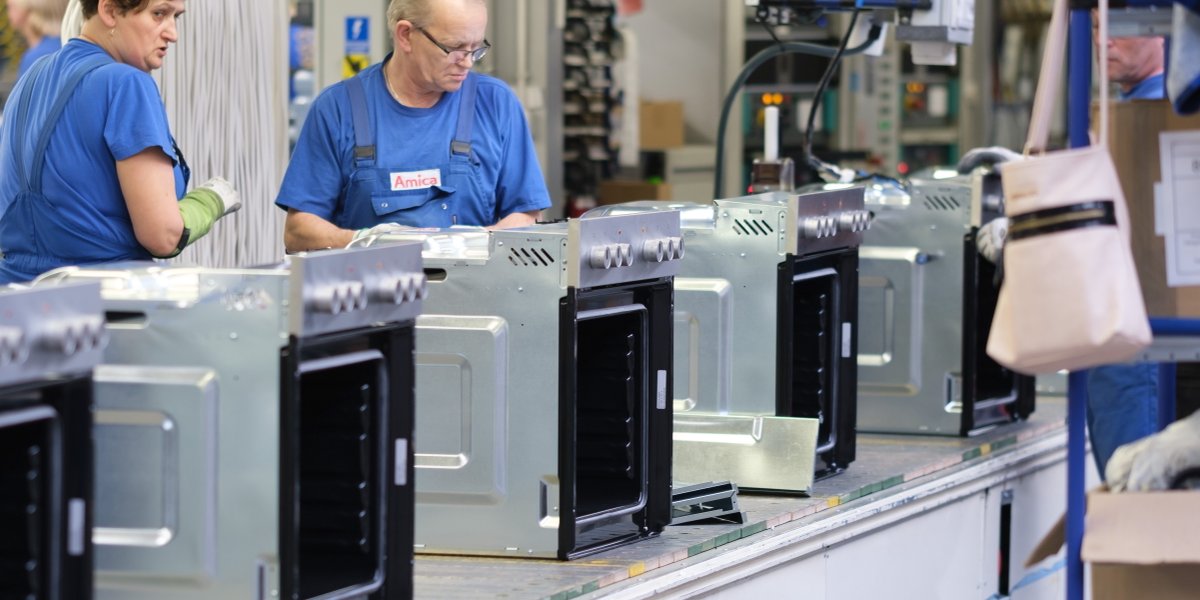
Chinese appliances outship Polish goods to EU threefold: 100,000 jobs at risk
Rzeczpospolita · 16h ago
 💻 Technology
Chinese researchers set data transfer speed record: 3.2 petabits per second
TechRadar · 18h ago
Similar stories
🌍 World
Xi Jinping surprised by plans for Ukraine peace meeting on Chinese soil
Interia Fakty · 5h ago
📈 Business
Chinese appliances outship Polish goods to EU threefold: 100,000 jobs at risk
Rzeczpospolita · 16h ago
💻 Technology
Chinese researchers set data transfer speed record: 3.2 petabits per second
TechRadar · 18h ago
Should the U.S. urgently reduce its dependence on China for military supply materials?
Comments
No comments yet
Comments
No comments yet — be the first to weigh in 👇
No comments yet. Be the first!