Full text
TENERIFE, Spain — The commander of NASA's Artemis II mission briefly feared that he and his crew would never return home from their trip around the moon after overshooting their turn-back point.
Commander Reid Wiseman and his three crewmates were supposed to reach 219,667 nautical miles (252,788 standard miles, or 406,823 kilometers) — farther than any humans have ever traveled from their home planet — before turning back toward Earth on the sixth day of their 10-day mission to the moon.
But the odometer on the Integrity spacecraft continued to tick upward as they shot past their intended point of return, leading the astronaut to fear that something had gone terribly wrong, he told an audience here at the Starmus VIII festival earlier this week. (This semi-annual event is held to celebrate achievements in science, exploration, and creativity.)
"Mission control in Houston had told us our maximum distance would be 219,667 nautical miles and that was the furthest we were supposed to be from Earth," Wiseman said. "I was watching this number, and I saw it hit 219,667, and I thought, 'Great, this is the farthest we will be from Earth, and the next number I will see will be 219,666 — we'll be going home.' But about three minutes later, I didn't see 219,666; I saw 219,668. It went up. I was like. 'Huh? That's weird.'
Artemis II astronauts Jeremy Hansen, Victor Glover and Reid Wiseman were presented with the Stephen Hawking Medal for Science Communication at the Starmus VIII festival in Tenerife, Spain, on Oct. 17. (Image credit: Max Alexander/Starmus) "And then about three minutes later, it goes to 219,669, and that was the moment that I felt real fear because I thought we had just gone too far — we're never going to come home — and so I was very scared," he added.
Then, at last, he saw the counter start to drop. Meanwhile, NASA astronauts Victor Glover and Christina Koch were at the window, doing science observations of the moon , and Canadian Space Agency astronaut Jeremy Hansen was sending reports back to mission control — so Wiseman's moment of terror went unnoticed.
When Wiseman saw the odometer click back to 219,668 nautical miles, he said, "We're going home," and the crew let out a cheer. "I knew there was a good chance we might make it," he added.
In an interview with Live Science's sister publication The Week Junior Science+Nature , Wiseman paid tribute to NASA's Earth-based teams for the ultimate success of the mission.
Related stories
'I'm at a loss for words': Artemis II mission comes home to joy and cheers after historic 10-day mission
Earth-based telescope shares image of Artemis II capsule near the moon — one of the farthest photos of humans ever taken
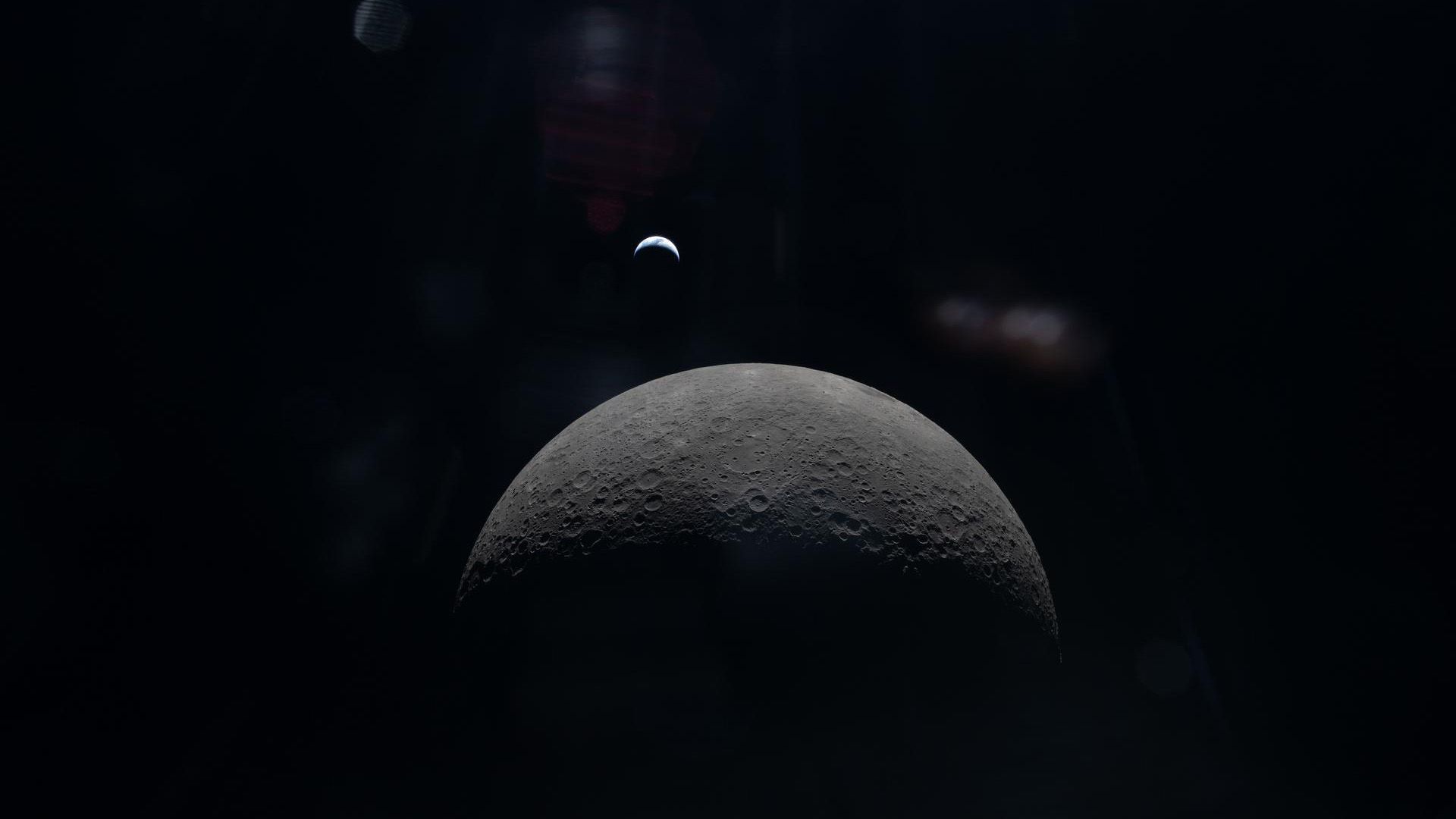
10 Artemis II photos that define humanity's return to the moon
"Getting home safely is a testament to the engineering rigor and the flight control teams back here on planet Earth, who put this rocket together and then who controlled it as we went out to the moon and came back. Those are the true heroes of this mission. They have real courage."
The Artemis II mission launched from NASA's Kennedy Space Center in Florida on April 1. It was the first crewed flight of the Orion space capsule and the first crewed mission to travel to the moon since Apollo 17 in 1972, taking nearly 10 days to fly around the lunar far side and return to Earth.
Nearly every moment of the crew's activities in the Orion capsule was livestreamed to the world, garnering massive public interest in the mission. The Artemis II crewmembers were awarded the Stephen Hawking Medal for Science Communication at the Starmus VIII festival.
Are you a NASA nerd? See how well you score on our Artemis quiz to find out!
Comments
No comments yet — be the first to weigh in 👇
No comments yet. Be the first!