Full text
Archaeologists have unearthed a Roman military camp in Spain, where they found fragments of weapons and metal tacks from soldiers' shoes. The camp was used during the Cantabrian Wars fought by Emperor Augustus as he expanded the Roman Empire in the first century B.C.
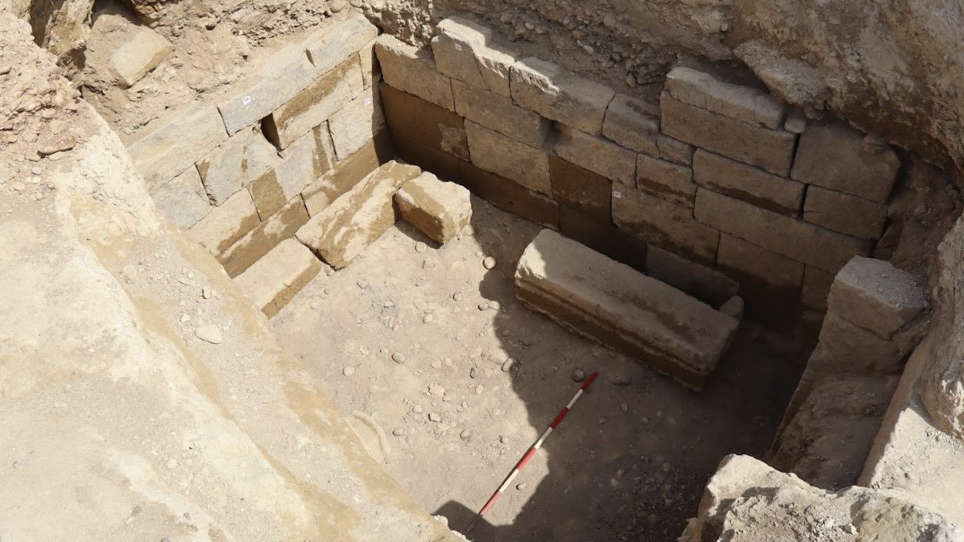
The fortified military camp is made up of an earthen platform roughly 39 feet (12 meters) wide, which is surrounded by a stone perimeter wall about 5 feet (1.5 m) thick, according to a translated statement . Uncovered during excavations earlier this year, the camp is situated about one-third of a mile (500 m) from where an Iron Age settlement was once inhabited by the Cantabri people, a group of Celtic tribes that lived among the Cantabrian Mountains in modern-day northern Spain.
The Cantabri fiercely resisted Roman rule for a decade, but in 19 B.C., they were conquered by the military commanded by Emperor Augustus . The Cantabrian Wars marked the end of local control over the territory, as the Iberian Peninsula then came under control of the Roman Empire.
Archaeologists work at the site of the Roman fort. (Image credit: University of León) "It's not easy to find a camp associated with a hill fort in this condition," Eduardo González Gómez de Agüero , an archaeologist at the University of León who co-directed the excavation project, said in the statement.
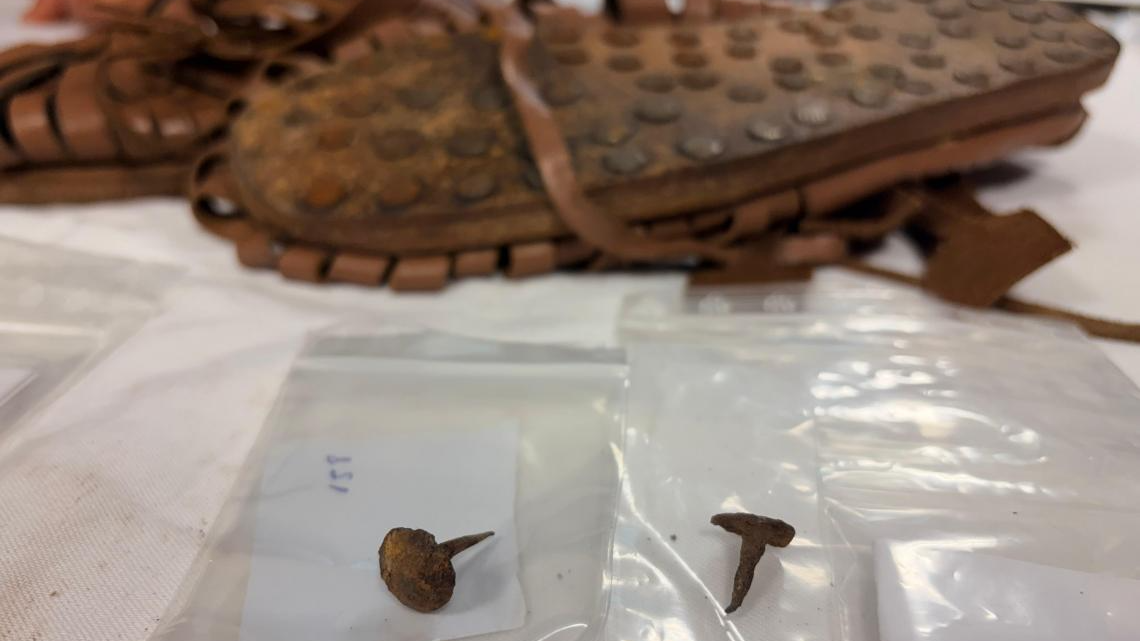
Among the well-preserved remains at the camp were metal weapon fragments and small iron tacks known as hobnails, which were hammered into the bottom of Roman soldiers' leather military sandals to help provide traction on rocky and muddy terrain. These objects are evidence that the Roman military was prepared to attack and subdue the Iron Age community, according to the statement.
The archaeologists also uncovered evidence of a major fire that destroyed most of the pre-Roman settlement, including two temples. González Gómez de Agüero suggested that the Romans may have deliberately set the fire as part of their conquest.
RELATED STORIES
Archaeologists discover decapitated head the Romans used as a warning to the Celts
8 ancient Roman shoes of 'exceptional size' discovered at Roman fort near Hadrian's Wall
Diarrhea and stomachaches plagued Roman soldiers stationed at Hadrian's Wall, discovery of microscopic parasites finds
"It's not just about defeating the enemy, but about humiliating them, erasing their identity, and breaking their connection to the land," he said in the statement.
Researchers are still working on establishing the chronology of the Romans' final attack on the Cantabri and want to understand if the settlement was destroyed in a single event or over time. Previously, another research team found 66 Roman camps in northern Spain, showing the immensity of the empire's attacks against the Cantabri.
The latest find is helping researchers understand the scale and location of Rome's fight for control of the Iberian Peninsula.
"It is an important step in understanding how the conquest was carried out on the Cantabrian slope of León, an area where it was necessary to link the Roman camps with Iron Age settlements," Carlos Fernández Rodríguez , an archaeologist at the University of León, said in the statement.
Can you identify these historical objects of war? Test your smarts with our weapons of the world quiz!


Comments
No comments yet — be the first to weigh in 👇
No comments yet. Be the first!