Full text
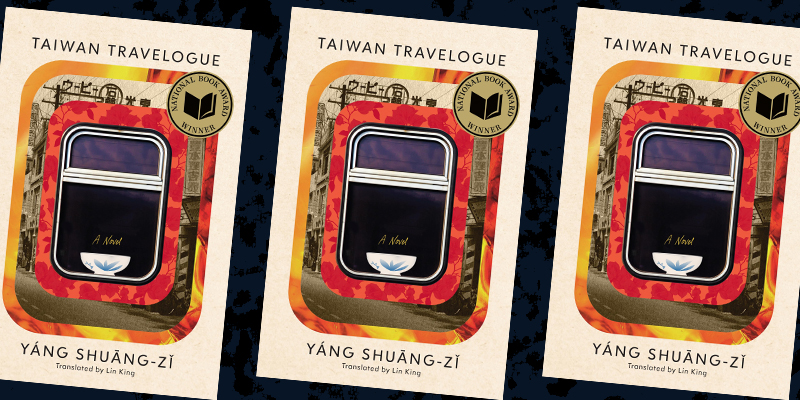
Translator and writer Lin King released a statement on Instagram on Tuesday laying out her claim of copyright infringement of her Booker-Prize-winning English translation of Taiwan Travelogue by Yáng Shuāng-Zǐ, originally written in Mandarin and titled Táiwān Màn Yóu Lù (《臺灣漫遊錄》) .
King discovered that a European publisher was “planning to release a translation of the book that was translated from my English text,” known as a “relay translation” where a book is translated into a third language from a previous translation. King sent “repeated warnings” to this publisher that this new translation wasn’t legal.
“As I am the sole copyright owner of the English Taiwan Travelogue ,” she writes, “an unauthorized third-language translation violates my copyright.” King has begun legal proceedings against this unnamed European publisher.
King’s defense of translation as an art form are the most moving parts of her statement. To quote her at length:
Translation is adaptation. It is not unlike a filmmaker reinterpreting a book for the screen, or Whitney Houston covering Dolly Parton’s “I Will Always Love You.” Whether one is “better” than the other is up for debate. That the two are different is indisputable.
Translation is also performance. If the writer is a scriptwriter, the translator is the actor; if the writer is a composer, the translator is the musician; if the writer is a choreographer, the translator is the dancer. Every one of the performer’s artistic choices impacts the delivery and reception of the original work.
I am often asked whether I identify more as a writer or translator. This is a false binary. Not all writers are translators, but all translators are writers. I chose, from the chaotic expanses of the English lexicon, every single word in Taiwan Travelogue. Shuāng-Zǐ cannot read it, much like how I will not be able to read most translations of my novel when it is published next year. Our translators will write those books, not we.
Yuka Igarashi, Executive Editor at Graywolf Press which published Taiwan Travelogue , echoed King’s defense of her work:
Lin King’s inspired translation of Yáng Shuāng-zǐ’s brilliant novel demonstrates the point she is making—that translators are writers in their own right whose copyright must be respected. As artists, mediators, and advocates, translators are indispensable in the dissemination of literature internationally, and we support Lin King’s effort to shed light on the often overlooked and unacknowledged work they do.
King similarly stresses that she’s trying to shine a light on the unfair business practices that have become too accepted, and allow for these kinds of copyright violating, third language translations.
“This is not about the money,” King writes, which will not surprise anyone familiar with the finances of literary translation. King notes that she “volunteered, without compensation, to begin translating Táiwān Màn Yóu Lù and pitch the book directly to US publishers.”
“Translation is a horrendous business plan,” King writes, “I do it because I believe in the books.”
King is looking at the broader business practices of translation. In bringing suit, she hopes to set a new legal precedent and shift the “status quo” that lets these copyright violations slide.
“Since when has ‘it’s always been done this way,’” she writes, “been a sufficient reason for continuing to infringe on people’s rights?”
She ends with a call for change:
To all publishers of translated fiction, I beseech you: Ask for permission, not forgiveness. If you love these books, respect the rights of the translators who rewrite these stories so that you, too, can read them.
King’s full statement is on her Instagram.



Comments
No comments yet — be the first to weigh in 👇
No comments yet. Be the first!