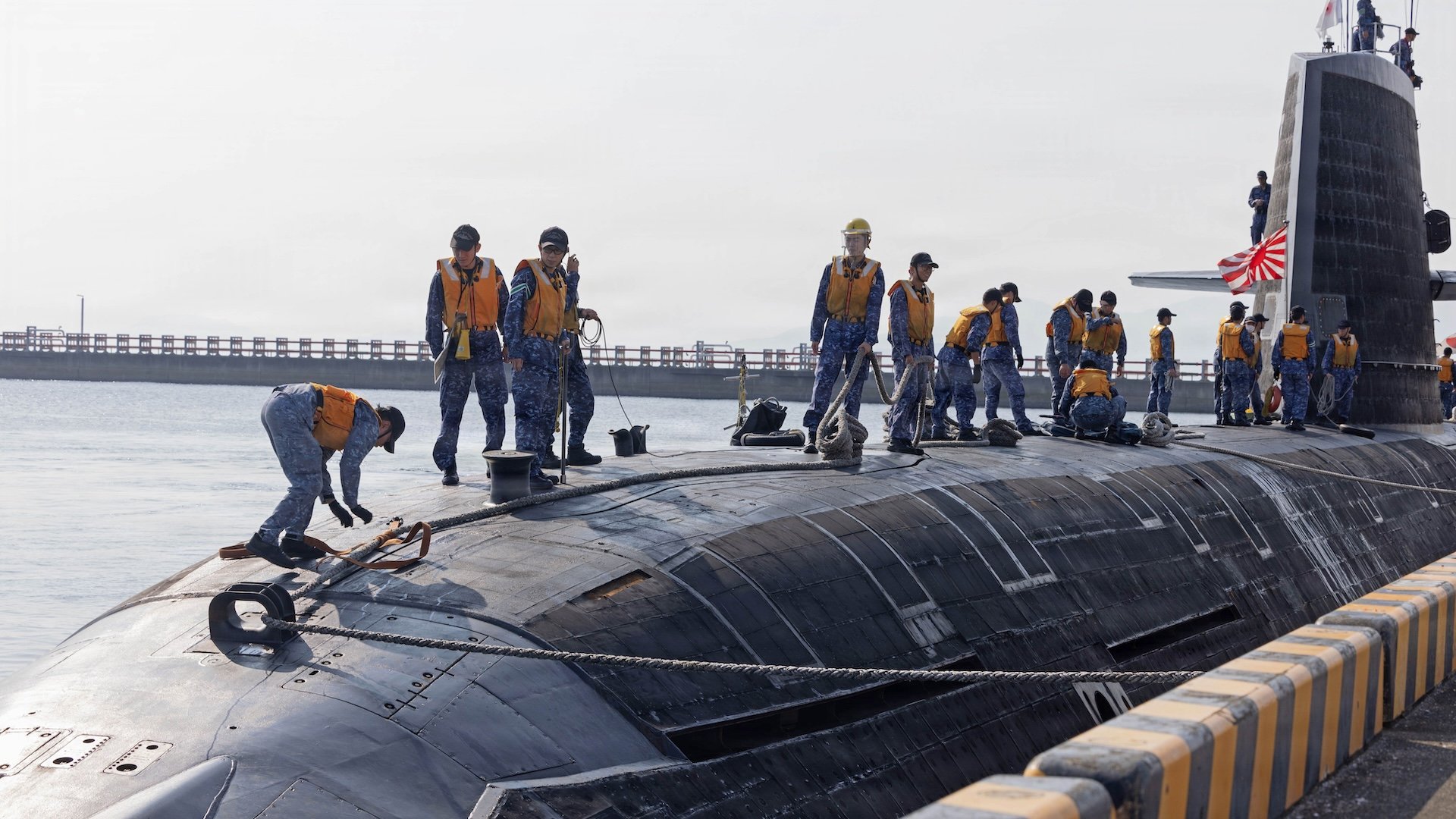
Japan weighs purchase of nuclear-powered submarines
Japanese Defence Minister Shinjiro Koizumi confirmed that Tokyo is not ruling out acquiring nuclear-powered submarines for the Maritime Self-Defence Force. This would represent a historic shift from the exclusively conventional propulsion of Japan's submarine fleet. Currently nuclear-powered submarines are operated only by China, France, India, Russia, the United Kingdom and the United States; Brazil, Australia and South Korea are working to acquire such vessels.
Full text
Japan has said it is keeping the door open to acquiring nuclear-powered submarines , a potentially major shift for a country whose submarine force has historically relied exclusively on conventional propulsion. Defense Minister Shinjiro Koizumi confirmed recently that Tokyo is not ruling out nuclear-powered submarines as it considers the future requirements of the Japan Maritime Self-Defense Force (JMSDF).
Should Japan ultimately pursue the capability, it would join an exclusive group of nations operating nuclear-powered submarines. China, France, India, Russia, the United Kingdom, and the United States are currently the only countries with nuclear-powered submarines in active service. Brazil is already working to join the club, while Australian and South Korean nuclear-powered submarine plans are somewhat longer-term .
A submarine of the Japan Maritime Self-Defense Force surfaces during a naval review off Sagami Bay, Japan. Photo by Koichi Kamoshida/Getty Images
Japan’s submarine fleet is already regarded as among the most capable conventionally powered forces, and is very much at the forefront of advanced naval propulsion technologies . Even with that considerable expertise, however, developing and sustaining a nuclear propulsion capability would represent a huge challenge, requiring expertise and infrastructure far beyond those needed to build Japan’s existing conventionally powered submarines.
Koizumi’s comments do not represent a decision to acquire nuclear-powered submarines, nor do they indicate that Japan has begun a procurement program. They do, however, mark a significant evolution in the country’s public debate over submarine propulsion and point to a growing willingness within the Japanese defense establishment to consider capabilities that were previously largely outside the mainstream of defense planning.
Secretary of War Pete Hegseth hosts a bilateral meeting with Japanese Minister of Defense Shinjirō Koizumi at the Pentagon, Washington, D.C., Jan. 15, 2026. (DoW photo by U.S. Navy Petty Officer 1st Class Alexander Kubitza)
Currently, Japan operates one of the world’s most capable conventional submarine fleets, centered on increasingly sophisticated diesel-electric boats equipped with air-independent propulsion and advanced lithium-ion batteries . These submarines are well suited to operations around Japan and the country’s surrounding waters.
The JMSDF currently operates 22 conventionally powered submarines, maintaining the force structure established in the 2010s while progressively replacing older boats with the more capable Taigei class . Five Taigei class submarines are now in JMSDF service, with additional boats in the pipeline.
The first-of-class Taigei was launched on October 14, 2020, at the Mitsubishi Heavy Industries (MHI) shipyard in the city of Kobe, in the western prefecture of Hyogo. Japan Maritime Self-Defense Force
Nuclear propulsion, however, would offer substantially greater endurance and sustained underwater speed, allowing Japanese submarines to conduct longer-range operations across the broader Western Pacific with minimal support. This is a requirement that is becoming increasingly relevant as Tokyo’s strategic focus expands beyond its immediate maritime approaches.
China’s rapidly expanding naval force , including its growing submarine fleet and increasingly distant maritime operations , is forcing Tokyo to consider how it would monitor and potentially counter Chinese forces farther from the Japanese archipelago. A nuclear-powered attack submarine could remain submerged for extended periods without the endurance limitations imposed by conventional propulsion, making it particularly useful for long-range surveillance, tracking, and sea-denial missions.
Japan’s debate is also unfolding alongside a significant development in neighboring South Korea. Seoul has confirmed plans to develop a new class of nuclear-powered submarines , a move that could add further momentum to an emerging undersea competition in Northeast Asia. South Korea’s decision is particularly relevant to Tokyo because it demonstrates that nuclear propulsion is no longer merely a theoretical capability for U.S. allies in the region. While the missions and strategic priorities of the Japanese and South Korean navies are different, both countries face the challenge of operating in waters increasingly contested by China and North Korea.
A South Korean Ministry of Defense rendering shows how the nuclear-powered Jang Bogo N Project boats may look. MND
The development could also create new opportunities for Japan to work more closely with Australia and the other AUKUS partners. Australia is in the process of acquiring its own conventionally armed, nuclear-powered submarine capability under AUKUS Pillar I, with U.S. and U.K. nuclear-powered submarines also scheduled to operate from Australia . Japan has separately been identified as a potential partner for AUKUS Pillar II, which covers advanced capabilities and technology cooperation.
A Japanese decision to pursue SSNs could eventually create a much deeper basis for cooperation with Australia, including submarine interoperability, undersea warfare, workforce and technical expertise, infrastructure, sustainment, and potentially aspects of the industrial base. Analysts have already examined how Japan could fit into the wider AUKUS submarine ecosystem as Australia’s nuclear-submarine program develops.
Concept art of the submerged SSN-AUKUS nuclear-powered attack submarine. U.K. Ministry of Defense illustration
A Japanese nuclear-powered submarine with a robust capacity to launch land attack cruise missiles would also be a powerful component in the country’s emerging “counterstrike” posture , which is increasingly centered on acquiring the ability to strike targets at longer ranges.
Japan has already begun deploying domestically developed long-range missile systems, including the Upgraded Type 12 surface-to-ship missile , while also acquiring the U.S.-made Tomahawk cruise missile .
Launch of the first Tomahawk missile from the Kongō class Aegis destroyer Chōkai at an undisclosed location in the Pacific. Japan Ministry of Defense
An SSN would potentially add a highly survivable, mobile platform to this emerging strike architecture, allowing Japan to position long-range weapons farther from its home territory and complicating an adversary’s efforts to locate and neutralize them. That could be particularly valuable in a conflict in which Japanese air bases, missile batteries, and other fixed infrastructure were under attack.
The potential SSN requirement also fits with Japan’s expanding expeditionary ambitions. As the JMSDF converts its Izumo class helicopter destroyers to operate F-35B fighters , giving Japan a more credible carrier aviation capability , nuclear-powered attack submarines could provide a valuable escort for these increasingly important surface groups. Their speed, endurance, and ability to remain submerged for extended periods makes SSNs particularly well suited to accompanying carrier forces on longer-range deployments and supporting contingencies farther from Japanese waters.
Looking at the bigger picture, it is highly significant that nuclear propulsion was effectively excluded from Japan’s conventional defense debate for decades. More recently, however, Japanese defense officials and policymakers have begun examining whether future submarines will require a different propulsion system. The issue is now one that can now be discussed openly at the ministerial level.
Nevertheless, pursuing a nuclear-powered submarine program would come with huge challenges.
The Japan Maritime Self-Defense Force Sōryū class submarine Hakuryū arrives at the submarine piers of Joint Base Pearl Harbor-Hickam. U.S. Navy photo by Mass Communication Specialist 1st Class Steven Khor/Released
Building and operating nuclear-powered submarines would require Japan to establish an entirely different industrial, regulatory, and training infrastructure. The vessels would also be considerably more expensive and complex to build and operate than Japan’s existing conventionally powered submarines. Tokyo would have to resolve questions involving nuclear regulation, reactor technology, maintenance facilities, crew training, and the handling of nuclear material.
There would also be a significant political dimension. Although naval nuclear propulsion is fundamentally different from possessing nuclear weapons, any move in that direction would inevitably receive scrutiny in a country whose postwar security policy has been shaped by its experience with nuclear weapons and its longstanding non-nuclear principles .
For those reasons, Koizumi’s statement should be viewed less as an announcement of a Japanese nuclear-submarine program than as evidence that the political barrier to discussing such a program is falling.
The Japanese Oyashio class submarine Yaeshio transits the Philippine Sea during Exercise Pacific Vanguard 23. U.S. Navy photo by Mass Communication Specialist 3rd Class Santiago Navarro
The next question is whether the Japanese government will move from keeping the option open to actually studying a nuclear-powered submarine design, propulsion technology and acquisition pathway in detail.
If it does, the consequences could extend well beyond Japan’s submarine fleet. A Japanese nuclear-powered submarine capability would represent a major enhancement of Tokyo’s ability to operate across the Western Pacific and could alter the undersea balance between Japan, China, and the United States’ other regional allies. At the very least, the idea is one that is now part of wider discussions at the highest levels.
Contact the author: thomas@thewarzone.com
The post Japan Opens The Door To Acquiring Nuclear-Powered Submarines appeared first on TWZ .
Similar stories
 🪖 Military
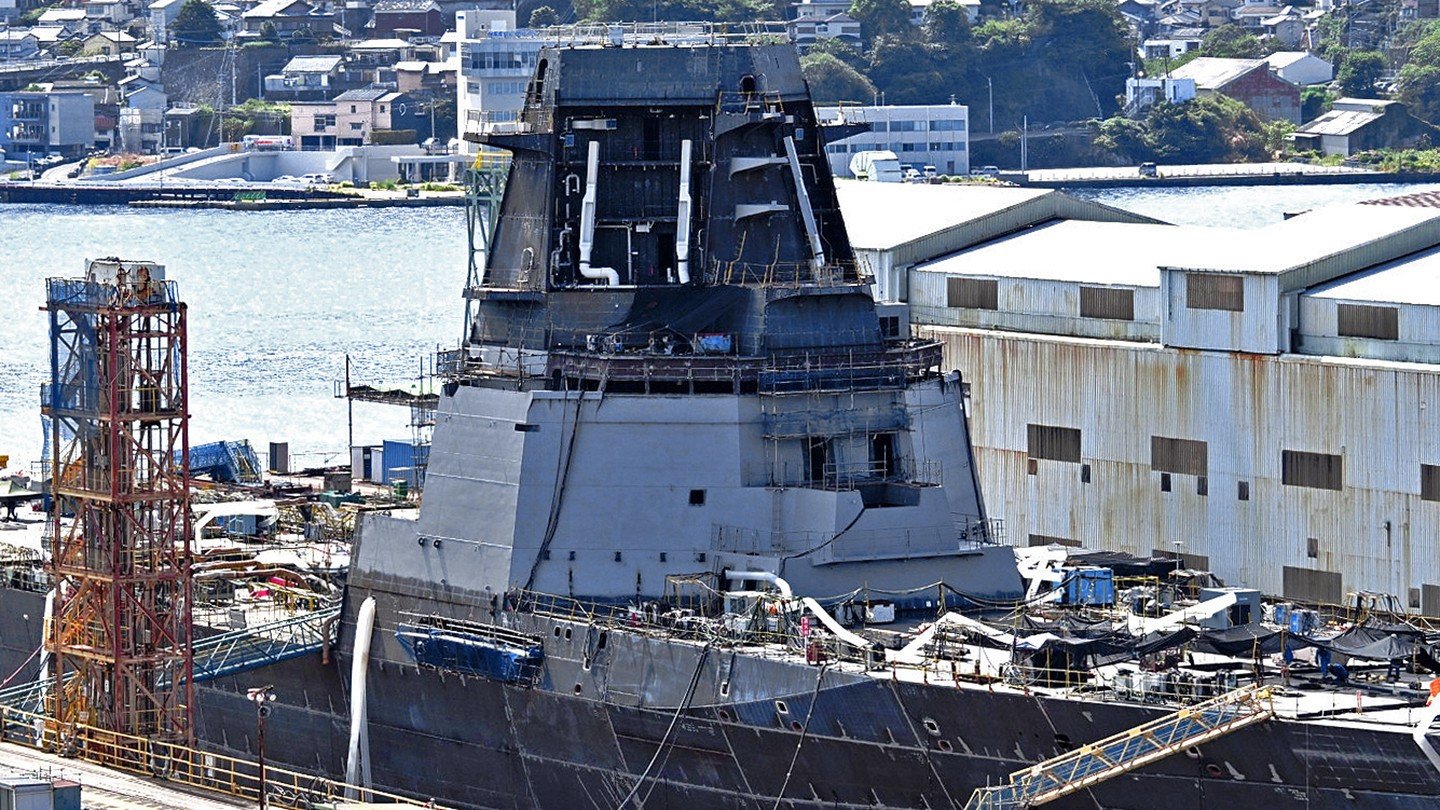
Japan's First Dedicated Missile Defense Warship Takes Shape as a Cruiser-Sized Giant
The War Zone · 17d ago
🪖 Military
Japan's First Dedicated Missile Defense Warship Takes Shape as a Cruiser-Sized Giant
The War Zone · 17d ago
 🪖 Military
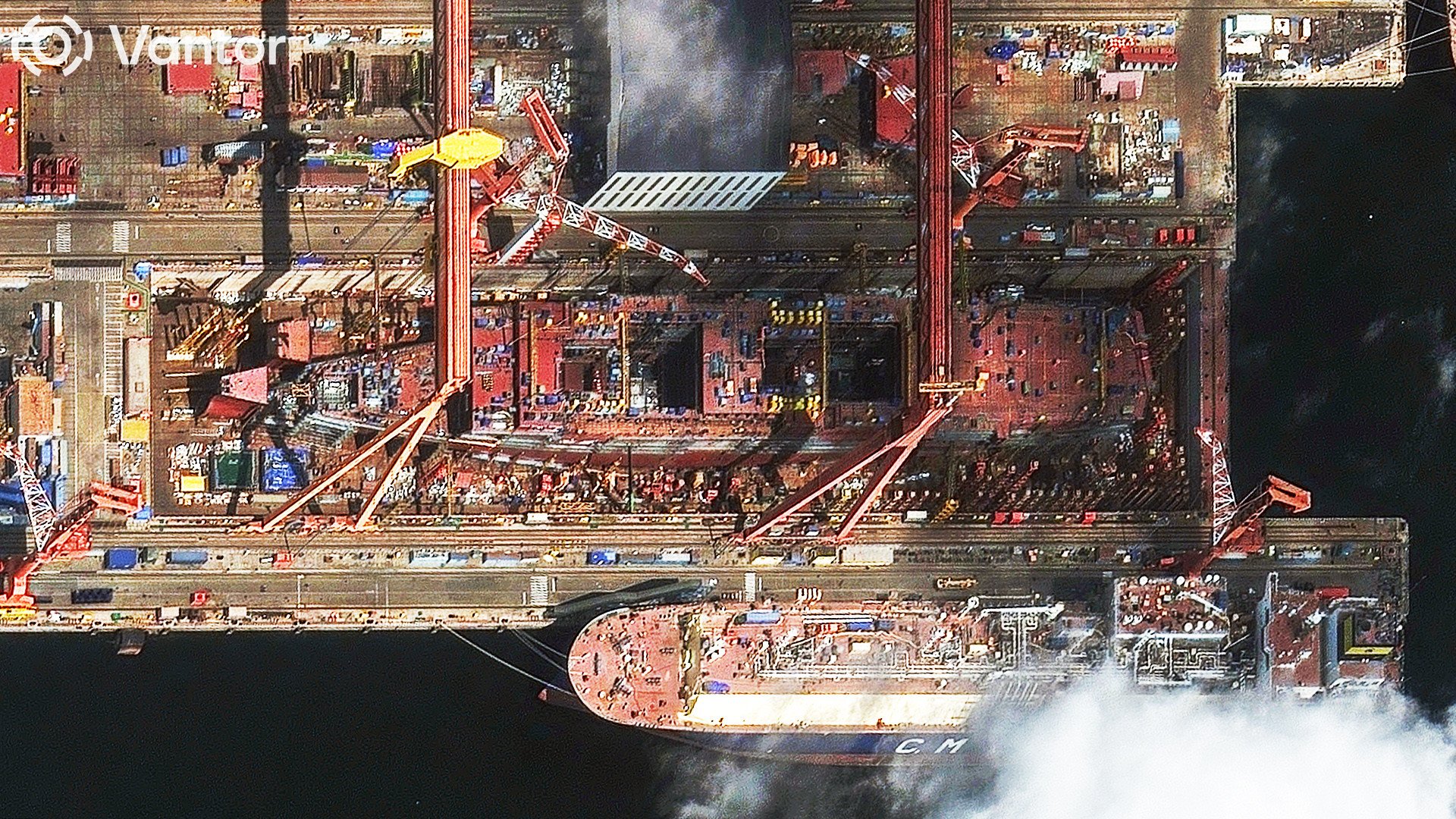
China's first nuclear-powered aircraft carrier takes shape at Dalian shipyard
The War Zone · 27d ago
🪖 Military
China's first nuclear-powered aircraft carrier takes shape at Dalian shipyard
The War Zone · 27d ago
 🪖 Military
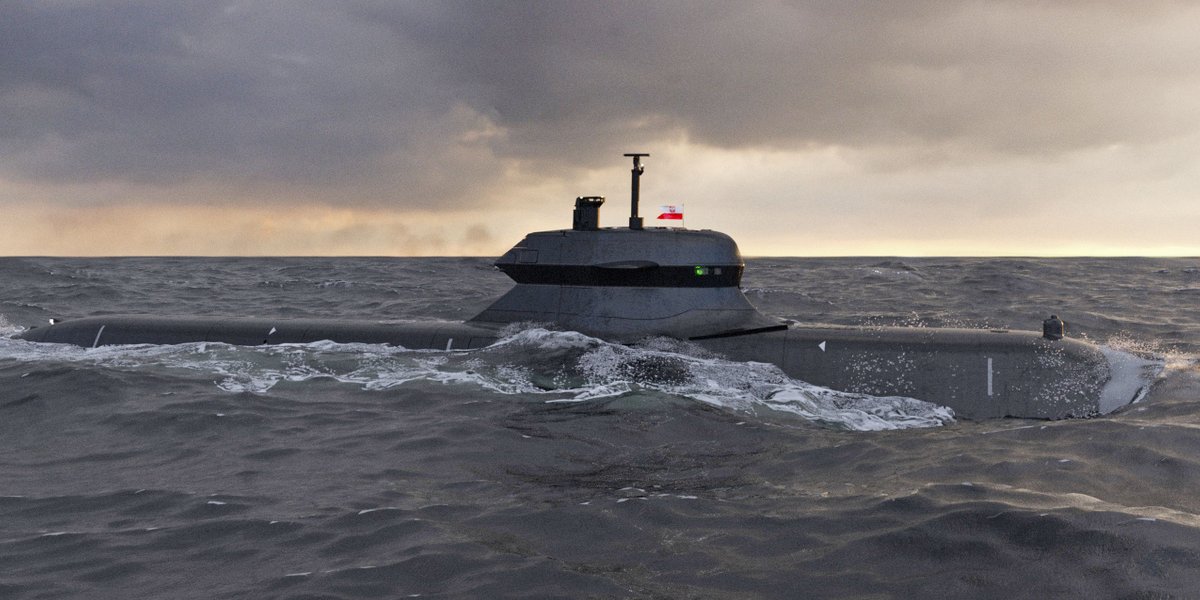
Polish submariners begin training in Sweden under the Orka submarine programme
Rzeczpospolita · 29d ago
🪖 Military
Polish submariners begin training in Sweden under the Orka submarine programme
Rzeczpospolita · 29d ago
Similar stories
🪖 Military
Japan's First Dedicated Missile Defense Warship Takes Shape as a Cruiser-Sized Giant
The War Zone · 17d ago
🪖 Military
China's first nuclear-powered aircraft carrier takes shape at Dalian shipyard
The War Zone · 27d ago
🪖 Military
Polish submariners begin training in Sweden under the Orka submarine programme
Rzeczpospolita · 29d ago
Comments
No comments yet
Comments
No comments yet — be the first to weigh in 👇
No comments yet. Be the first!