
Ukraine races to maximise pressure on Russia with long-range drones before winter
Ukraine is racing to inflict maximum damage on Russia before winter, when Moscow typically strikes Ukrainian energy infrastructure. Long-range Ukrainian drones have been hitting deep inside Russia, cutting supply lines and straining the Russian military and economy. Officials stress the urgency of pressing the advantage before Russia replicates the drone technology and uses it for counterstrikes.
Full text
BRUSSELS — Kyiv is racing to inflict maximum damage on Russia ahead of what it anticipates will be another winter of devastating attacks on Ukrainian energy infrastructure.
Ukraine has been making major gains in the war, thanks in large part to its use of long-range drones, which have been able to strike deep into Russia , cutting supply lines and stretching Moscow’s military and economy thin.
“We see a weaker Russia,” Estonian Foreign Minister Margus Tsahkna told POLITICO. “The reason is that Ukraine has been able to fight and develop their own capabilities for deep strikes.”
The key now is to pile pressure on President Vladimir Putin before Russia can copy Ukraine’s drone technology and use it for counterstrikes, said two Ukrainian officials, granted anonymity to speak freely about Kyiv’s thinking.
The other key issue for Ukraine is timing. The country suffers much more in winter as Russia smashes its energy grids and central heating networks with relentless drone attacks, all while temperatures plummet to minus 20 or 30 degrees Celsius in some parts of the country. Russian attacks have pummeled Ukraine every winter of the war so far.
For now, Ukraine has the upper hand in the war, something that could also shape the terms of any renewed peace talks led by U.S. President Donald Trump, the Ukrainian officials said.
The approach to Russia must be “more pressure, no compromises, and only [negotiate] from strength,” Tsahkna said. “Putin is still rational.”
President Volodymyr Zelenskyy has signaled he would be willing to freeze the war along current lines, but Putin wants Ukraine to cede territory that his forces do not fully control. Kyiv’s concern is that any peace initiative could turn into pressure on Ukraine to make concessions, rather than on Moscow to stop fighting, the officials said.
Putin’s fuel headache
The clearest sign of Ukraine’s success is Russia’s energy woes.
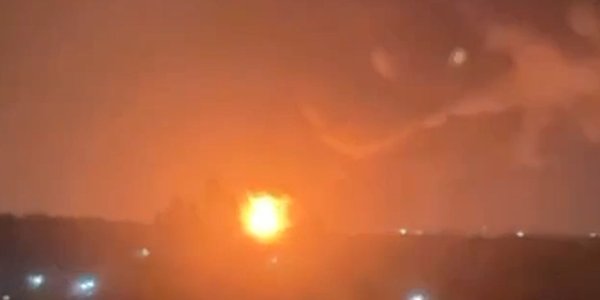
Ukrainian drones last week struck the Omsk refinery , more than 2,500 kilometers from the front line. The facility processes around 10 percent of Russia’s total refined oil output, and Ukraine’s General Staff said the strike had damaged a primary oil processing unit. Last Wednesday Kyiv also hit oil refineries in the republic of Tatarstan and in the regions of Saratov and Voronezh, and on Sunday a Ukrainian drone hit a tanker as it was entering the canal between the Sea of Azov and the Black Sea.
Since spring, Ukraine has intensified strikes on refineries producing gasoline, diesel and jet fuel, contributing to shortages across large parts of the country , with almost all Russian regions now reporting fuel supply problems .
The crisis is especially acute in Crimea, where authorities have declared a state of emergency and banned fuel sales . Tourism, a key part of the peninsula’s summer economy, has been badly hit .
Cars queue up to refuel at a petrol station in Nakhabino, Russia on July 8, 2026. | Contributor/Getty Images
For Ukraine, Crimea matters both symbolically and as a military hub. Disrupting fuel supplies there complicates Russian logistics while undermining the image of control Moscow has projected since illegally annexing the peninsula in 2014.
The Omsk attack showed how far Kyiv has come, with the strike reportedly carried out by new FP-1 drones built by Ukrainian firm Fire Point, capable of reaching up to 2,700 kilometers.
Ukraine’s campaign is designed to make the war more expensive for the Kremlin, more visible to Russians and harder for Putin to sustain without broader domestic consequences.
Estonia’s Tsahkna argued that pressure is already changing the tone around the Kremlin.
“Nobody’s talking anymore about the victory,” he said of Putin’s inner circle. “It’s already about what will happen personally to them after the war.”
Ukraine’s EU backers are moving on the same track.
“We need to give Ukraine whatever they need, because now is the time to push,” said one EU diplomat, granted anonymity as he was not authorized to comment on the record. “Any delays now are going to cost us all. Ukraine is not fighting just for itself.”
That urgency will be on display on Monday, when French President Emmanuel Macron hosts a meeting of the Coalition of the Willing in Paris. Kyiv is hoping the gathering will translate political support into faster deliveries of weapons, air defenses and other military aid — and give fresh momentum to its push to exploit Russia’s current vulnerabilities before the window begins to close.
Belarus gambit
Ukraine’s confidence has also been visible to its north.
Last month, Zelenskyy gave Belarusian dictator and key Putin ally Alexander Lukashenko an ultimatum : He had one week to remove relay equipment from Belarus’ territory, or Ukraine would take them out by force.
Moscow’s forces have used Belarusian territory to launch missile and drone attacks against Ukraine since the launch of the full-scale invasion. Zelenskyy said Lukashenko complied before the deadline expired .
For Kyiv, the episode showed that one of Moscow’s top partners is less confident in Russian protection than before.
Ukraine’s President Volodymyr Zelenskyy arrives to attend an EU summit in Brussels on June 18, 2026. | Nicolas Tucat/AFP via Getty Images
The strikes on Russian energy infrastructure have made it clear that “Russia is not even able to protect itself, so Lukashenko knows it is not able to protect him,” said Uladzimir Astapenka, a former Belarusian diplomat who now works with Sviatlana Tsikhanouskaya, the internationally recognized winner of the rigged 2020 Belarus presidential election.
Astapenka said Lukashenko is deeply reluctant to become more directly involved in the invasion because Belarusian society overwhelmingly opposes the war. “He cannot rely on Belarusians to fight Ukraine.”
Tsahkna described Lukashenko as “a good litmus test” for the pressure building around Putin. “These guys … they want to survive. Maybe he’s seeing better than us what is really happening in the Kremlin.”
Technology race
Ukraine’s advantage remains fragile. Moscow’s economy is still on a war footing, Russia has expanded drone production, and its forces have repeatedly found ways to counter Ukrainian innovations. That’s why Kyiv is pressing allies to move faster with financing and procurement.
Ukraine’s Defense Minister Mykhailo Fedorov told POLITICO this month that Kyiv needs billions more in military aid to sustain the current momentum. “If we have enough resources to launch a new cycle of war innovations before Russia adapts to the current one, we will get another six months,” Fedorov said.
The defense ministers of Sweden, the Netherlands, Germany, Denmark, Estonia, Poland, Latvia, Finland and Lithuania earlier this month wrote to European Defense Commissioner Andrius Kubilius and foreign policy chief Kaja Kallas calling for the Commission to move faster in approving Ukraine’s planned spending of EU financial support, to enable Kyiv to press its advantage.
Ukraine’s Economy Minister Oleksii Sobolev said Kyiv’s edge comes from necessity and short innovation cycles. “When people are trying to kill you, you have to survive and you have to innovate,” he told POLITICO. “There is no other way around it.”
But Ukraine does lack the advantage in one area: At NATO’s Ankara summit last week, Zelenskyy warned that Kyiv lacks sufficient means to stop Russian ballistic missiles, a point underscored by a string of attacks that have killed and injured dozens of Ukrainians.
“Please help us get more air defense missiles,” Zelenskyy said. “We are capable of doing everything else ourselves. But when it comes to air defense, we need our partners’ determination.”
Winter and peace talks
Zelenskyy’s pressure campaign is driven by a key consideration: Winter is coming.
Last winter, Russian attacks on civilian energy infrastructure left thousands of homes in Kyiv without electricity in sub-zero temperatures. Ukrainian companies and authorities have repaired much of the damage to the grid, but officials expect Moscow to again target heat and power as temperatures fall.
Alexander De Croo, the former Belgian prime minister who is now the administrator of the United Nations Development Programme, said Ukraine is trying to reduce its vulnerability by decentralizing its energy system with local generation, renewables, storage and backup capacity.
Alexander De Croo said Ukraine is trying to reduce its vulnerability by decentralizing its energy system with local generation, renewables, storage and backup capacity. | Atif Aryan/AFP via Getty Images
“The Ukrainians have rewritten the playbook in many domains,” De Croo said. “Now they are rewriting the playbook of energy security.” But that work will not be finished before temperatures drop in October.
Kyiv also sees a narrower political window inside Russia. With legislative elections due in September, the Ukrainian officials said they don’t believe Putin will launch a politically risky mass conscription drive before the vote to replenish Russia’s heavy battlefield losses.
Ukraine’s immediate objective is to reduce Russia’s ability to strike its energy grid, increase pressure on Putin’s economy, and enter any diplomatic process led by the Trump administration from a position of strength.
The tactics seem to be working.
Addressing Zelenskyy at the NATO summit on Wednesday, and referring to their public blow-up in Washington in February 2025, Trump said : “We’ve actually developed a good relationship. It’s hard to believe, right? From the Oval Office to now, I think we’ve developed a very good relationship.”
“One of the things we’re going to be talking about is, we’re going to give a license to you to make Patriots,” Trump told Zelenskyy. “That’s pretty cool, right?”
The change of tone from Trump has been chalked up in part to the shift in Ukraine’s fortunes on the battlefield.
“Trump backs a winner. And Zelenskyy looks like the winner now,” said another EU diplomat. “We have to keep it that way.”
Should Ukraine intensify strikes on Russian territory before winter?
Comments
No comments yet









Comments
No comments yet — be the first to weigh in 👇
No comments yet. Be the first!