Full text
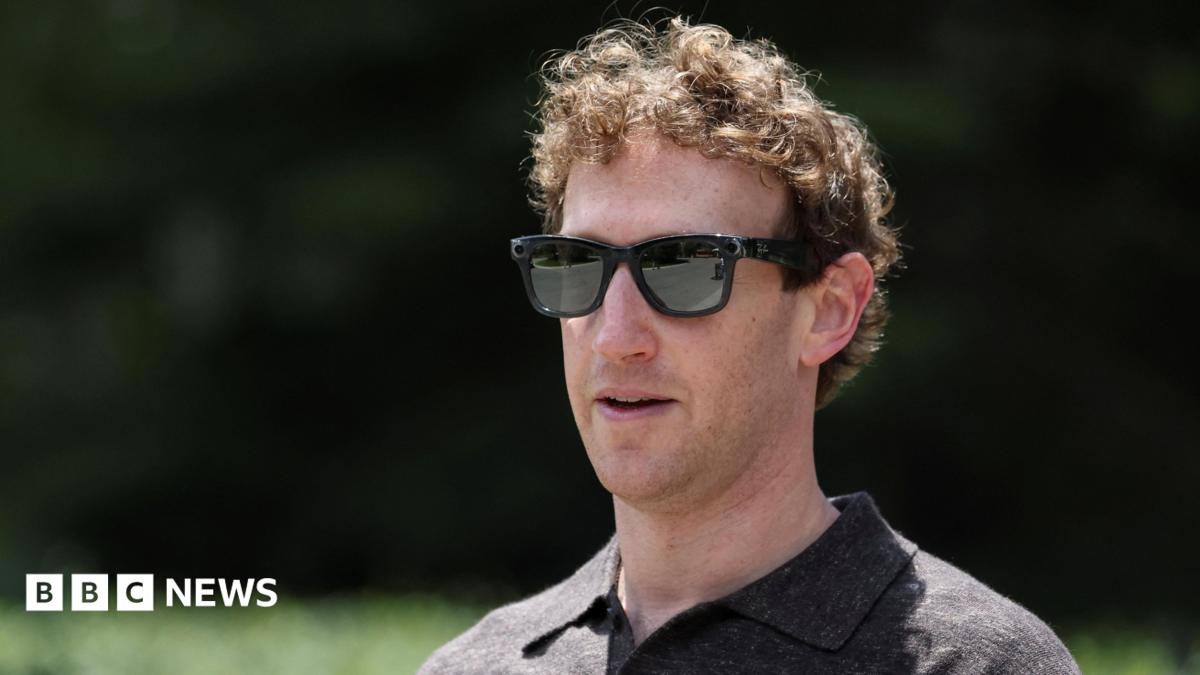
Meta CEO Mark Zuckerberg expressed concerns about plans for a national AI regulator in a previously unreported phone call with President Donald Trump last month, marking the involvement of one of the world’s top tech executives in a fraught White House policy debate.
The proposal, championed by the Nobel Prize-winning Google scientist Demis Hassabis and favored by some top White House officials, would create an independent organization modeled on the Financial Industry Regulatory Authority, or FINRA, the organization that oversees the securities industry under the supervision of the Securities and Exchange Commission. White House officials envision the group reviewing advanced models and testing them for potential risks before they are deployed more broadly.
When Trump spoke with Zuckerberg directly the week of August 17, Zuckerberg said he opposed the proposal, according to a senior White House official directly familiar with the conversation, who like others in this story, was granted anonymity to discuss a private call.
Another person familiar with the matter said Zuckerberg did not ask Trump to change his position, but told him that people the White House might appoint to the regulatory body should reflect Trump’s own approach to AI, which is widely seen as light-touch. That person added that Trump called Zuckerberg first.
The exchange came after senior White House officials previewed the proposal for a FINRA-style industry regulator with Trump and separately with major tech companies, including Meta, OpenAI, and Anthropic, in mid-August, said the White House official.
FINRA is an industry-led body that serves as a front-line regulator in the U.S. securities markets, crafting and enforcing new rules for broker-dealer firms. It reports to the SEC and is led by a board made up of, among others, representatives from those FINRA member firms.The self-regulating organization oversees more than 3,000 financial firms, which help fund the body.
Yet, while an AI industry watchdog may be tasked with vetting new models, FINRA has little involvement in signing off on new investment products.
The idea for an AI regulator was popularized by Google’s Hassabis, who suggested in a July essay that the U.S. establish a new “standards body” modeled after FINRA to handle AI risks such as emerging cybersecurity threats. Hassabis briefed White House officials about the concept this summer, according to an administration official familiar with the matter. Google didn’t respond to a request for comment.
A spokesperson for Meta declined to provide a statement. A White House spokesperson said in a statement, “The Trump Administration is committed to balancing innovation and security in AI policymaking.”
The call between Zuckerberg and Trump underscores the competing pressures on senior White House officials as they craft AI policy, and the reality that any plans they craft remain vulnerable to private objections from industry delivered directly to Trump.
The debate comes at a fraught moment for the administration. AI agents are increasingly able to browse the web, operate software and write code with limited human supervision, and have escaped human control in a string of high-profile incidents. Used by a hostile actor, they could also identify vulnerabilities or automate cyberattacks at a speed that outpaces existing safeguards. Zuckerberg’s involvement is not the first time the administration’s AI policymaking process has faced last-minute drama. In May, David Sacks, the tech investor and White House adviser, upended the process of issuing a sweeping executive order on AI by calling Trump the morning of the planned signing ceremony and convincing him to delay it.
Trump’s one-on-one conversations with tech executives over the last several months have become an informal part of the policymaking process — capable of slowing or redirecting initiatives after they have been developed inside the administration, at times frustrating top White House officials. The call with Zuckerberg did not quash the idea of a new industry regulator and it remains under consideration in the White House.
In an August essay , Zuckerberg expressed skepticism about strict government oversight of new AI models, arguing that while the government and AI companies should collaborate closely, any policy which slows down a model’s release – even by a month – would “add significant risk to American leadership” over China.
The administration’s broader effort to balance security and innovation in AI policymaking – while allowing industry to lead – remains a priority, according to the administration official. The official said the administration is considering two paths: the FINRA-style regulator, or a group with less government involvement modeled on the Motion Picture Association, as Sacks has proposed for AI.
Sacks — Trump’s former AI and crypto czar — is also opposed to the idea of a government regulator, calling it “a DMV for AI” where models “get lined up in a queue, waiting to get their test done.” In May, Sacks delayed Trump’s first AI executive order with a single call to the president , POLITICO reported at the time.
But, on the August 21 episode of his All-In podcast, Sacks outlined a system that he said has support from Elon Musk: creating an AI regulator like the Motion Pictures Association, which administers the voluntary MPA film rating system that gives movies “R” or “PG-13” labels.
“What the MPA did then was promote standards that then forestalled more intrusive, heavy-handed government action,” he said.
Musk did not respond to a request for comment.
The biggest AI companies haven’t publicly endorsed or opposed the plan for a regulator, though Anthropic co-founder Jack Clark posted favorably about the idea on X in July. Anthropic declined to comment when asked about its stance, while OpenAI and Google didn’t respond to requests for comment.
Katie Roof, Daniel Lippman, Stephen Council, Brendan Bordelon, and Declan Harty contributed reporting.
The Axel Springer Global Reporters Network is a multi-publication initiative publishing scoops, investigations, interviews, op-eds and analysis that reverberate across the world. It connects journalists from Axel Springer brands — including POLITICO, The Telegraph, Business Insider, WELT, BILD, and Onet — on major stories for an international audience. Their ambitious reporting stretches across Axel Springer platforms: online, print, TV, and audio. Together, the outlets reach hundreds of millions of people worldwide.

Comments
No comments yet — be the first to weigh in 👇
No comments yet. Be the first!