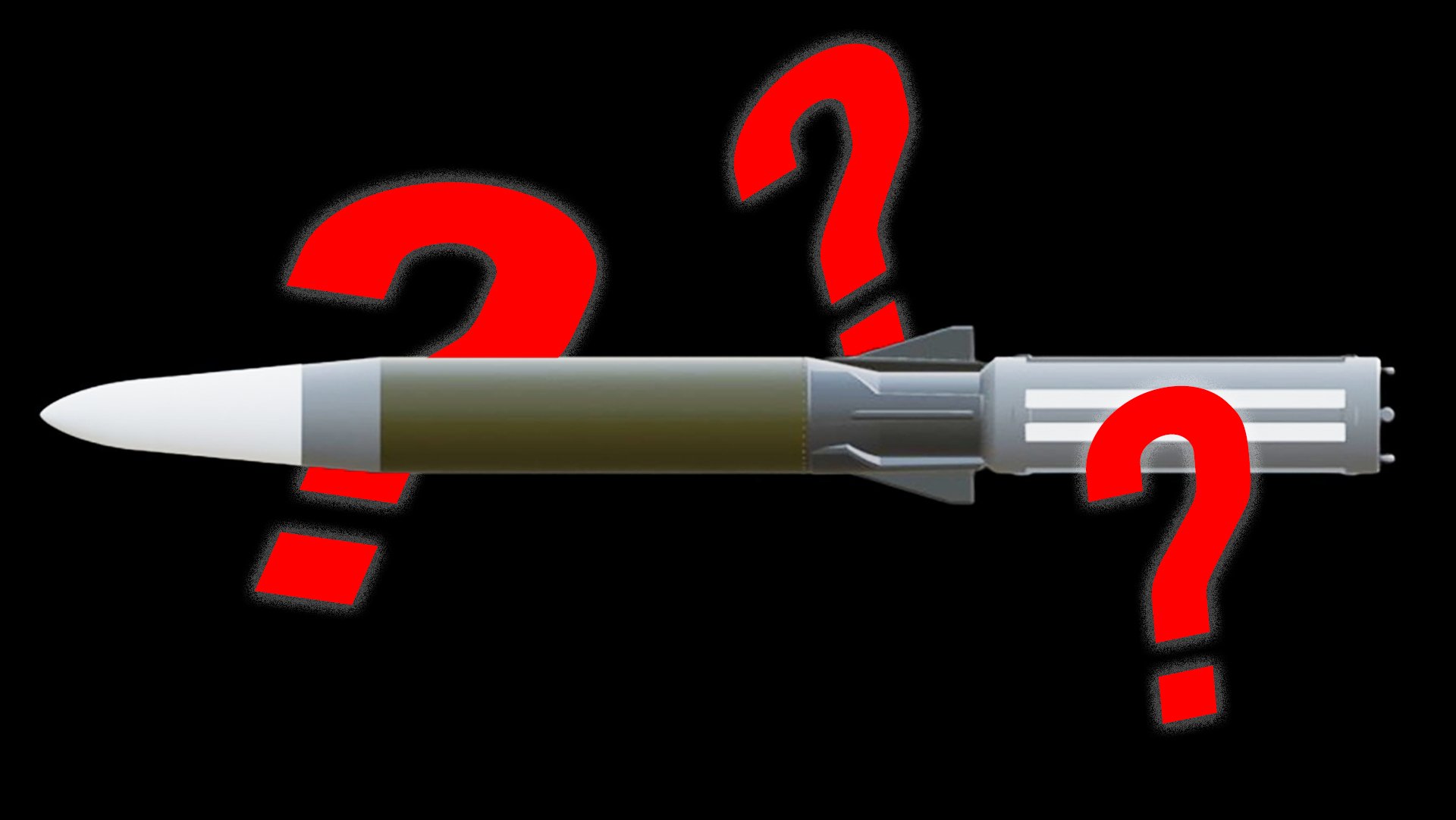
Ukrainian intel report: Russia's Zircon is likely a quasi-ballistic, not a hypersonic cruise missile
Ukraine's Defence Intelligence (DIU) has published a detailed breakdown of Russia's 3M22 Zircon missile, naming 70 enterprises and 84 individuals involved in its production. The report found US-origin electronics inside the weapon. Component analysis suggests Zircon may be a manoeuvrable quasi-ballistic missile rather than a true hypersonic cruise missile, contradicting Russian claims.
Full text
A new Ukrainian intelligence report details the complex production chain behind Russia’s shadowy 3M22 Zircon missile and identifies U.S.-origin electronics inside one of Russia’s most advanced weapons. New details also add weight to the theory that the weapon is a maneuverable quasi-ballistic missile rather than a true hypersonic cruise missile.
The unusually detailed new breakdown of the Zircon missile identifies 70 enterprises and 84 individuals involved in its development and production while providing a component-by-component look at one of Moscow’s most closely watched — and least-understood — weapons.
DIU exposes details of russia’s 3M22 Zircon ballistic missile — including its components, production chain, 70 companies involved, key personnel, and foreign equipment used to manufacture the weapon: https://t.co/oOBqjUb8dS pic.twitter.com/VqRSSA41iV
— Defence Intelligence of Ukraine (@DI_Ukraine) August 31, 2026
The first evidence of Zircon’s combat use emerged in February 2024 , when Ukrainian officials displayed recovered debris after a Russian strike. The wreckage included distinctive engine and steering-system components that Ukrainian specialists used to identify the weapon.
Russia has since employed the missile on other occasions. Ukrainian authorities reported that a Zircon was launched from occupied Crimea during a major missile and drone strike in January 2026 , as we reported at the time.
While initially developed for use from warships and submarines, Zircon is understood to have been employed from ground-based launchers against Ukraine, with modified launchers from the K-300P Bastion coastal defense system considered the most likely candidate .
A standard Bastion-P mobile coastal defense missile system. Photo by Maxime POPOV / AFP MAXIME POPOV
The new entry on Ukraine’s Main Directorate of Intelligence (GUR) War & Sanctions portal includes an interactive 3D model and identifies systems ranging from the missile’s radar seeker and onboard computer to its propulsion system and warhead. It also identifies foreign-origin electronics, including components associated with U.S. manufacturers.
Among them, according to the GUR report, is a TGA2704 amplifier associated with TriQuint Semiconductor, now part of U.S. company Qorvo. The GUR also identifies an Altera Cyclone II EP2C5T144I8N field-programmable gate array (FPGA) associated with Altera Corporation, now part of Intel, and lists it as originating in the United States.
An Altera Cyclone II Field-Programmable Gate Array (FPGA), a type of microchip, which the GUR says was found in Zircon wreckage. GUR
The alleged findings do not establish that either company knowingly supplied Russia’s defense industry, nor do they explain precisely how the components reached Russian production lines. The GUR says it’s seeking additional information on their origins and supply chains. Bearing in mind previous precedents, China could potentially be one source, being a known vector globally for recycled chips.
Nevertheless, the disclosure highlights the continued presence of Western-origin electronics in Russia’s advanced weapons programs despite sanctions and export controls.
The GUR lists the Zircon as approximately 26 feet long, with a body diameter of 2.2 feet, and a warhead weighing about 265 pounds.
The agency gives a maximum speed of Mach 8-9, a flight altitude of approximately 19-25 miles, and a separate “maximum fixed speed” (presumably, sustained cruising speed) of Mach 6.8. These are Ukrainian intelligence assessments and cannot be independently verified.
The database identifies the 3B222 active radar-homing head, manufactured by NPP Radar MMS, and a Baget-83 onboard digital computer produced by KB Korund-M.
Reported 3B222 active radar homing antenna recovered from Zircon wreckage. GUR
It also identifies the 3B915 guidance units, the 3G22 warhead, and the 3L2211 solid-fuel rocket motor manufactured by NPO Iskra. Other Russian companies provide altimeters, control systems, power supplies, and other components.
Reported remains of a 3L2211 solid-fuel rocket motor manufactured by NPO Iskra. GUR
The reported propulsion information is particularly significant.
Russian and other sources have consistently described Zircon as a hypersonic cruise missile , implying an air-breathing propulsion system burning liquid propellant, capable of sustaining hypersonic flight.
However, the physical evidence for such a propulsion system has always been less clear.
Open-source analysis by Fabian Hinz has highlighted the apparent absence of a conventional air intake on Zircon. A scramjet- or ramjet-powered missile requires an intake to bring atmospheric oxygen into the engine, yet available imagery does not clearly show one. A Russian patent associated with the missile’s jettisonable launch cap likewise does not reveal an obvious intake arrangement.
Just published my new OSINT investigation into Russia's secretive Zircon missile whose combat use has risen sharply in 2026.
Available evidence suggests that Zircon is not a hypersonic cruise missile but rather a quasi-ballistic system.
Link: https://t.co/8DoQePRpX3 pic.twitter.com/bIBS532FUB
— Fabian Hinz (@fab_hinz) June 17, 2026
More significant is evidence from recovered missile debris.
Material examined by Ukraine’s Scientific Research Institute of Forensic Expertise included a circular metal structure interpreted as part of a solid-propellant rocket motor. The hardware appeared to be associated with Zircon’s second stage rather than simply its launch booster (which would be used on a true hypersonic cruise missile to bring it up to operating speed). This suggests a two-stage weapon, with a solid-propellant rocket in each. This would match with what we have seen during shipboard launches.
That finding is consistent with Russian patent activity involving NPO Mashinostroyeniya and NPO Iskra. Patents associated with the companies describe solid-propellant rocket motors incorporating arrangements for aerodynamic-control equipment around the motor’s exhaust system.
There is also evidence that Russian engineers developed advanced composite solid propellants specifically for Zircon.
None of this conclusively proves the missile lacks an air-breathing engine, but it certainly raises more questions about its classification. It should be noted that there are also some solid-fuel ramjet concepts, but these are much rarer applications.
In February 2024, evidence emerged that Russia had, for the first time, used the Zircon in attacks on at least one target in Ukraine. Ukrainian scientists showed a video of the Zircon wreckage — “fragments of the engine and steering mechanisms [with] specific markings,” seen here. via X
If Zircon is primarily rocket-powered, it may be better understood as a maneuverable quasi-ballistic missile that nonetheless reaches hypersonic speeds.
Such a weapon would use rocket propulsion to accelerate rapidly and climb to high altitude before descending toward its target along a trajectory that is partly ballistic but incorporates aerodynamic maneuvering — a so-called ‘porpoising’ or ‘skip-glide’ trajectory . It could therefore reach hypersonic speeds without requiring sustained cruise under the power of an air-breathing system. The combination of high speed and unpredictable trajectory also makes it notably difficult for air defenses to deal with, characteristics shared with the air-launched Kinzhal , another Russian quasi-ballistic missile.
That interpretation could also help explain reports of a highly variable Zircon speed profile.
Russian officials have claimed that the missile can reach approximately Mach 9. During a 2020 test , Russian military leadership said Zircon reached more than Mach 8 while flying to an altitude of roughly 17 miles.
A Russian Ministry of Defense video that claims to show the Zircon test in the White Sea on Oct. 6, 2020:
Ukrainian assessments have described a more complicated profile, with the missile reportedly flying at around Mach 5.5, accelerating to approximately Mach 7.5 near the target, and then slowing before impact. Those figures cannot be independently confirmed, but a boost-and-glide or quasi-ballistic trajectory could produce such a profile more naturally than sustained powered cruise.
Ru MoD released a somewhat better Zircon launch footage. pic.twitter.com/bxHa6DsFG7
— krakek (@krakek1) December 3, 2024
At the same time, it should be recalled that ‘hypersonic’ does not necessarily imply a ‘hypersonic cruise missile.’ A ballistic or quasi-ballistic weapon can travel well above Mach 5, which appears to be the case here. The characteristics of the Zircon, as presented by the GUR, would also help explain official Ukrainian claims that the missiles have been intercepted successfully by Patriot PAC-3 air defense systems.
There is also a relevant technological precedent. NPO Mashinostroyeniya has previously patented solid-propellant missiles using quasi-ballistic trajectories, including designs intended to maneuver at high-supersonic and hypersonic speeds. That does not establish a direct lineage to Zircon, but it does show that the concept is consistent with the company’s history.
The other major takeaway from the release is the scale of Zircon’s production network.
One of Russia’s leading missile houses, NPO Mashinostroyeniya is identified as the missile’s main designer and manufacturer and prime contractor for Russian Ministry of Defense contracts covering its development and production.
But the weapon depends on dozens of other organizations. NPO Iskra supplies the solid-fuel motor; NPP Radar MMS provides the radar seeker; KB Korund-M produces the onboard computer; and other enterprises supply guidance systems, altimeters, control electronics, warheads, power systems, and other specialized equipment.
Another video, released by the Russian Ministry of Defense in May 2022, is said to show the Gorshkov launching a Zircon, although the missile is seen only at a distance with no details visible:
The U.S.-origin electronics claimed to have been identified by GUR are particularly notable because they demonstrate how Russia’s sophisticated weapons production remains connected to international semiconductor supply chains .
By linking specific enterprises and individuals to individual missile components, Ukraine has provided governments and investigators with new information that could be used to pursue sanctions , export-control enforcement, and efforts to disrupt Russia’s supply chain.
The report also adds weight to continued open-source assessments of what kind of missile Zircon actually is.
Regardless of its classification, Zircon remains a formidable weapon. A rocket-powered missile capable of reaching hypersonic speeds, flying at high altitude, maneuvering, and potentially accelerating during its terminal approach presents a serious challenge to missile defenses. With Ukraine’s ability to intercept even more conventional ballistic missiles already severely eroded, the weapon further complicates the country’s troubling air defense picture.
Contact the author: thomas@thewarzone.com
The post Russia’s Zircon May Not Be A Hypersonic Cruise Missile After All appeared first on TWZ .
Similar stories
 🪖 Military
Russian commander accused of attacks on civilians killed in St. Petersburg car bomb
Onet Wiadomości · 3d ago
🪖 Military
Russian commander accused of attacks on civilians killed in St. Petersburg car bomb
Onet Wiadomości · 3d ago
 🪖 Military
Ukrainian intelligence: Russia planning mobilisation of up to 600,000 after September elections
Onet Wiadomości · 4d ago
🪖 Military
Ukrainian intelligence: Russia planning mobilisation of up to 600,000 after September elections
Onet Wiadomości · 4d ago
 🌍 World
Russian court jails citizen for 23 years for spying for Poland
Rzeczpospolita · 17d ago
🌍 World
Russian court jails citizen for 23 years for spying for Poland
Rzeczpospolita · 17d ago
Similar stories
🪖 Military
Russian commander accused of attacks on civilians killed in St. Petersburg car bomb
Onet Wiadomości · 3d ago
🪖 Military
Ukrainian intelligence: Russia planning mobilisation of up to 600,000 after September elections
Onet Wiadomości · 4d ago
🌍 World
Russian court jails citizen for 23 years for spying for Poland
Rzeczpospolita · 17d ago
Will Ukraine revealing Zircon's production details weaken Russia's missile programme?
Comments
No comments yet
Comments
No comments yet — be the first to weigh in 👇
No comments yet. Be the first!