Full text
A private spacecraft failed to rescue NASA's Swift space telescope, meaning the big observatory will come crashing back to Earth in the near future.
The Neil Gehrels Swift Observatory launched to Earth orbit in November 2004. Over the past two decades, it studied gamma-ray bursts — the most powerful explosions in the universe — and other cosmic objects and events using a trio of telescopes.
But Swift's science work is now done, and its days in orbit are numbered.
Call to action
In September 2025, NASA put out a call to action to save Swift, whose orbit was decaying quickly due to high solar activity. The bottom line: The observatory needed a boost to a higher orbit soon, or it would be dragged down to its death in Earth's atmosphere .
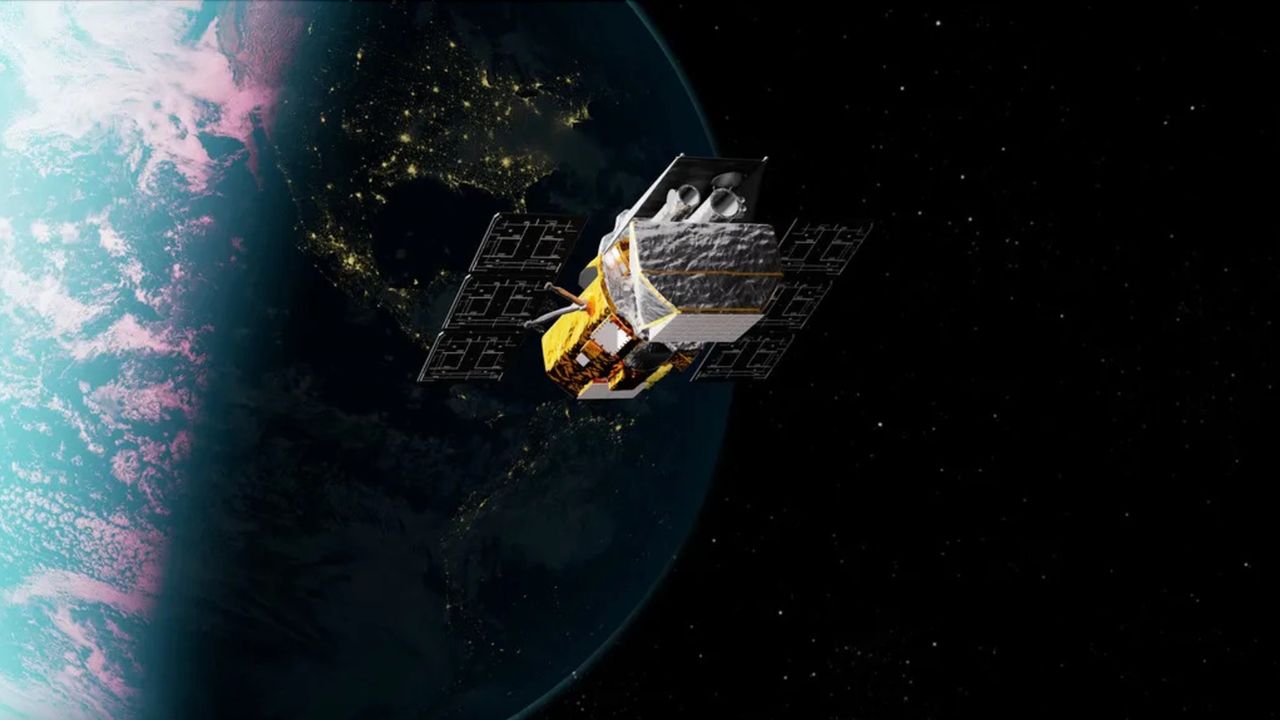
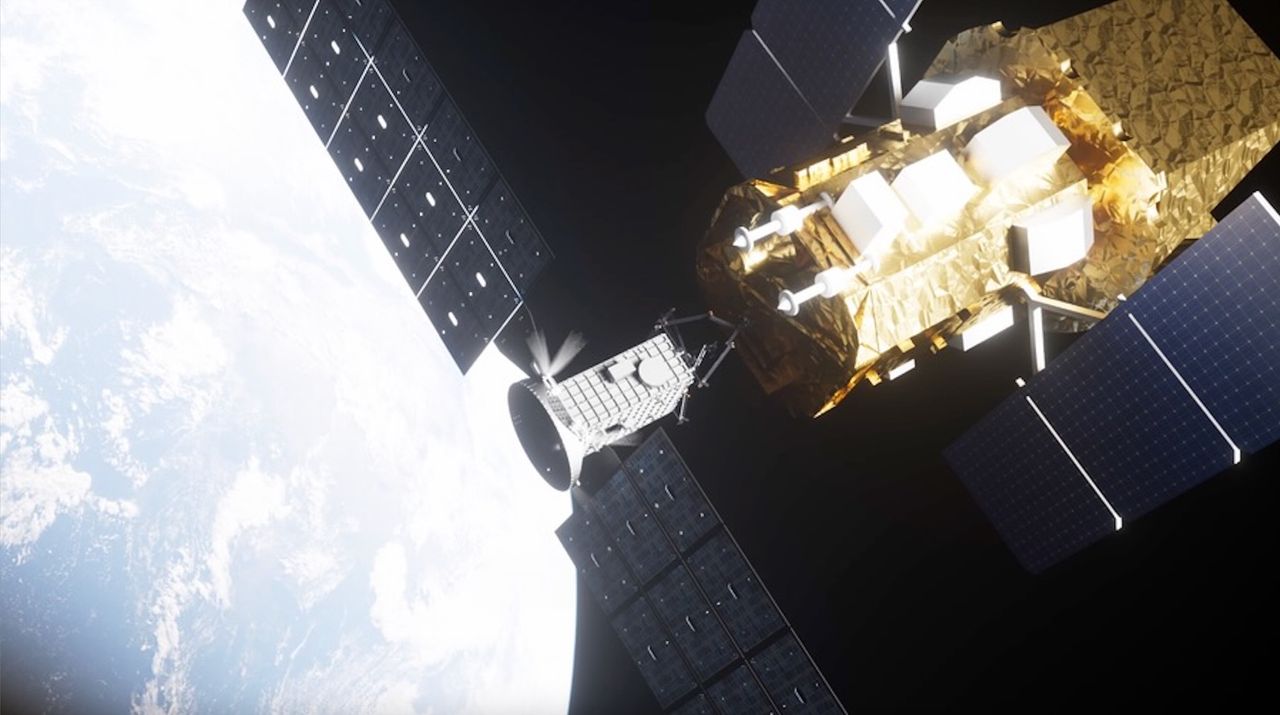
The Arizona-based company Katalyst Space Technologies answered that call, and won a $30 million NASA contract to perform the re-boost. In hurry-and-scurry mode, Katalyst built a robotic spacecraft called LINK, which launched on July 3 to meet up with Swift and haul it to a higher orbit.
But LINK suffered attitude-control issues after launch, causing NASA and Katalyst to wave off the rescue attempt .
Artist's illustration of Katalyst Space Technologies' LINK spacecraft meeting up with NASA's Swift space telescope in orbit. This did not happen, however; LINK suffered issues after launch and was unable to pull of the rendezvous. (Image credit: NASA) Timeline troubles
Ghonhee Lee is the CEO of Katalyst Space Technologies.
Speaking to CNN News Central on Aug. 24, Lee said: "You know, this is not the outcome that we wanted, but I think it's very important to recognize the unprecedented scale. This was an ambitious, high-risk, high-reward mission where we designed, built and launched a space robot within nine months."
Lee said that the timeline worked against the group. "I think if we had had 12 months even — just three more months — it would have made a tremendous difference," he told CNN's Kate Bolduan.
Swift is now coming back down to Earth , but it's unclear when and where.
A pre-launch photo showing technicians working on NASA's Swift space telescope. (Image credit: NASA/GSFC) Uncontrolled reentry
"Yes, Swift will have an uncontrolled reentry ," said Alise Fisher, public affairs specialist in astrophysics within the Office of Communications at NASA Headquarters in Washington, D.C.
The spacecraft's specific timing for reentry will depend on a number of factors, Fisher told Space.com. "Swift is not likely to reenter sooner than October. NASA will share more information as reentry approaches, following established interagency procedures for such notifications."
NASA expects most of the Swift spacecraft to burn up as it travels through the atmosphere, Fisher said, "but some components are expected to survive reentry. The risk of harm coming to anyone on Earth is unlikely."
Diagram depicting the Swift observatory. (Image credit: NASA/GSFC) Survivability analysis
Swift's dry mass is 613 kilograms (1,351 pounds). The spacecraft's science gear includes a Burst Alert Telescope, an Ultraviolet/Optical Telescope and an X-Ray Telescope.
So what might make it to Earth during Swift's speedy fall through the atmosphere?
The observatory's "dry mass and instruments are such that it will likely disintegrate sufficiently upon reentry to not pose a ground casualty hazard," said Darren McKnight, a senior technical fellow at LeoLabs, a company that keeps a persistent eye on what's going on in Earth orbit.
"However, it has both an X-ray telescope and optical telescope, so the internal workings of those devices might survive," McKnight told Space.com. He said that optical lenses, along with titanium tanks, are components that might make it to the ground .
"I am sure that they have done the analysis but have seen no public reporting on the survivability analysis," he said.
A sign of things to come?
Swift is unlikely to burn up entirely upon reentry, given its mass, said Ewan Wright, a Ph.D. student in interdisciplinary studies at the University of British Columbia in Vancouver and a junior fellow at the university's Outer Space Institute.
We also don't know where it will come down, he noted.
"It has an orbital inclination of 21 degrees, so could reenter anywhere in any latitude from 21 North to 21 South," Wright told Space.com. "The most likely outcome is that any surviving debris will land in the sea, but there is a chance it could impact a built-up area and cause a casualty."
Even if Swift's return to Earth is uneventful, "there are more and more uncontrolled reentries of satellites and rockets each year, and the chance that someone will be hit is growing," Wright said.
Comments
No comments yet — be the first to weigh in 👇
No comments yet. Be the first!