Full text
The U.S. Army is calling for new potential options for replacing the venerable Stinger short-range heat-seeking surface-to-air missile. The service has already been funding work on two competing designs from Lockheed Martin and Raytheon under its Next-Generation Short-Range Interceptor (NGSRI) program since 2023. The Army is currently aiming to buy 11,000 NGSRI missiles, as well as 2,200 new man-portable launchers, starting in Fiscal Year 2028.
The Army put out a contracting notice regarding what it is calling the NGSRI Alternate Interceptor Demonstration (AID) yesterday. The service is looking to hold an industry day event regarding its plans for the AID at Redstone Arsenal in Alabama next month.
“The Army is seeking to identify additional potential sources to fulfill the NGSRI requirements,” the notice explains. “The Army plans to conduct a demonstration in the Spring 2027 timeframe. A successful demonstration by an offeror may lead to an award for missile procurement.”
A picture showing a test of Lockheed Martin’s NGSRI entrant, called QuadStar. Lockheed Martin
Raytheon has previously released this image in relation to work on its NGSRI design. Raytheon
“The current NGSRI program was initiated to meet the Department of the Army requirement for Maneuver Short Range Air Defense (M-SHORAD) surface to air missile systems to replace the legacy FIM-92 Stinger man-portable air defense system,” the notice adds. “The NGSRI is a high performance, soldier portable, fire and forget, surface to air missile system capable of defeating rotary wing, fixed wing, and Group 2/3 Unmanned Aircraft System threats.”
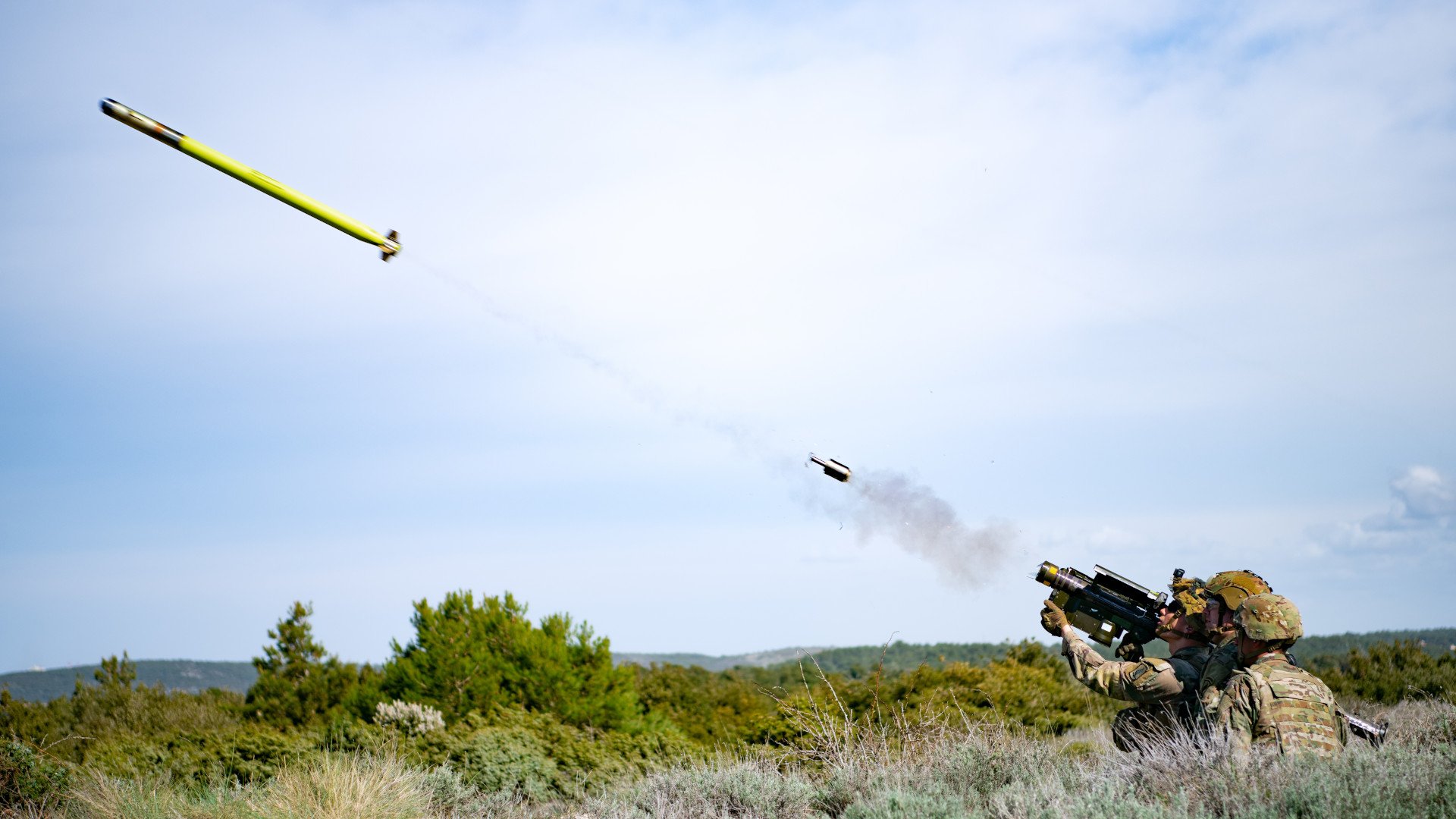
US Marines fire a Stinger missile during training. The NGSRI program is seeking a replacement for Stingers in Army and Marine Corps service. US Army
In U.S. military parlance, Group 2 covers drones with gross weights between 21 and 55 pounds, that can fly up to altitudes of 3,500 feet, and hit top speeds of up to 250 knots. Group 3, the next tier up, is a far broader category that encompasses uncrewed aerial systems weighing anywhere between 55 and 1,320 pounds, with operational ceilings between 3,500 and 18,000 feet, and with top speeds between 100 and 250 knots.
The Iranian-designed Shahed-136 one-way-attack drone is, by far, the best-known example of a Group 3 design, and one that encapsulates the importance of addressing threats in that particular category. Development of kamikaze drones in the Group 2 tier has also been surging globally , including in the United States . Both categories do also include drones configured for surveillance and reconnaissance and other missions .
It is also worth noting here that the Stinger has received upgrades in recent years to improve its effectiveness against drones. You can read more about that missile’s evolution since it was first introduced in the 1970s here .
“The NGSRI missile is backwards compatible with the legacy Stinger missile platforms such as SGT STOUT and Marine Corps Marine Air Defense Integrated System (MADIS),” yesterday’s contracting notice also stresses. This has been a key requirement since the program started.
Sgt. Stout is the name given to an air defense system in Army service today that is based on the 8×8 Stryker light armored vehicle . The Sgt. Stout has a turret that can be fitted with up to two four-round launchers for Stingers. Those launchers can also be swapped out for ones that can be loaded with a pair of millimeter-wave radar-guided AGM-114L Hellfire missiles . The turret also has a 30mm XM914 automatic cannon, which can fire proximity-fuzed airbursting rounds against drones and other aerial threats, and a 7.62x51mm M240B machine gun.
A Sgt. Stout air defense vehicle fires a Stinger missile during training. US Army
The four-round Stinger launchers used on the Sgt. Stout are the same ones found on the older Humvee-based Avenger air defense systems, which are in increasingly limited use in the U.S. Army and Marine Corps. Army Avengers were recently in the news after images emerged showing them protecting President Donald Trump at his golf course in Bedminster, New Jersey.
An Army Avenger system seen deployed in Bedminster, New Jersey earlier this month. USAF Lt. Col. Andrew Scott
In its current form, the Marine Corps’ MADIS consists of two 4×4 Joint Light Tactical Vehicles (JLTV) in different configurations. One is armed with Stinger missiles, as well as an XM914 cannon and M240 machine gun, all mounted on a single remote weapon station. The other has the same type of remote weapon station, but without Stingers, and also has added electronic warfare, electronic support measures, and sensor capabilities.
A Marine MADIS vehicle fires a Stinger missile during training. USMC
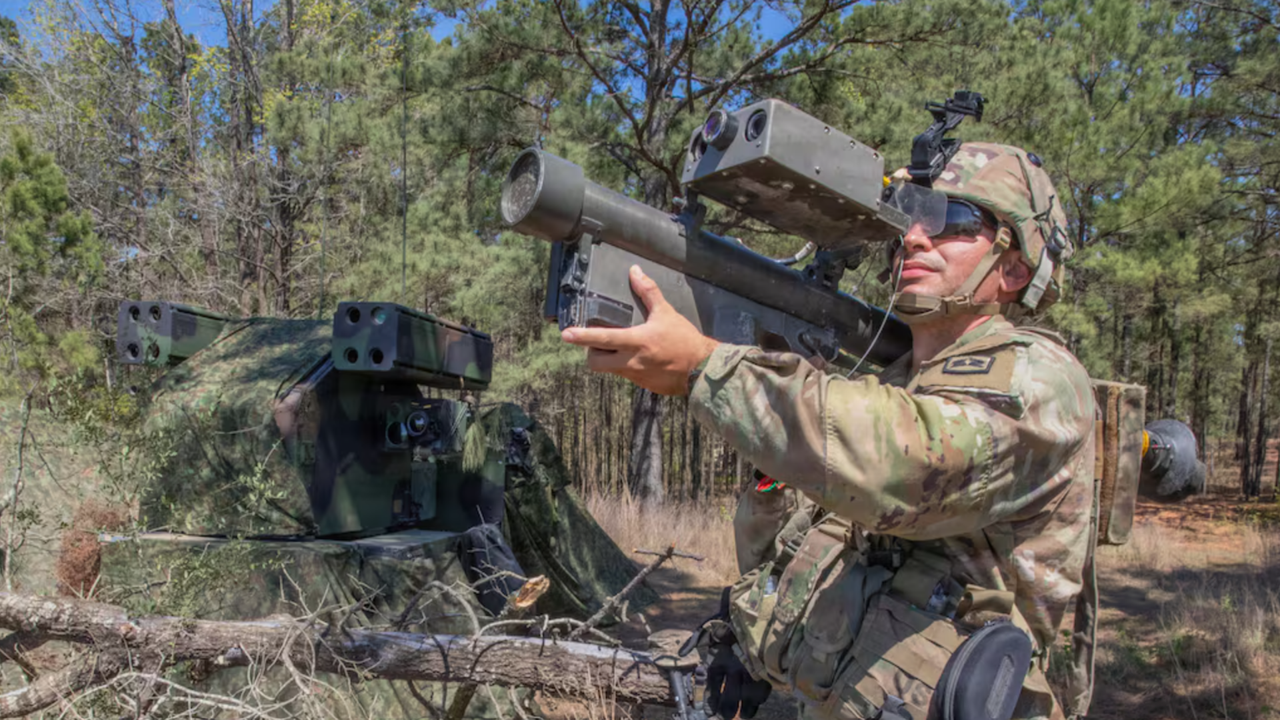
Stinger is still perhaps best known in its shoulder-fired form, also known as the Man-Portable Air Defense System (MANPADS) configuration, as seen in pictures earlier in this piece. The Army has already been pursuing new individual launchers, or Control Launch Assemblies (CLA), for use with existing Stingers , which could also be used with future NGSRI missiles. Lockheed Martin has publicly put forward a new CLA design as part of its NGSRI proposal, which is called QuadStar , as seen in the video below.
Whether or not the newly announced AID plans reflect any major issues with the existing NGSRI competition is unknown. Lockheed Martin and Raytheon have announced the successful passage of major milestones in work on their respective designs at separate points this year. Raytheon is also the current prime contractor for the Stinger.
Stinger is also in widespread service globally. Any replacement the U.S. military might adopt, especially one that is backwards compatible with existing launchers, could easily translate to interest from foreign armed forces. The ongoing war in Ukraine and other conflicts in recent years have contributed to a new surge in demand for MANPADS worldwide, including to help counter growing drone threats.
The U.S. military has been putting new emphasis on diversifying supplier bases and greater government control of intellectual property rights, especially for munitions, in recent years. This is a general focus area that has grown even more since President Trump’s second term began last year. Officials have been open about their desire to reduce reliance on traditional prime contractors and bring in more smaller and non-traditional firms , even for very high-profile weapon system programs . These efforts reflect a particular push to avoid so-called ‘vendor lock’ and promote greater competition, which can also offer benefits when it comes to cost and scaling production.
When it comes to NGSRI, as mentioned, the Army is looking to buy thousands of these missiles, as well as individual launchers, in the coming years. A new demonstration next year would also not preclude the service from ultimately ordering NGSRIs from either Lockheed Martin or Raytheon.
With plans to start production of the selected NGSRI design in Fiscal Year 2028, which starts on October 1 of next year, the Army will need to make a decision about how to proceed with NGSRI relatively soon.
Contact the author: joe@twz.com
The post Army Widens Stinger Surface-To-Air Missile Replacement Search appeared first on TWZ .

Comments
No comments yet — be the first to weigh in 👇
No comments yet. Be the first!