Full text
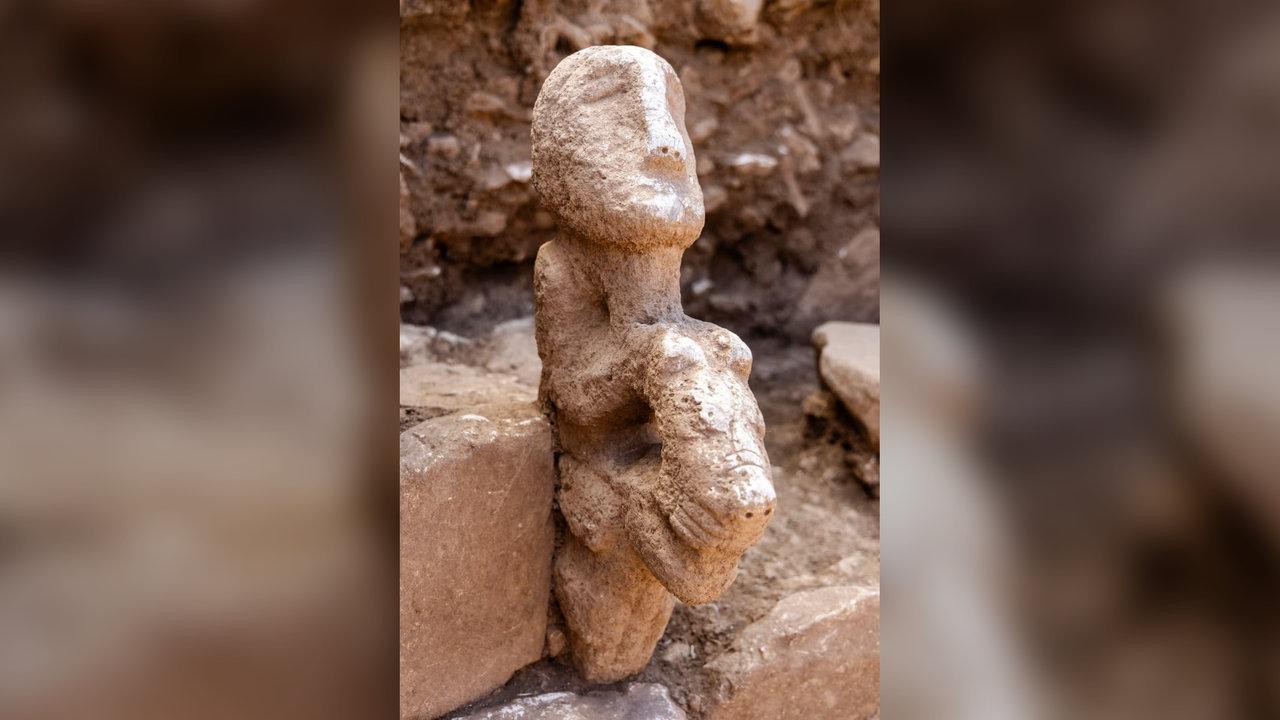
Archaeologists working at a Stone Age site in Turkey have discovered a unique depiction of a person sitting on the back of a leopard. The 11,000-year-old statue may reflect the culture's fascination with virility and masculinity, experts say.
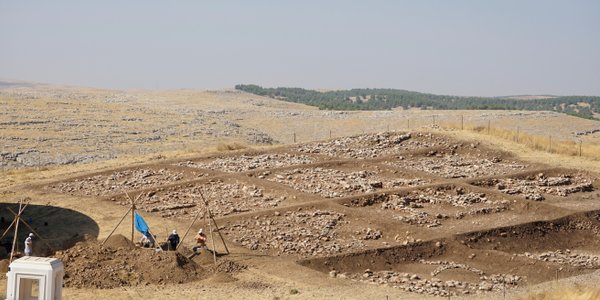
The statue was unearthed this summer at Karahan Tepe (also written as Karahantepe), a Neolithic site in southern Turkey, according to an Aug. 25 translated statement from the Turkish Ministry of Culture and Tourism.
The unique statue, which measures about 28 inches (70 centimeters) tall, was made in "a style unlike anything seen before," Mehmet Nuri Ersoy , Turkey's minister of culture and tourism, said in the statement.
Excavators found the statue on a platform that ran along the wall of a round structure about 10 feet (3 meters) in diameter, according to the statement.
Karahan Tepe is one of the oldest known villages in the world. It was built around 9750 B.C. in Turkey's Urfa province (also known as Şanlıurfa), where other early settlements, including Göbekli Tepe , were established. Several of these early settlements produced enigmatic artwork depicting men and wild beasts.
In 2023, archaeologists at Karahan Tepe unearthed an enormous 11,000-year-old statue of a man clutching his penis , which possibly represents an important ancestor. Another life-size sculpture of a man holding his penis, known as Urfa Man , was found near Göbekli Tepe in 1993. And in 2022, archaeologists working at the site of Sayburç in the Urfa region found a carved scene depicting two leopards , a bull and a man grasping his penis.
The newly discovered sculpture "seems to be a mirrored version of the known type of 'animal mounting on top of a human,'" Jens Notroff , a Neolithic archaeologist at the German Archaeological Institute who was not involved in the project, told Live Science in an email. A statue of a human with a leopard on their back was previously discovered at Karahan Tepe and is now in the collection of the Şanlıurfa Museum .
Notroff thinks the Sayburç leopard scene and the new statue of a person on a leopard may be linked.
"Leopards were common feline predators in the region," he said. "They are vigorous, dangerous animals, so probably challenging game for skilled hunters. That might have added to their symbolic meaning."
Although the exact meaning of the human-and-leopard motif is unknown, Notroff suggested it could relate to courage or strength.
RELATED STORIES
Ritual solstice structure 1,000 years older than Stonehenge unearthed in Czech Republic
Stone Age family may have been cannibalized for 'ultimate elimination' 5,600 years ago, study suggests
Ancient 'female-centered' society thrived 9,000 years ago in proto-city in Turkey
"An individual fearlessly shown among these animals, as in Sayburç, or even apparently mastering one, as in this new sculpture from Karahan Tepe, could be read as maybe a symbol of power, of control over this vigor and danger," Notroff said.
The statue may also yield important new information about the earliest human settlements in the region, according to the statement.
"I believe this discovery, which opens the door to new questions about the earliest periods of human history, will have a wide impact on the scientific community," Ersoy said.
What do you know about the Paleolithic, Mesolithic and Neolithic eras? Find out with our Stone Age quiz!

Comments
No comments yet — be the first to weigh in 👇
No comments yet. Be the first!