Full text
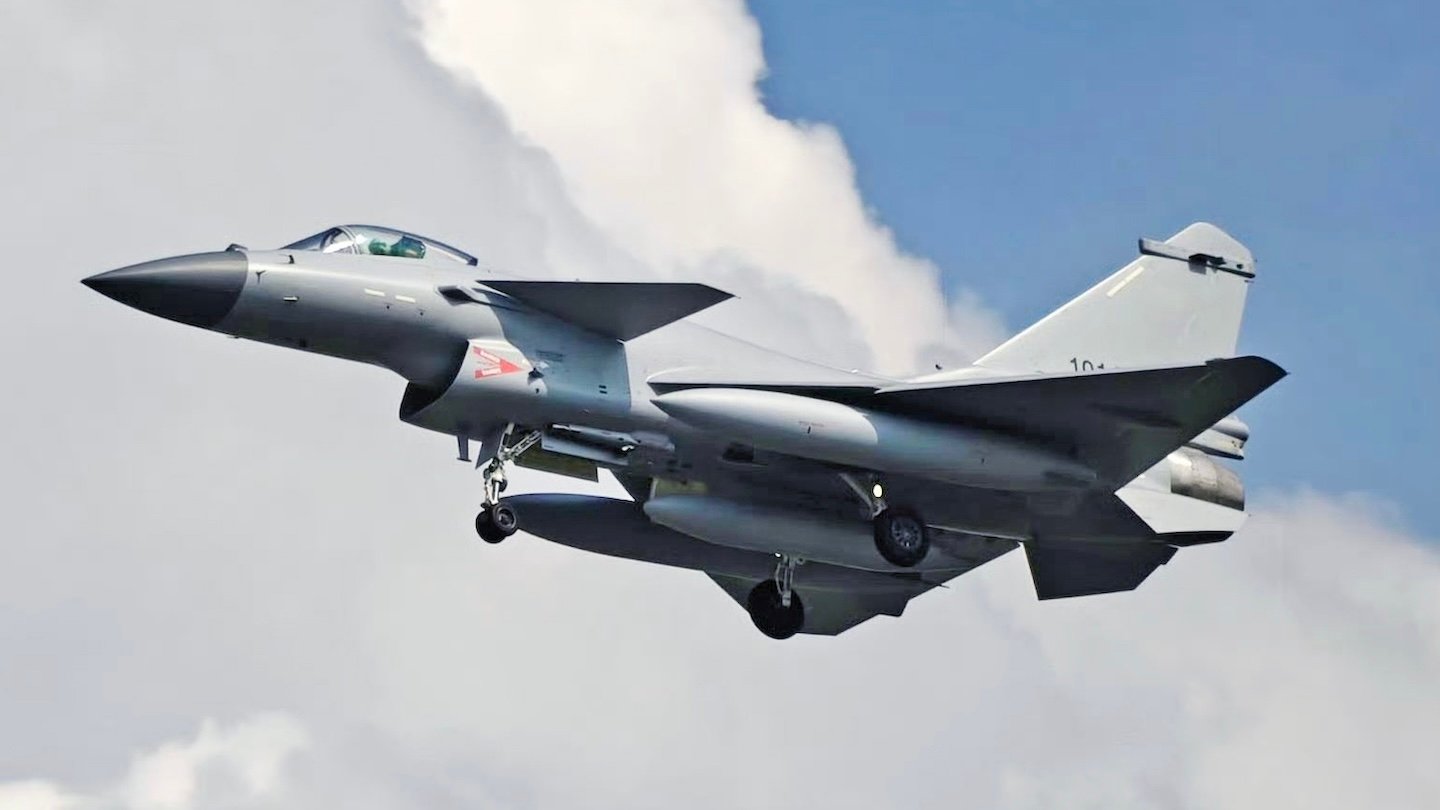
Bangladesh is moving toward formal negotiations with China over a potential purchase of J-10CE fighters and attack helicopters, in what could become one of the country’s most significant defense acquisitions in years. The development also underscores the growing international interest in a Chinese fighter that has gained considerable attention since seeing combat in Pakistani service last year .
Bangladesh’s Prime Minister’s Information and Broadcasting Adviser Zahed Ur Rahman said Tuesday that a government panel is preparing a draft agreement that could pave the way for negotiations with Beijing. The government has not disclosed how many aircraft it intends to acquire, the potential value of the deal, or a delivery schedule, with those details expected to be determined during negotiations.
Bangladesh is advancing plans to purchase Chinese J-10CE fighter jets, with a government official pointing to the aircraft’s performance in the recent India-Pakistan conflict https://t.co/EypP8oci6C
— Bloomberg (@business) August 25, 2026
Local reporting has previously pointed to a potential requirement for as many as 24 J-10CEs.
If ultimately contracted and delivered, Bangladesh would become only the second confirmed foreign customer of the export version of the J-10C, after Pakistan. However, there has been growing speculation about other potential customers, too, fueled by imagery showing apparent export-standard J-10s being tested in China.
A Pakistan Air Force J-10CE. Pakistan Air Force
The potential acquisition comes as Bangladesh seeks to modernize its aging combat aircraft fleet. Dhaka already maintains a long-standing defense relationship with Beijing, which has supplied Bangladesh with combat aircraft, naval vessels, tanks, missile systems, and other military equipment over the past two decades.
The J-10CE is a much more capable proposition than many of the older fighters still operated by air forces that have historically relied on Chinese or Soviet-designed equipment, of which Bangladesh is a prime example. Currently, the Bangladesh Air Force’s fighter fleet is made up of different versions of the Chengdu F-7 (an updated Chinese version of the MiG-21 Fishbed ) and much smaller numbers of MiG-29 Fulcrums .
Three Bangladesh Air Force F-7s perform during celebrations to mark Bangladesh’s 54th Victory Day in Dhaka, Bangladesh, on December 16, 2025. Photo by Zabed Hasnain Chowdhury/NurPhoto Zabed Hasnain Chowdhury
Maintaining aging Soviet-designed fleets increasingly presents challenges in terms of airframe life, avionics, spare parts, weapons, and overall readiness. Meanwhile, the war in Ukraine and accompanying sanctions serve to make Russia an even less reliable source of military aircraft and other arms.
The J-10C is a single-engine multirole fighter equipped with an active electronically scanned array (AESA) radar, modern avionics, electronic warfare capabilities, and the ability to employ a growing range of Chinese precision-guided weapons. The export J-10CE also provides access to weapons such as the much-vaunted PL-15 beyond-visual-range air-to-air missile .
A Chinese J-10C fighter during a training exercise. Xinhua/Xi Bobo/Getty Images Xinhua News Agency
The aircraft’s growing reputation has been helped considerably by Pakistan.
Pakistan became the first foreign operator of the J-10CE , and the aircraft received intense international attention during the May 2025 conflict between Pakistan and India . Pakistan said its Chinese-made fighters were involved in shooting down several Indian aircraft, while the precise circumstances , numbers, and tactics involved remain the subject of competing claims and outside analysis.
A Pakistan Air Force J-10CE after its arrival at PAF Base Minhas, where it first arrived in 2022. Pakistan Air Force
Nevertheless, the conflict provided the J-10CE with an unusual degree of combat visibility for a Chinese export fighter. Now, Bangladeshi officials have explicitly acknowledged that the aircraft’s reported performance during that conflict has attracted attention in Dhaka.
The J-10CE is also particularly well positioned within China’s emerging fighter-export portfolio.
China is developing more advanced stealth aircraft, including the FC-31/J-35 family, but that program represents a different proposition for prospective customers, coming with greater cost and potential uncertainty attached. The J-10C is a much more mature design already in operational foreign service, giving China an aircraft that can be offered today rather than relying entirely on future capabilities.
A full-scale mockup of an FC-31 fighter is showcased at Airshow China 2022 on November 6, 2022 in Zhuhai, China. Photo by VCG/VCG via Getty Images YANG SHUGUANG
That combination of modern systems and an established production line could prove attractive to countries that need to replace aging fighters without taking on the financial, political, or industrial commitments associated with acquiring a Western combat aircraft.
As well as the potential Bangladesh deal, Uzbekistan has been linked to the J-10CE.
For months, Chinese military aviation observers have speculated that Tashkent could become another customer for the fighter. More recently, imagery of an aircraft carrying the serial number 1020 has generated renewed interest, with low-visibility markings on its tailfin appearing to resemble the Uzbek flag.
Finally clear images of an Uzbekistan AF J-10CE … Here serial number #1020. pic.twitter.com/pj6pasyIxv
— @Rupprecht_A (@RupprechtDeino) August 23, 2026
Interesting claim; allegedly the original, clearer version of this picture was actually taken already last month.
I hope it is not again an AI modified version of it. https://t.co/2qxYnBJ5SU pic.twitter.com/qC3KasTWYH
— @Rupprecht_A (@RupprechtDeino) August 16, 2026
While unconfirmed, serial numbers in the 101X and 102X ranges have been associated by some observers with a possible Uzbek order.
In the past, reports have circulated that Uzbekistan also intends to acquire 24 J-10CEs. There have also been unverified accounts that J-10s have already been seen at Karshi Khanabad Air Base in Uzbekistan.
Uzbekistan operates a combat fleet heavily reliant on Soviet-era designs, including MiG-29 fighters and Su-25 Frogfoot attack jets. Replacing at least some of those aircraft with modern Chinese fighters would represent a notable expansion of Beijing’s role in a defense market historically dominated by Russian equipment.
View this post on Instagram
View this post on Instagram
China has increasingly demonstrated an ability to offer modern military equipment across almost every major category. This includes drones, air defense systems, warships, missiles, armored vehicles, transports, and combat aircraft.
Chinese equipment provides a way to acquire increasingly sophisticated military capabilities without making the same political choices that can accompany major Western defense purchases. Beijing is also generally willing to package aircraft with the weapons, training, support, and other systems required to operate them as an integrated capability.
The J-10CE is an important part of that emerging strategy, as China seeks to show that its fighters can move into markets traditionally supplied by Russia and the West.
Contact the author: thomas@thewarzone.com
The post J-10 Deal With Bangladesh Takes Shape As China’s Fighter Export Push Grows appeared first on TWZ .


Comments
No comments yet — be the first to weigh in 👇
No comments yet. Be the first!