Full text
Approximately 90,000 cars from Chinese brands will be built in Europe this year.
European lawmakers are looking for ways to boost domestic manufacturing.
Spain has emerged as the hotbed for Chinese car production in Europe.
The European expansion of Chinese car manufacturers is in its early stages, and already, local production is growing rapidly. Within the next decade, as many as 1.5 million vehicles from Chinese brands could be built in Europe annually.
var adpushup = window.adpushup = window.adpushup || {que:[]};
adpushup.que.push(function() {
if (adpushup.config.platform !== "DESKTOP"){
adpushup.triggerAd("0f7e3106-c4d6-4db4-8135-c508879a76f8");
} else {
adpushup.triggerAd("82503191-e1d1-435a-874f-9c78a2a54a2f");
}
});
This year, Chinese brands like BYD, Leapmotor, and Chery are expected to manufacture approximately 90,000 of these vehicles in Europe, either in new factories or existing ones that have been underutilized. Global Mobility expects this figure to grow to 1 million units annually by 2030 and 1.5 million by 2035.
Read: The Chinese Brand That Didn’t Exist In Britain A Year Ago Just Outsold Honda And Mazda Combined
However, lawmakers in Europe are eager to ensure that brands don’t exclusively rely on Chinese parts when building new vehicles, and instead work with local suppliers. They’re doing this through the Industrial Accelerator Act (IAA), which aims to strengthen Europe’s industrial base and boost domestic manufacturing .
var adpushup = window.adpushup = window.adpushup || {que:[]};
adpushup.que.push(function() {
if (adpushup.config.platform !== "DESKTOP"){
adpushup.triggerAd("89c65a14-4682-4807-a4bb-5436c5361bee");
} else{
adpushup.triggerAd("f25825bd-1260-4574-84ce-2b26e315fad8");
}
});
Chinese, But With European Parts
BYD Ti7
Details are still being ironed out, but the act is expected to introduce quotas for European parts to be used in vehicles manufactured across the continent. Without this act, “the main risk is that China will open pure assembly plants for Chinese components in the EU – with minimal economic added value for the Europeans,” economist Sander Tordoir said.
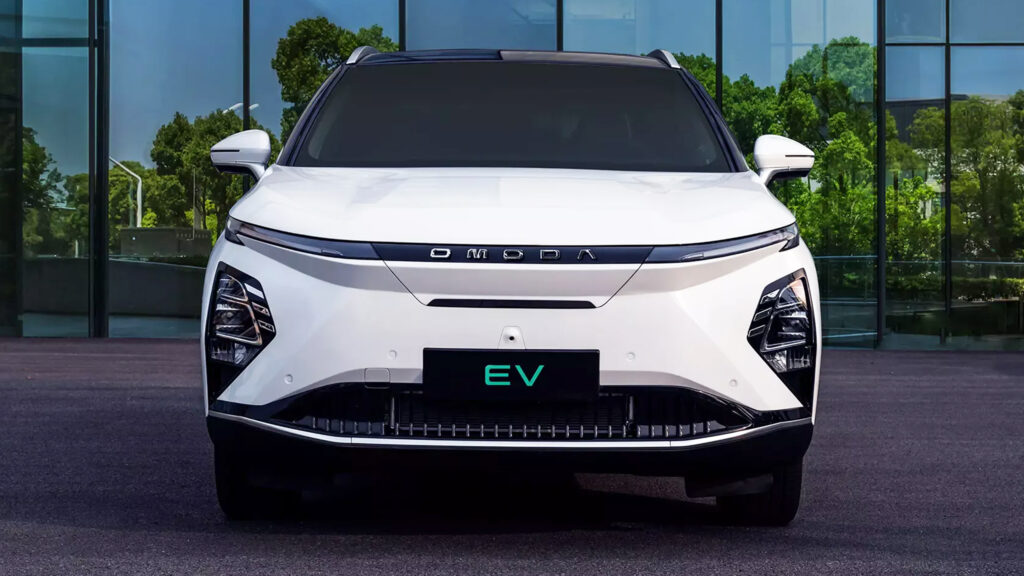
BYD will soon start production of its cars in Hungary and is also looking to add a plant in Spain to its local portfolio. In addition, several Jaecoo and Omoda vehicles are being built in Spain, and soon, Leapmotor will also start building EVs at the Stellantis site in Zaragoza. Geely will also manufacture vehicles in Valencia through a partnership with Ford.
Leapmotor
The key reason Chinese brands are building locally is to avoid paying hefty import tariffs. However, if the IAA enforces car companies to increase their reliance on European suppliers and manufacture more components locally, brands like BYD, which have a high degree of vertical integration, will have to consider if the investments are worthwhile.
“Because, to be considered ‘Made in Europe,’ large parts of the components, including the battery, would then have to be manufactured locally,” Gregor Williams from the Rhodium Group think tank told Automobilwoche .
var adpushup = window.adpushup = window.adpushup || {que:[]};
adpushup.que.push(function() {
if (adpushup.config.platform !== "DESKTOP"){
adpushup.triggerAd("bb7964e9-07de-4b06-a83e-ead35079d53c");
} else {
adpushup.triggerAd("9b1169d9-7a89-4971-a77f-1397f7588751");
}
});
Jaecoo 7

Comments
No comments yet — be the first to weigh in 👇
No comments yet. Be the first!