Oil tanker struck in Strait of Hormuz hours after Trump's new Iran sanctions threat
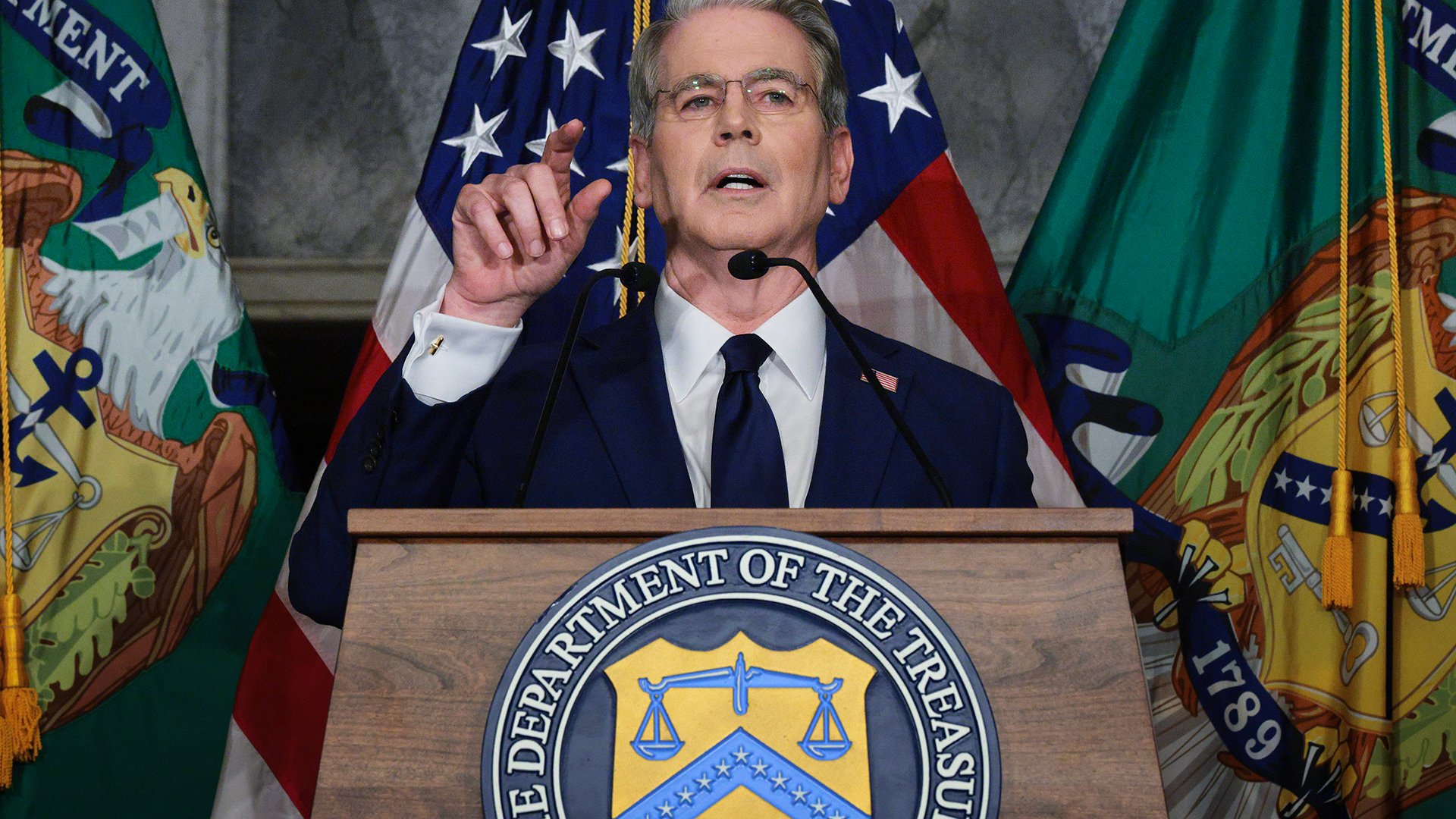
The UK Maritime Trade Operations center reported an oil tanker was struck by an unknown projectile 9 nautical miles northeast of Ash Shishah, Oman. The attack occurred hours after the Trump administration announced harsh new sanctions aimed at compelling Iran to return to negotiations. Treasury Secretary Scott Bessent had billed the move as an "economic D-Day" against Iran, though no firm deadlines were set.
Full text
There is a report of a new ship attack in the Strait of Hormuz, highlighting the difficulty of ending hostilities with Iran. The strike came hours after the Trump administration on Monday unleashed the threat of harsh new sanctions to further isolate the Islamic Republic. Though details were sparse, and no deadlines were issued, the goal was to compel the Iranians to return to negotiations by inducing additional economic pain instead of through bombardment. Originally touting the announcement as an “economic D-Day” against Iran, Treasury Secretary Scott Bessent’s lack of firm timelines presented Monday doesn’t seem to match that initial rhetoric.
Monday evening, the United Kingdom Maritime Trade Operations center (UKMTO) said it “received a report of an incident 9NM northeast of Ash Shishah, Oman.”
“The Master of an oil tanker reports the vessel has been struck by an unknown projectile causing damage to the engine room and disabling the vessel,” UKMTO reported on X. “Crew are reported safe. Environmental impact is unknown at time of report. Vessels are advised to transit with caution and report any suspicious activity to UKMTO. Authorities are investigating.”
UKMTO didn’t assign blame, but it’s obviously extremely likely the attack was carried out by Iran.
UKMTO WARNING 120-26
Click here to view the full product. https://t.co/lBi4Tk6MCl #MaritimeSecurity #MarSec pic.twitter.com/KL3RUtCGgH
— UKMTO Operations Centre (@UK_MTO) August 24, 2026
Hours before Bessent’s sanctions announcement, the Houthi rebels of Yemen also attacked another Saudi ship in the northern Red Sea. These strikes are a stark reminder that the war launched on Iran by the U.S. and Israel on Feb. 28 is still sending kinetic shockwaves around the region and roiling the global economy.
At a press conference in Washington, Bessent formally announced the broad outlines of a new list of measures to cut Iran off from global trade. The move comes as the Iranian economy, which was reeling even before the war broke out , continues to suffer after months of war and an ongoing U.S. naval blockade of its ports.
“We are level-setting with every country to tell them our expectations. We know who they are. They know who they are,” Bessent told reporters . “So when the hammer of U.S. Treasury actions falls upon them, they will have no one to blame but themselves.”
. @SecScottBessent : "This is a sustained campaign to collapse every last option for Iran. Let there be no ambiguity as to the position of the United States: an economic engagement of any kind with this murderous regime will expose those responsible to the full reach of American… https://t.co/SSfD50jMin pic.twitter.com/s6rqMhLnTv
— Rapid Response 47 (@RapidResponse47) August 24, 2026
Dubbed “Operation Economic Outcast,” the plan calls for every country to “be given a defined timeline to shut down its Iran-related business activity,” Axios noted . “If it fails to do so, the U.S. will impose secondary sanctions.”
As part of this effort, the Treasury Department “ issued determinations against five critical sectors––digital assets, technology, gold, aviation, and shipping––that the Iranian regime uses to try to prop up its failing economy,” it explained . In addition, the Office of Foreign Assets Control (OFAC) “sanctioned nearly 60 entities, individuals, and vessels in multiple jurisdictions that enable the Iranian regime’s recklessness, including illicit nuclear and missile technology procurement, cyber operations, and oil‑revenue generation networks.”
OFAC also “ suspended several general licenses that previously authorized certain remittance payments to Iran and Iranian access to the U.S. cultural and academic system,” Treasury noted. “OFAC issued additional guidance on the sanctions risks of bowing to Iranian demands related to shipping in the Strait of Hormuz.”
Operation Economic Outcast: Total Isolation of the Iranian Regime https://t.co/KZb1YjgvCS
— Rapid Response 47 (@RapidResponse47) August 24, 2026
Asked by a reporter what actions the U.S. might take against China, Bessent hinted that Beijing is not exempt. China has been a major importer of Iranian oil and its banks have helped support Tehran’s economy.
“We want to make clear here today that no one is above the reach of U.S. sanctions,” Bessent responded. “That if they facilitate transactions and are part of the ecosystem that turns Iranian oil into money, into repression, they will be targeted.”
BIG: Bessent on China and Iran:
We want to make clear here today that no one is above the reach of U.S. sanctions.
That if they facilitate transactions and are part of the ecosystem that turns Iranian oil into money, into repression, they will be targeted. pic.twitter.com/hVuFLlgaZa
— Clash Report (@clashreport) August 24, 2026
Bessent did not offer any further specifics. He was equally vague about any timelines for this effort.
“We are giving everyone the opportunity to remedy bad behavior,” Bessent told reporters. “Why would I want to blow up the global financial system?”
Bessent: "Why would I want to blow up the global financial system?" pic.twitter.com/vPXHtzS4IF
— Aaron Rupar (@atrupar) August 24, 2026
For their part, the Iranians dismissed Bessent’s plan and promised their own harsh response to the new sanctions.
“Americans know that no one buys their bombast; the United States is not in an economic position to further restrict its relations with other countries,” Mohammad Bagher Ghalibaf, speaker of the Iranian parliament, stated on X. “Iran’s trading partners, both in the media and through messages sent to us, have made it clear that they don’t take these statements into account anywhere.”
آمریکاییها میدانند که کسی گُندهلافیهای آنها را باور نمیکند؛ آمریکا از لحاظ اقتصادی در شرایطی نیست که بخواهد روابط خود با دیگر کشورها را محدودتر از این کند.
شرکای تجاری ایران، هم در رسانهها و هم با ارسال پیام به ما اعلام کردهاند که این اظهارات را به هیچ جا حساب نمیکنند.
— محمدباقر قالیباف | MB Ghalibaf (@mb_ghalibaf) August 24, 2026
“Any escalation of this situation will undoubtedly bring about consequences,” Iran’s Foreign Ministry spokesperson Esmail Baghaei said . “Our hands are not tied.”
Baghaei did not offer specifics, but Iran still possesses missiles and drones that it can use to strike U.S. and allied interests in the region. In addition, Tehran still maintains a large degree of control over shipping in the Strait of Hormuz. Even the threat of additional attacks could affect the flow of oil through the strategic chokepoint.
In addition, on Saturday, Mohsen Rezaei, the head of Iran’s national security council, threatened to attack U.S. businesses, The Telegraph reported . He also warned allies of the U.S. that they would be considered enemies, and their interests harmed if they joined Trump’s economic warfare. Cyberattacks on U.S. water systems that officials suspect may be linked to Iran-backed hackers have been reported in at least a dozen states, CBS News reported earlier this month . Iranian-linked hackers are also suspected of forcing a small British power generator offline for four days last month. Aside from that, there are still many U.S. business interests in the Middle East, and especially energy firms, with major facilities right across the Persian Gulf.
While the U.S. and Iran trade threats, the Houthis carried out a fresh strike on Saudi shipping as we noted earlier in this piece.
The Iranian-backed group claimed it hit the oil tanker Amzan off the coast of Yanbu. That’s the kingdom’s key port on the northern Red Sea, about 600 miles north of Houthi territory.
Ansarallah says it struck the Saudi oil tanker Amzan with a ballistic missile off Yanbu in the northern Red Sea, declaring the attack part of its maritime blockade on Saudi Arabia and its “blockade for blockade” campaign.
Military spokesperson Yahya Saree said the missile hit… pic.twitter.com/PS6vna9XA2
— Drop Site (@DropSiteNews) August 24, 2026
Both the UKMTO and the Ambrey maritime security company confirmed the attack, which took place about 64 nm west of Yanbu, Ambrey noted.
After the vessel was hit, “the Egyptian Navy was reported to have responded and was transiting to the area of interest to conduct a rescue operation,” Ambrey stated. “At the time of the attack, the vessel was not transmitting its AIS signal. Its previous AIS transmission was recorded at 02:33 UTC on 8 August.”
UKMTO WARNING 119-26
Click here to view the full product. https://t.co/mmhfDsrx3V #MaritimeSecurity #MarSec pic.twitter.com/knJNCNwtGE
— UKMTO Operations Centre (@UK_MTO) August 24, 2026
The ship attack was the latest Houthi strike against the Saudis. The Yemen-based group had already struck Saudi ships in the southern part of that body of water and refineries along the northern portion after imposing a blockade on the Bab al-Mandeb Strait (BAM), leading several oil tankers in the Red Sea to avoid that route in favor of the Suez Canal . The expansion of the Houthi campaign against Saudi shipping began earlier this month with an attack off the port of Yanbu on the NCC Wafa , a Saudi oil tanker.
Bab al-Mandeb Strait. (Google Earth)
Though both the Strait of Hormuz and the BAM remain under pressure, ship traffic ticked upwards in both chokepoints last week, according to the Kpler global trade intelligence firm. Those numbers alone, however, don’t paint the full picture, Kpler cautioned.
“Traffic edged higher through the Strait of Hormuz and Bab el-Mandeb last week, but headline volumes obscure contrasting risk signals,” Kpler cautioned on X. “Hormuz crossings rose 2.5% to 121, while laden transits fell 27% and sanctioned crossings increased from 9 to 16. Use of Iran’s unilateral routing scheme also climbed to 46.3% of crossings.”
“Bab el-Mandeb traffic rose 3.1% to 269 crossings,” the firm added. “Dark transits declined, but sanctioned and shadow fleet crossings remained broadly flat at 74 combined. The data suggest commercial substance is weakening at Hormuz even as overall traffic holds up, while Bab el-Mandeb remains resilient despite an active threat environment.”
Hormuz traffic masks rising risk
Traffic edged higher through the Strait of Hormuz and Bab el-Mandeb last week, but headline volumes obscure contrasting risk signals.
Hormuz crossings rose 2.5% to 121, while laden transits fell 27% and sanctioned crossings increased from 9 to… pic.twitter.com/iHKsCigEJL
— Kpler (@Kpler) August 24, 2026
While the U.S. is threatening further moves to hurt the Iranian economy, doing so has inherent risks. For decades, Iran has weathered sanctions and isolation and yet the regime has persevered. It withstood mass protests against it earlier this year with bloody crackdowns that played a big role in moving U.S. President Donald Trump to take military action.
Iran continues to wield the cudgel of threatening the U.S. by resuming attacks on its assets in the region as well as against allies. In July, Tehran took rare initiative with a surprise attack on U.S. forces in Jordan, a contrast to its previous pattern of responding to strikes.
For the U.S., continued conflict risks further expenditure of its stocks of high-end offensive and defensive weapons and strain on its troops and equipment . It would also add new economic pressure. To help mitigate gasoline prices that shot up during the war, the Trump administration began releasing a large amount of oil from the strategic petroleum reserve. That move set off a cascade of downstream effects.
“Stocks of crude oil in the U.S. Strategic Petroleum Reserve (SPR) fell by about 3.7 million barrels to 289.7 million barrels last week, the lowest level since November 1982,” Reuters reported , citing data from the Department of Energy. “The drawdowns are part of a U.S. agreement to release 172 million barrels from the facility.”
Barchart, the global market data and technology firm, offered a stark assessment of the state of the SPR.
“The U.S. has just 41 days of crude oil inventory left, the lowest level in half a century,” Barchart noted on X.
While that doesn’t mean gas pumps in the U.S. are about to shut down, the alarm bells are ringing.
U.S. has just 41 days of crude oil inventory left, the lowest level in half a century pic.twitter.com/qukNA5YqnT
— Barchart (@Barchart) August 24, 2026
Earlier this month, the president said his new strategy was to be “low-keying it” in Iran, a suggestion wants to avoid further major military action. However, in addition to global and domestic economic pressure, there are other factors weighing on Trump as he decides what to do next with regard to Iran.
The war is unpopular and the midterm elections are fast approaching. The White House and Republican leadership remain keenly aware that the conflict dragging on until November won’t help the party’s bid to hold onto control of both the Senate and the House.
We will have to see if the Treasury’s plan is actually enacted and what Iran’s response will be. As it sits now, the administration is clearly hoping the threat of such economic isolation will press them to the negotiating table, but Iran has shown no signs yet that it will.
Contact the author: howard@twz.com
The post Ship Struck In Strait Of Hormuz Hours After Trump’s “Economic D-Day” Campaign On Iran Unveiled appeared first on TWZ .
Similar stories
Similar stories
Are economic sanctions more effective than military strikes in pressuring Iran?
Comments
No comments yet
Comments
No comments yet — be the first to weigh in 👇
No comments yet. Be the first!