Full text
Keep our news free from ads and paywalls by making a donation to support our work!
Notes from Poland is run by a small editorial team and is published by an independent, non-profit foundation that is funded through donations from our readers. We cannot do what we do without your support.
President Volodymyr Zelensky has signed a law establishing a new national pantheon to commemorate Ukrainian historical heroes. While it is not yet known which figures will be honoured there, Poland has expressed concern that they will include nationalist leaders associated with massacres of Poles in World War Two.
On Sunday, a Polish deputy foreign minister warned that Kyiv “will have a huge problem” integrating with the European Union if it celebrates such individuals. But Zelensky reiterated that “only Ukrainians will decide who is a hero to us”.
The establishment of the pantheon has taken place against the backdrop of a diplomatic crisis triggered in May by Zelensky’s decision to name a military unit after the “heroes of the Ukrainian Insurgent Army (UPA)”.
Parts of the UPA were responsible for the so-called Volhynia massacres during World War Two, in which Ukrainian nationalists killed around 100,000 Polish civilians, mostly women and children, as part of an ethnic cleansing operation.
Poland regards the episode as a genocide, though Ukraine strongly rejects that label . Many Ukrainians hold the UPA in high regard for the role that it played in fighting for independence from Moscow-backed Soviet rule.
Click here to help us continue providing news free from paywalls and ads
Poland condemned Zelensky’s decision and stripped him of the country’s highest honour, the Order of the White Eagle. In response, the Ukrainian president announced in late June that he would seek to create a new national pantheon, because “no one will dictate which heroes we should honour”.
A bill creating the pantheon was subsequently approved by the Ukrainian parliament in July, and, on Saturday, Zelensky signed it into law, just ahead of today’s celebrations of Ukrainian independence day.
“A Ukrainian pantheon will definitely be established, and only Ukrainians will decide for themselves who our heroes are,” declared Zelensky at a meeting with military veterans on Saturday. “All our true heroes…who fought for Ukraine, for our independence…deserve due honour.”
However, the introduction of the law only now begins the process of building the pantheon itself – where the remains of those chosen as national heroes will be reburied – and the establishment of an advisory body that will decide which figures should receive such an honour.
It therefore remains unknown for now who will be included in the pantheon. However, on Sunday, Polish deputy foreign minister Marcin Bosacki warned against honouring figures associated with the Volhynia massacres.
“Every nation and its government has the right to choose the heroes they deem appropriate,” emphasised Bosacki in an interview with broadcaster TVP.
“However, if individuals responsible for mass crimes against civilians, such as [Stepan] Bandera or [Roman] Shukhevych, are included in Ukraine’s national pantheon, it would significantly worsen Ukraine’s relations not only with Poland but with Europe in general,” he added.
Bandera was the leader of a faction of the Organisation of Ukrainian Nationalists (OUN-B), which in turn founded the UPA. Shukhevych was a military leader of the UPA. Both figures continue to be honoured in Ukraine , often prompting protests from Poland .
🇵🇱 Polskie MSZ ostrzegło Ukrainę przed „ogromnymi problemami” z Europą z powodu Bandery i Szuchewycza
„Ukraina wie, że z tymi, którzy zabijali nie tylko Polaków, ale także Ukraińców, Czechów, Żydów i Romów, na swoich sztandarach będzie miała ogromne problemy z integracją… pic.twitter.com/hyujMppbEw
— NEXTA Polska (@nexta_polska) August 24, 2026
“Ukraine knows that, with those who murdered not only Poles, but also some Ukrainians, Czechs, Jews and Roma, on its banners, it will have a huge problem integrating with Europe,” added Bosacki.
However, the deputy minister also emphasised that, “strategiaclly, the interests of Poland and Ukraine remain very close” and that Poland must continuing “supporting Ukraine in defeating the aggressive Russia”.
“We do not differ much with the Ukrainians, only with certain parts of the Ukrainian authorities after their absolutely erroneious decision to name a unit after the ‘heroes of the UPA’.”
The proportion of Poles who hold a negative view of relations with Ukraine has risen to the highest level ever recorded by state research agency CBOS
Meanwhile, the proportion who believe reconciliation with Ukraine is possible is at its lowest ever level https://t.co/YYBCFkVxNr
— Notes from Poland 🇵🇱 (@notesfrompoland) August 12, 2026
Polish government figures have previously made it clear that, if Ukraine honours figures associated with historical massacres, that will make it harder for the country to achieve its ambitions of joining the EU.
In June, deputy prime minister Władysław Kosiniak-Kamysz warned that “you can’t build a pantheon to those who destroy European cooperation”, and that countries seeking EU membership should “not build national identity…on events, people or systems that in some way raise objections or pain among EU partners”.
Kosiniak-Kamysz declared that, just as Zelensky said no one will tell Ukraine who they can honour, “no one will tell us how to vote on the entry of any state into the European Union”. That was an allusion to the fact that Poland, like all other EU member states, can veto Ukraine’s accession to the bloc.
Polish and Ukrainian media have widely quoted Poland's deputy PM as saying: “With Bandera, Ukraine will not enter the EU.”
However, he did not actually speak those words.
We explain what @KosiniakKamysz actually said and how it came to be misinterpreted https://t.co/S3bozRIJTA
— Notes from Poland 🇵🇱 (@notesfrompoland) July 1, 2026
Notes from Poland is run by a small editorial team and published by an independent, non-profit foundation that is funded through donations from our readers. We cannot do what we do without your support.
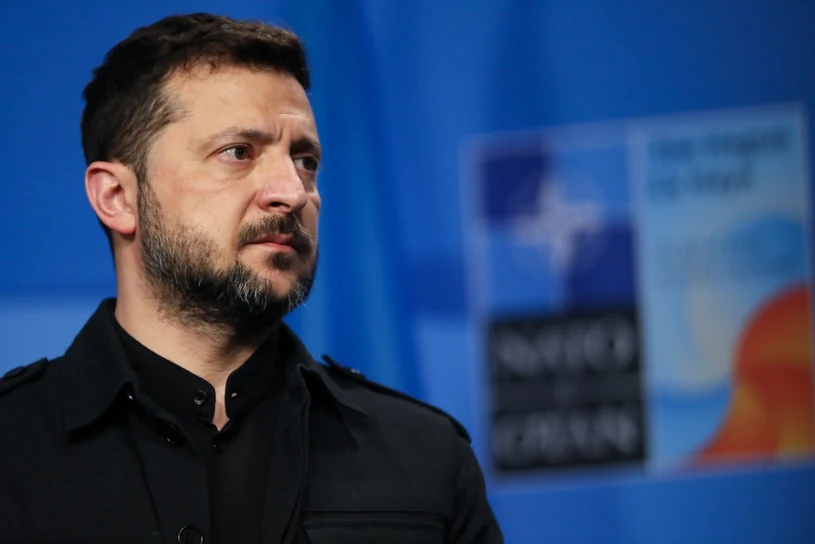
Main image credit: Presidential Office of Ukraine (under CC BY-NC-ND 4.0 )


Comments
No comments yet — be the first to weigh in 👇
No comments yet. Be the first!