Full text
A £5 million trial is examining whether AI can assist in the reduction or removal of contrails from aircraft
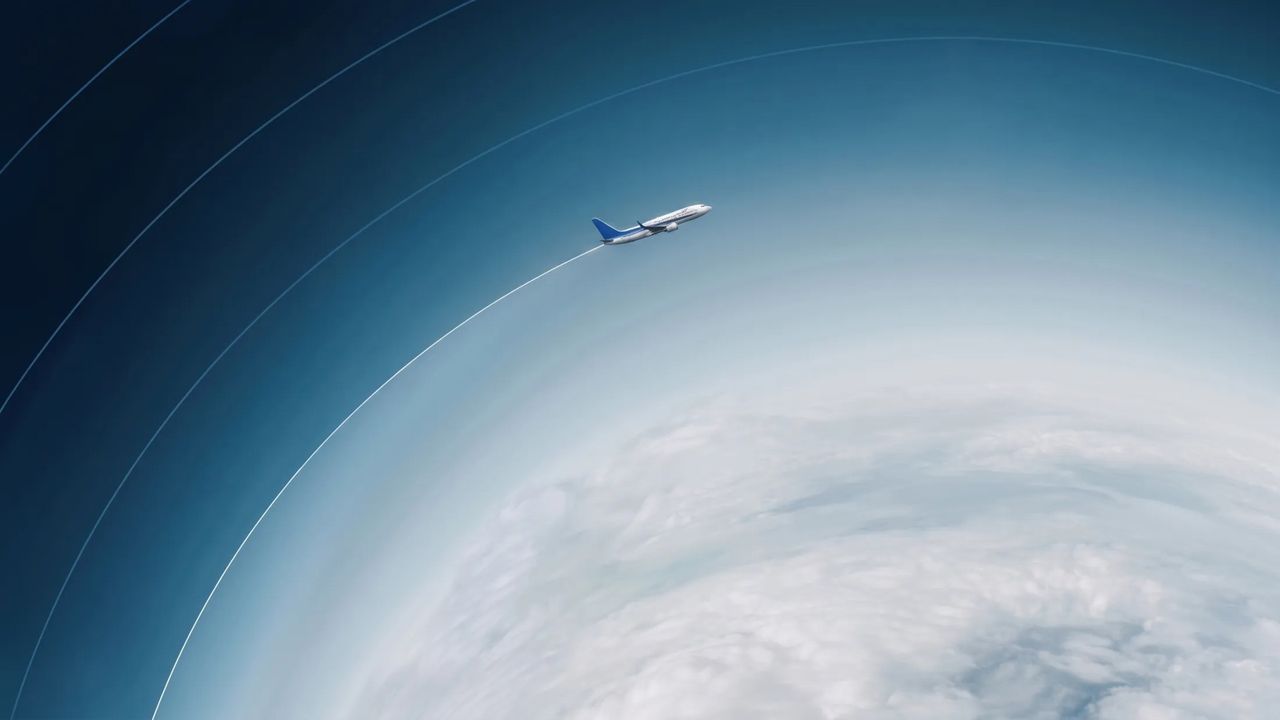
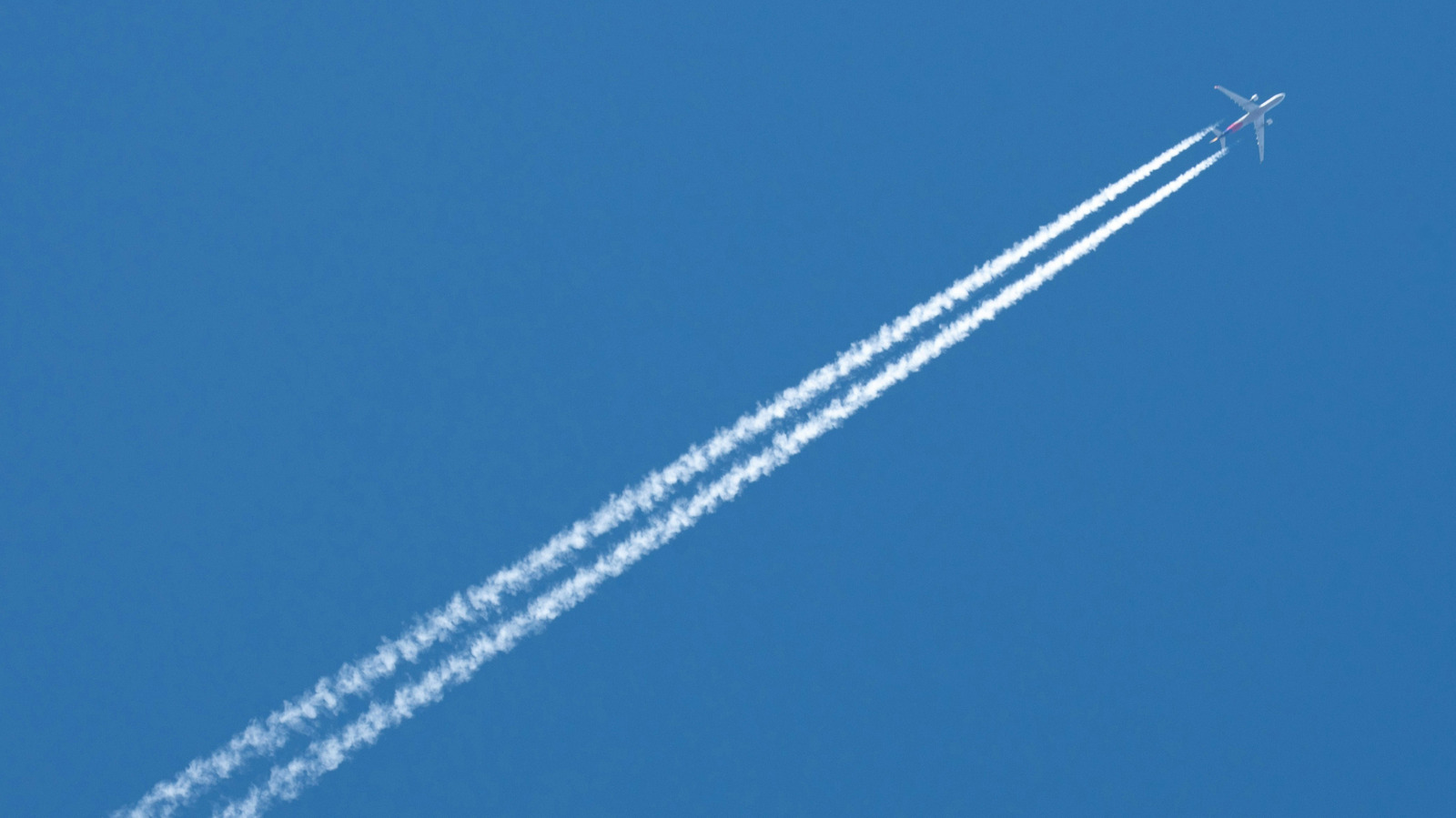
Contrails appear when the exhaust from aircraft engines hits the cold, high-altitude air, which creates ice crystals
Also known as vapour trails, contrails are believed to contribute to climate change
Google, the Met Office, and the UK Government are cooperating with NATS (formerly National Air Traffic Services) and the University of Cambridge and Imperial College London on Operation Blue Skies , which aims to reduce or remove contrails from aircraft traveling from Europe to the USA and Canada.
Targeting the North Atlantic, the project will explore the possibility of diverting craft around areas of particularly cold air, thereby reducing contrails (also known as vapour trails) and avoiding their impact on the climate.
Google’s contribution will include the use of AI to learn from the gathered data and build a picture of how contrails are formed over the North Atlantic.
Landmark consortium
The organizations collaborating on this research project each play their own role.
While Google is providing AI models, machine learning, and satellite imaging (pro bono, at an estimated £1.4 million value), NATS oversees airspace and safety assessments, and the educational institutions evaluate outcomes and independently verify the data and results. Meanwhile, the Met Office is developing new contrail forecasting, along with meteorology.
Also involved is the website Contrails.org, which is designing trial parameters and handling forecast assessments.
Funding for the project is coming from the UK government’s Department for Transport, bringing together the Aerospace Technology Institute (ATI), the Department for Business, Innovation, Science and Trade (BIST) and Innovate UK under its ATI Programme.
“Operation Blue Skies aims to demonstrate that solving the challenge of contrails is operationally practical,” says Google, “providing a validated blueprint for how our airspaces can be managed to drastically reduce aviation's climate impact.”
Operation Blue Skies is not the only such project in operation (Google previously worked with American Airlines on a similar basis), but it is the first to be backed by government funding.
33% of aviation climate warming
The project will focus on the eastern half of the North Atlantic corridor, the Shanwick Oceanic zone, where around 5% of global contrail warming occurs. Running for 30 months, two operational trials running four months each will observe 10,000 flights, with some given slight deviations to reduce travel “through contrail-sensitive airspace.”
If successful, findings from the Blue Skies Project could become standard operational procedure during flights. Dr. Paul Hodgson, Google's technical lead for the operation, told the BBC , "We think that contrail warming is responsible for something like a third of all aviation climate warming. The CO2 penalty is in the order of less than 1%, compared to the contrail cost, which is of a similar order of magnitude to all of the CO2 of aviation."
Operation Blue Skies will commence formal trials over the winter of 2026-2027, with the second trial period during the winter of 2027-2028.
Comments
No comments yet — be the first to weigh in 👇
No comments yet. Be the first!