Full text
Hyundai could expand Georgia plant production to 800,000 vehicles annually by 2028.
Expansion could make Hyundai’s Metaplant biggest vehicle assembly operation in US.
Future American investment could include midsize pickups and body-on-frame SUVs.
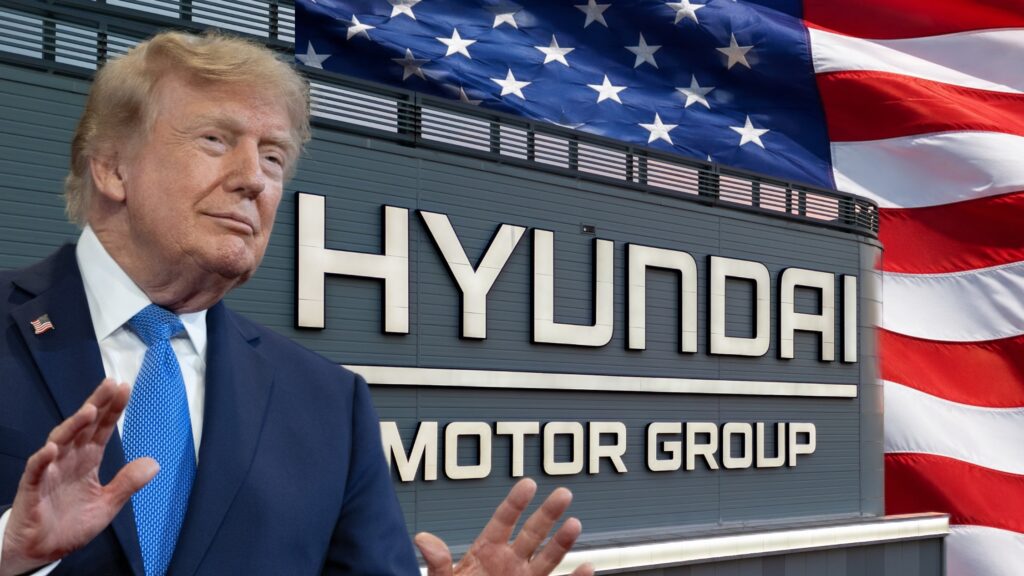
Hyundai ’s still getting comfortable in its enormous new HMGMA Georgia factory, but apparently 500,000 cars per year might not be enough. The automaker is considering boosting annual capacity to somewhere between 700,000 and 800,000 vehicles by 2028, potentially making it America’s biggest assembly plant.
var adpushup = window.adpushup = window.adpushup || {que:[]};
adpushup.que.push(function() {
if (adpushup.config.platform !== "DESKTOP"){
adpushup.triggerAd("0f7e3106-c4d6-4db4-8135-c508879a76f8");
} else {
adpushup.triggerAd("82503191-e1d1-435a-874f-9c78a2a54a2f");
}
});
CEO Jose Muñoz revealed the possibility to CNBC following the debut of the Genesis GV90 flagship SUV, stressing that nothing has been finalized. The expansion would form part of Hyundai’s previously announced $26 billion US investment that finishes in 2028 as it rapidly increases local production.
Related: Hyundai Is About To Flood The North American Market With 36 New Models
The company has good reason to want to up production. Hyundai is targeting at least 80 percent of the vehicles it sells in America to be locally produced by the end of the decade, versus around 40 percent in 2024. And it is planning to unleash dozens of new models in the same timeframe.
var adpushup = window.adpushup = window.adpushup || {que:[]};
adpushup.que.push(function() {
if (adpushup.config.platform === "DESKTOP"){
adpushup.triggerAd("ea4d4b5a-f8e5-4d5d-9d9a-53a3b956b6cd");
} else{
adpushup.triggerAd("44c0a4dc-e25b-4ba5-ac64-2c510461b92a");
}
});
“For that purpose, we need to add more capacity,” Munoz told CNBC , describing the US as Hyundai’s “most important market in the world besides Korea.”
President Trump’s tariffs are adding urgency. Imports from South Korea currently face a 15 percent tariff, and Muñoz acknowledged that those costs are encouraging Hyundai to accelerate localization plans that were already underway.
From EVs To Trucks
Hyundai announced the Georgia facility in 2022 and has subsequently expanded its ambitions for the $7.6 billion site. The Metaplant currently builds the Hyundai Ioniq 5 and Ioniq 9 EVs alongside the Kia Sportage Hybrid, but its eventual menu could become much broader.
var adpushup = window.adpushup = window.adpushup || {que:[]};
adpushup.que.push(function() {
if (adpushup.config.platform !== "DESKTOP"){
adpushup.triggerAd("bb7964e9-07de-4b06-a83e-ead35079d53c");
} else {
adpushup.triggerAd("9b1169d9-7a89-4971-a77f-1397f7588751");
}
});
And Hyundai might need even more manufacturing capacity elsewhere. Muñoz says the company is examining additional US investment specifically for body-on-frame trucks and SUVs, although he’s keeping the details under wraps.
Boulder Concept Hints At Future SUV
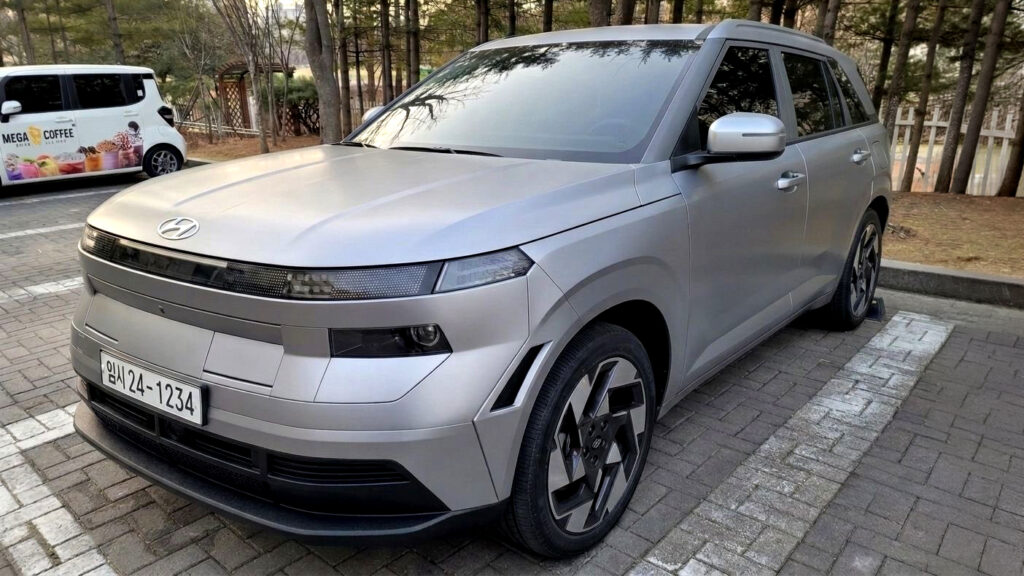
We already have a pretty good clue what that could involve. Hyundai recently unveiled the Boulder concept , a rugged ladder-frame SUV previewing the architecture beneath a new American-focused midsize pickup due by 2030. That truck is being developed and built in America with locally sourced steel, and a production SUV inspired by the Boulder looks increasingly difficult to bet against.
That would take Hyundai into territory currently dominated by machines such as the Ford Ranger and Bronco, Toyota Tacoma and 4Runner, and Jeep Wrangler.
var adpushup = window.adpushup = window.adpushup || {que:[]};
adpushup.que.push(function() {
if (adpushup.config.platform !== "DESKTOP"){
adpushup.triggerAd("b25ecba7-3bbb-4ea7-a3a8-dbea91695c07");
} else {
adpushup.triggerAd("e46c436a-adeb-4b5e-a2c7-56bc36561c10");
}
});
Hyundai certainly isn’t lacking momentum to pull off that kind of challenge. Its US market share has climbed from 8.4 percent in 2020 to 11.2 percent last year when Kia is included, while combined sales have risen by nearly half this decade.
Hyundai


Comments
No comments yet — be the first to weigh in 👇
No comments yet. Be the first!