Full text
NATO is planning to fortify the border with Russia and its allies with a network of sensors and drones, with AI assistance
The Eastern Flank Deterrence Initiative will track threats along the NATO borders with Russia and Belarus
The strategy mirrors the steps taken by Ukraine to bolster its defenses against Russian aggression
NATO’s concerns about its border with Russia and Belarus have grown into plans to deploy sensors and drones along 3,500 kilometers, with an AI element to assist in threat detection and tracking.
Known as the Eastern Flank Deterrence Initiative, the AI will be used to control fleets of drones, but the AI’s role in the kill chain will not involve decision-making.
Instead, human operators will be given the final say on whether a drone can strike a target.
Millions of drones
The plans follow a similar approach in Ukraine, where the borders with Russia and Belarus are closely observed by AI-managed drones. But the move towards AI looks set to evolve the procedural kill chain into a kill web, where information provided by drones and sensors with AI oversight is provided to a human operator for a decision.
The Eastern Flank Deterrence Initiative (EFDI) is a fully fledged operation, complete with a data backbone, for which US Army Maj. Ben Schiff is the product manager. The EFDI Data Backbone is described as a “digital ‘nervous system’” for the project, which connects not just the sensors and drones but also satellites and the information systems of NATO members.
Automation of the drones is mainly concerned with the “boring” jobs, like hovering over target areas to detect incursions. But the drones don’t attack unprompted. Instead, this is brought to the human operative for the final decision.
“So the humans are deciding what the drone does, but they don't necessarily need to take the action of flying it because we don't have a million pilots,” said Schiff . “We can't fly a million drones at the same time.”
The kill web
Traditionally, drone strikes have been overseen by a procedural kill chain, whereby information is assessed by a remote operator ahead of a decision being made to attack a target. The EFDI program is unifying data to progress NATO’s approach from a kill chain to “kill web.” This means the information accumulated on the target – from drones but also sensors and satellites, as well as member country information – can be quickly passed to operators. But the devices assembling the data need to be able to work together.
Maj. Matt Blubaugh, a spokesperson for US Army Europe and Africa, says "The value of a drone, sensor, or other capability is not determined solely by its individual performance [but] its effectiveness depends on how well it integrates into the broader operational ecosystem."
The model has already been proved in combat, such as taking out an Iranian Shahed drone in Kuwait.
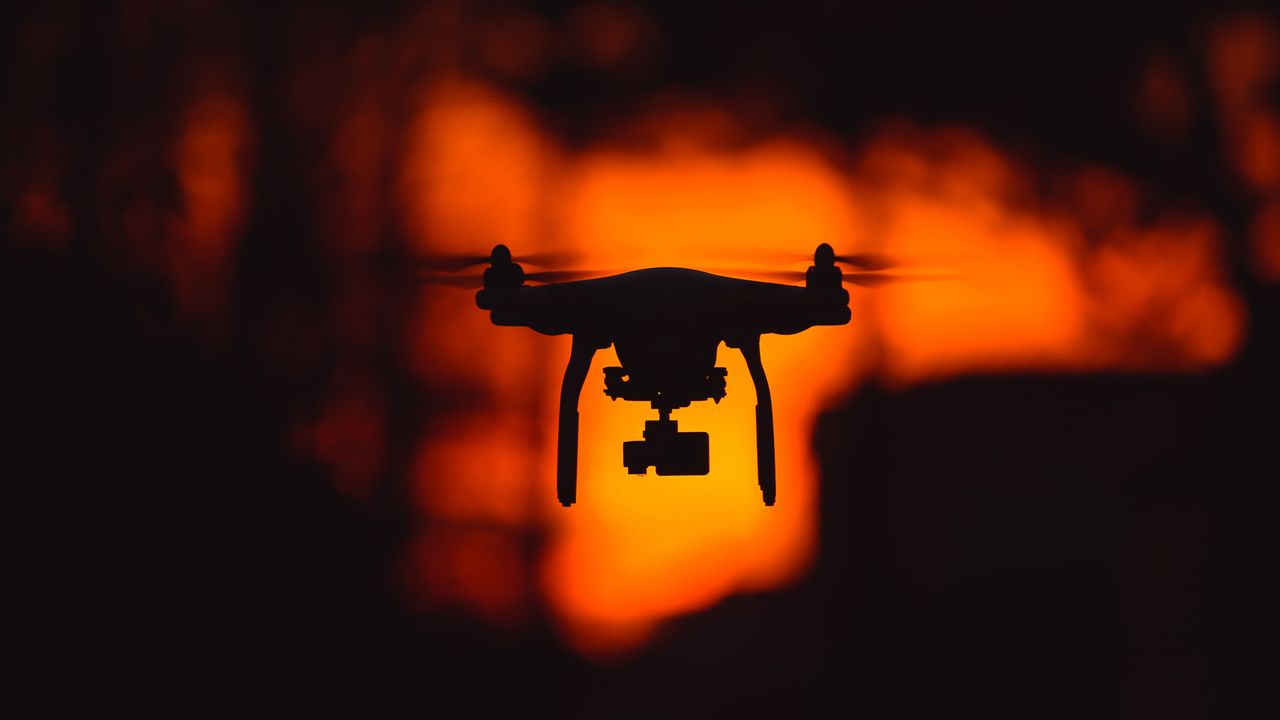
 NATO builds digital shield in the east — drones and AI to detect Russian attacks
Onet Wiadomości · 7d ago
NATO builds digital shield in the east — drones and AI to detect Russian attacks
Onet Wiadomości · 7d ago
 Russian drone breaches Romanian airspace — Kyiv shelled, at least 12 killed
Wirtualna Polska · 1h ago
Russian drone breaches Romanian airspace — Kyiv shelled, at least 12 killed
Wirtualna Polska · 1h ago
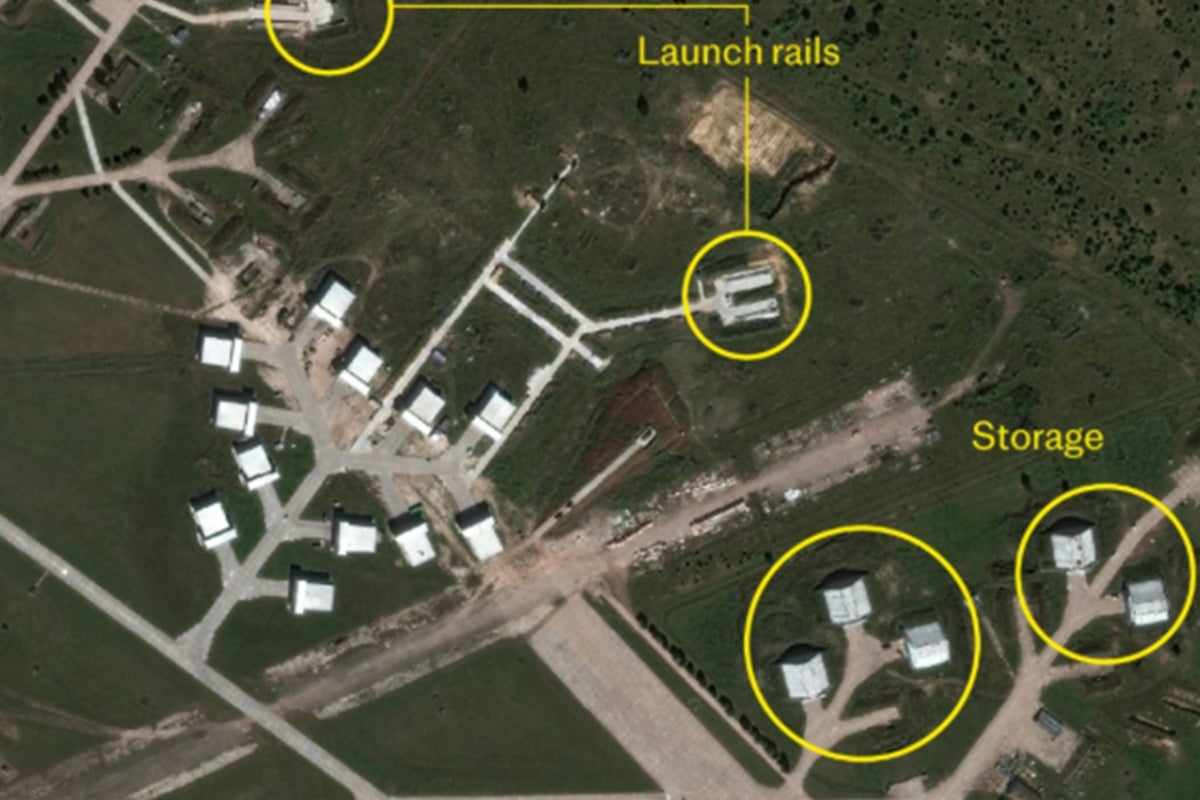 Russia expanding secret drone bases capable of striking deep into NATO territory
The Independent World · 2d ago
Russia expanding secret drone bases capable of striking deep into NATO territory
The Independent World · 2d ago
Comments
No comments yet — be the first to weigh in 👇
No comments yet. Be the first!