Full text
DDR5 RAM pricing has risen swiftly again in Germany
That means two months of sharp increases, backing up recent rumors that memory is going to get pricier
An exec from the storage world has also said that SSD-related pricing pain is seemingly going to last until 2030
I've recently been writing about how the RAM crisis appears to be reaching new levels of severity , and unfortunately there's more evidence that the situation is worsening with the price of system memory and storage.
Wccftech noticed that 3D Center has a new set of monthly figures for the German retail market which shows that as of mid-August, DDR5 RAM pricing has risen to 486% of the cost it was in July 2025. So, effectively it's five times pricier than before the crisis began a year ago.
That's a substantial jump from the 445% level seen last month , and an even bigger increase than the previous month, in which prices were at 419%. To look at it another way, prices have risen 16% in August compared to the cost of DDR5 in mid-June.
Internal SSD prices have also increased 7.7% month-on-month in the German retail market – and those drives are now 2.2 times as expensive as they were pre-crisis – and Wccftech also picked up another interesting but bleak storage revelation.
Pua Khein-Seng, the CEO of Phison, which makes controllers for SSDs, observed that the NAND market (flash memory chips for SSDs) is in deeper trouble than was previously believed in terms of the time needed to ramp up production.
Taiwan's Commercial Times reports that Pua said he recently had a conversation with senior executives from a NAND manufacturer, and that he asked about how long it would take from investment (being made now) to actual mass production being realized.
The CEO noted (bear in mind translation issues): "He originally estimated it would take about two years, but the answer they gave was 'four years.'"
What this means is that the expectation is now that NAND supply difficulties are going to persist through to 2030 (rather than 2028).
Analysis: there may be trouble ahead…
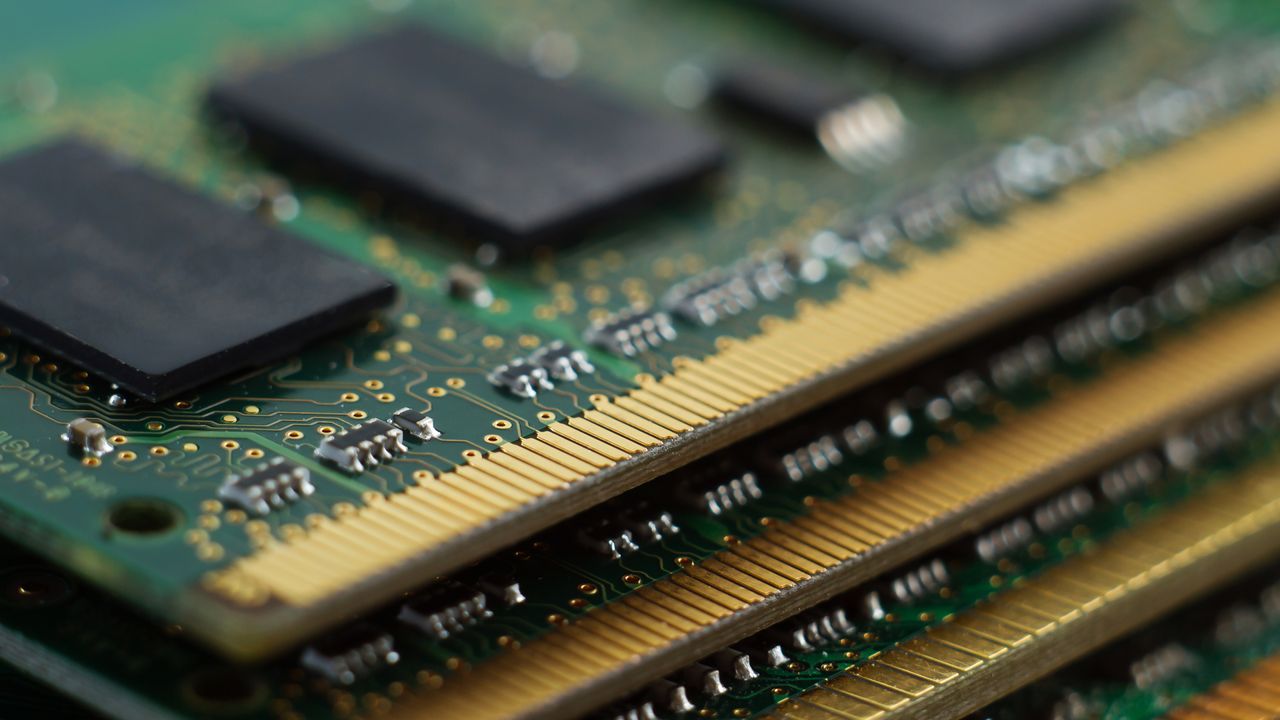
(Image credit: Shutterstock / Eshma) That's an unsettling prediction from the storage world, coming as it does on top of a lot of other recent bad news suggesting that the RAM crisis will last a long time, and possibly to 2030 and beyond – and that the remainder of this year, and 2027, are going to see matters get worse .
The German retail market appears to be a clear indicator of how things are going, seeing as DDR5 pricing had dropped slightly and then plateaued (more or less) since the beginning of 2026, but started a sharp climb in July as noted. Yes, this is just one source of info, but it's a snapshot of the market of a large European country, and it correlates with all the gloomy predictions we're hearing of late.
As 3D Center points out (again, this is translated): "The bigger picture now points to a worrying price trend, which is likely to break exorbitant levels very soon, unless this trend is halted – for which there are currently no indications."
Sadly, it seems that RAM and storage prices really are going to increase as 2026 rolls on. While there would appear to still be room for further hikes to SSDs (sadly), with system RAM it's arguable how much more consumers can take before they completely refuse to buy until costs come down at least somewhat. That said, new desktops and laptops are still going to be sold, so this isn't just about refusing to upgrade your home PC's memory, of course.
 RAM crisis set to push up Xbox and PlayStation prices ahead of GTA 6 launch
BitHub.pl · 7d ago
RAM crisis set to push up Xbox and PlayStation prices ahead of GTA 6 launch
BitHub.pl · 7d ago
 ADATA CEO: RAM and SSD prices will keep rising longer than anyone expects
benchmark.pl · 27d ago
DNA-semiconductor hybrid memory device uses 100 times less power than conventional chips
Science Daily · 10h ago
ADATA CEO: RAM and SSD prices will keep rising longer than anyone expects
benchmark.pl · 27d ago
DNA-semiconductor hybrid memory device uses 100 times less power than conventional chips
Science Daily · 10h ago
Comments
No comments yet — be the first to weigh in 👇
No comments yet. Be the first!