Full text
MIT finds EVs cut lifecycle emissions 40 to 60 percent in most locations.
Even the dirtiest US grid fails to make an EV the worse option.
A gas car burns the same fuel forever, while the grid keeps improving.
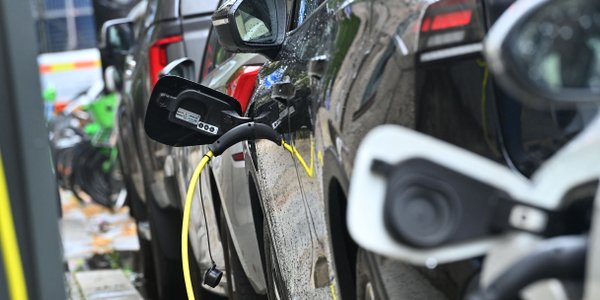
Well, there’s no way that this information will be controversial at all. A new study out of MIT appears to completely crush the claim that EVs simply move pollution from the tailpipe to a smokestack. The analysis tackled the variables usually missing from that argument, like where drivers live, what powers their grid, what they drive, how far they travel, and even the weather.
var adpushup = window.adpushup = window.adpushup || {que:[]};
adpushup.que.push(function() {
if (adpushup.config.platform !== "DESKTOP"){
adpushup.triggerAd("0f7e3106-c4d6-4db4-8135-c508879a76f8");
} else {
adpushup.triggerAd("82503191-e1d1-435a-874f-9c78a2a54a2f");
}
});
Its conclusion isn’t that EVs are perfect. It’s that battery-electric vehicles beat comparable gas cars on lifecycle emissions across the U.S., including where electricity still comes heavily from fossil fuels.
Published in Environmental Research Letters, the MIT-led research first reported by InsideEVs found that EVs cut emissions by 40 to 60 percent in most locations. That’s not cherry-picking statistics either. The researchers considered vehicle and battery manufacturing, fuel and electricity production, regional grids, local temperatures, vehicle types, and how people actually drive. Re-read that maybe, because that’s a dearth of variables and considerations.
Read: Should Fossil Fuel Ads Be Banned Like Tobacco
var adpushup = window.adpushup = window.adpushup || {que:[]};
adpushup.que.push(function() {
if (adpushup.config.platform !== "DESKTOP"){
adpushup.triggerAd("89c65a14-4682-4807-a4bb-5436c5361bee");
} else{
adpushup.triggerAd("f25825bd-1260-4574-84ce-2b26e315fad8");
}
});
The reason is pretty simple. Internal-combustion engines waste an enormous amount of the fuel they burn as heat. EVs lose energy too, including at the power plant and during transmission, but electric motors are so much more efficient that they retain a massive advantage even after those losses are counted. A dirty grid narrows the gap. It doesn’t magically erase it.
What The Study Doesn’t Claim
Credit: Stellantis
Before the angry comments come in, though, it’s worth being clear about what this study does and doesn’t say. It is a lifecycle greenhouse-gas analysis, so battery production is already in the equation. But it doesn’t claim EVs have no environmental cost, nor does it settle every issue people may cram under the word “green.”
Mining, water use, local air pollution, labor practices, battery recycling , and grid reliability all deserve their own scrutiny. Like every model, its results also depend on assumptions about battery life, manufacturing, charging behavior, and future electricity mixes. Those details can affect the size of an EV’s advantage from place to place.
Still, the core finding holds. Even with the country’s most carbon-intensive electricity mix, the researchers found battery EVs do not increase lifecycle emissions compared to combustion vehicles. That’s a remarkably direct answer to the smokestack argument.
var adpushup = window.adpushup = window.adpushup || {que:[]};
adpushup.que.push(function() {
if (adpushup.config.platform !== "DESKTOP"){
adpushup.triggerAd("bb7964e9-07de-4b06-a83e-ead35079d53c");
} else {
adpushup.triggerAd("9b1169d9-7a89-4971-a77f-1397f7588751");
}
});
The Grid Only Gets Cleaner
And the picture should keep improving. The EIA says wind and solar accounted for a record 19 percent of U.S. electricity generation in 2025. Every cleaner kilowatt-hour makes the EV already in your driveway cleaner to run. A gas car gets no such upgrade. It just keeps burning gas. You can prefer an ICE car. That’s fine. Plenty of us do. But pretending a fossil-fueled grid turns an EV into a gas car isn’t skepticism. At this point, it’s simply ignoring the evidence.
var adpushup = window.adpushup = window.adpushup || {que:[]};
adpushup.que.push(function() {
if (adpushup.config.platform !== "DESKTOP"){
adpushup.triggerAd("bb7964e9-07de-4b06-a83e-ead35079d53c");
} else {
adpushup.triggerAd("9b1169d9-7a89-4971-a77f-1397f7588751");
}
});
Credit: Tesla | Lead Photo: BP Oil

Comments
No comments yet — be the first to weigh in 👇
No comments yet. Be the first!