Full text
Video game lawyer Haley MacLean has seen such a sharp rise in anti-AI wording in the game dev and publisher contracts she reviews that virtually "all" of her clients now explicitly oppose the tech.
Speaking with GamesRadar+, MacLean , a corporate IP lawyer and head of video game practice at Voyer Law, explains just how common clauses banning generative AI have become.
MacLean frequently deals with publishing agreements for "indie up to AA" studios. These spell out "the services that the publisher is going to offer in exchange for [revenue] share." And in these agreements, more developers and publishers are pushing to completely forbid any use of generative AI, she says.
"It's turned around, especially in the past year. I would say about two to three-ish years ago, you'd see a little bit of it," she says of anti-AI clauses. "But in this last year alone, it's gone from being in a decent chunk of agreements, maybe the more risk-averse publishers are sticking in 'no gen AI' clauses , and sort of trickled down to, 'The big guys are doing it. We should do it too.'
"Even the smaller, more simple publishing studios are like, 'Let's include this just to cover our butts.' So now it's just boilerplate, to the point that if I did encounter one that didn't have a gen AI clause, if the publisher was creating assets too, I would say we need to push for that to make sure the publisher is not using gen AI in the marketing, porting, QA of your game."
(Image credit: Hotta Studio) Here, gen AI is defined as AI used to actively generate an asset, meaning passive use or encounters with something like Google's increasingly unavoidable AI-generated results wouldn't trigger an anti-AI clause. MacLean shared a useful, anonymized example of what a no-AI clause might look like. (You can also read the gen AI clause in the contract for Outersloth, the indie fund set up by Among Us maker Innersloth.)
"REDACTED desires to avoid the use of generative AI systems and software whenever possible. REDACTED shall not: (a) use any generative AI technologies or tools in the creation of Game Product; and/or (b) insert Game Product into any AI system libraries or databases, without prior written consent from REDACTED. A violation of this Section REDACTED is a material breach of this Agreement."
Due to the fraught legal landscape surrounding gen AI, MacLean advises studios "don't touch it. It's not worth the legal liability that it brings to you." And there are several reasons for that, grounded in existing case law as well as AI regulations and precedents that could come in the future and wreak havoc retroactively.
Firstly, gen AI use " has a major business effect because of how anti-AI the general public is," MacLean observes. Many clients "start from that angle" in contract discussions, she says: "I don't want to use gen AI because my community would hate it."
This pushback is especially fierce in the West and perhaps even more so in the United States, with multiple states fighting with AI companies over environmental resources and zoning this year alone, to say nothing of the ethical or labor issues attached to the technology. Dozens of game developers have told GamesRadar+ that they oppose gen AI , and Palworld comms lead John Buckley neatly echoed MacLean's observation, saying, "Gamers don't want it."
(Image credit: Shift Up) Secondly, gen AI creates enormous copyright and ownership issues, and this goes both ways. Gen AI is so messy that its use may put creators in a legal position where they're simultaneously liable for ideas or assets used without permission and unable to claim that they own their stuff.
Games could be accused of infringement if a generated asset could be linked to something that was used by AI without permission. A topical example comes from the gacha game Neverness to Everness, whose developer, Hotta Studio, admitted gen AI use and rushed to remove generated assets, and was credibly accused of copying a popular anime film promo, which had seemingly been scraped by the AI tool used, almost shot-for-shot.
But what happens if you generate something, put it in your game, and then somebody copies you ? You may not have a leg to stand on in court, MacLean reasons.
"Sometimes I feel like I'm going crazy when I see these massive corporations," she says. "I was watching the [Unreal Engine 6] tutorials that are like, 'Look at all this stuff we can use.' Where are the lawyers? I truly don't understand it. It kind of feels like a lawyer is hovering slightly over them, because they'll say things like, 'Look at this awesome tool. I can just type in 'barrel' and a barrel appears. But I have to make sure to change it a little bit!' They sort of imply that the users should be transforming every generated asset a bit, but they know that their users aren't going to do that."
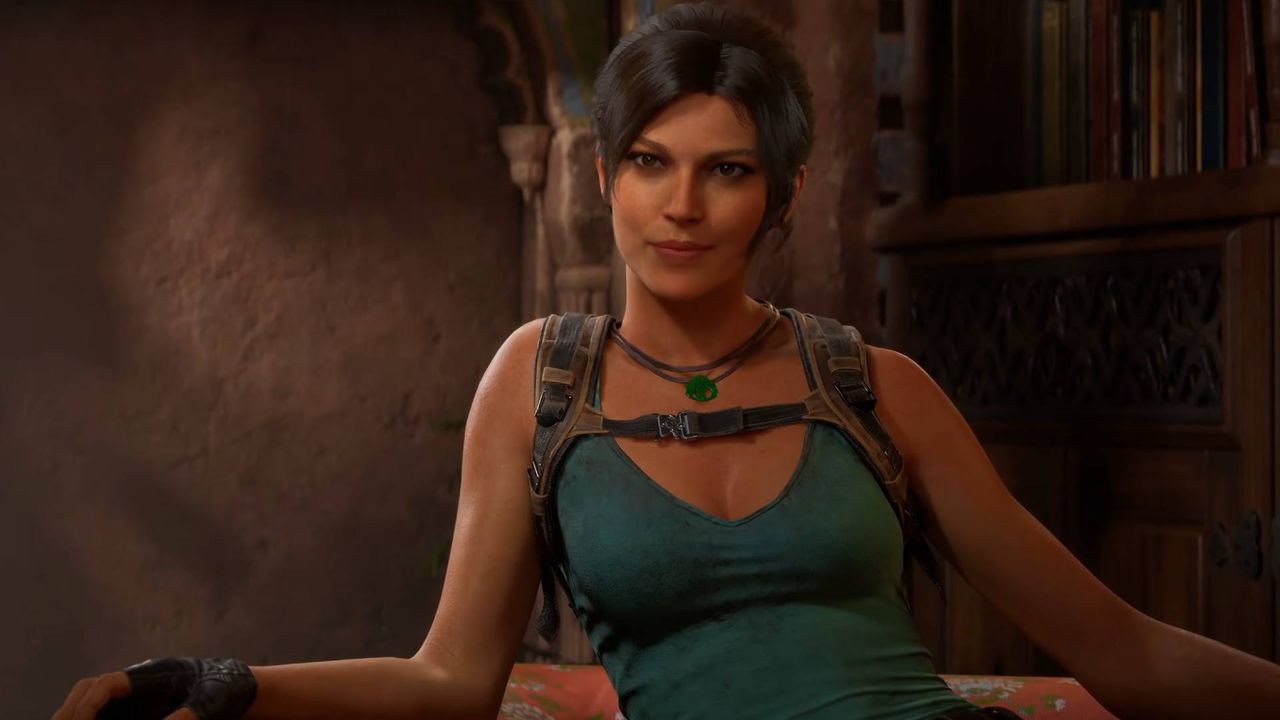
MacLean points to Tomb Raider: Legacy of Atlantis, which has been criticized for its AI use . If Legacy of Atlantis gets "sloppy about it" and uses "a bunch of assets that are not humanly transformed into original works of IP," she argues that anyone could claim that they can lift those assets from the game and repurpose them.
(Image credit: Amazon Game Studios) For example, if Legacy of Atlantis had "an outdoor level and all the trees are AI-generated, I legally would argue somebody could go and use every single tree in the Lara Croft game, that they know is AI-generated, and put in their game, and I don't think those devs can turn around and say, 'Those are our trees,'" she continues.
"No, they're not, because you didn't generate them, and legally speaking, you have no ownership title over them if you didn't put in the sweat equity to have an artist go in and, inspired by that original first pass of the tree, then transform it into an original tree asset ... But I think these major companies who are always laying off, trying to cut the bottom line , increase the value of the company, they're going to cut corners when they can, and I think they're going to get sloppy. And I think we're going to see lawsuits of those types in the coming years when they want their protection but they want to do everything faster and cheaper."
In such a legal environment, MacLean reckons more companies would spend so much time checking the output of AI to cover legal bases that it would just be cheaper and better to have humans make art in the first place. And "that's what the Copyright Act wants," she adds. "It wants humans making art."
"Gen AI can't assign copyright; it can't transfer copyright," she stresses.
"What case law in the US and Canada has seen, time and time again, is that AI cannot own because it was not human-made. We're in that frustrating middle with new tech where it's very fun, it's very flashy, everyone's excited, but I think the legal issues are going to just be popping up more and more."
"It creates lesser games": Indie game studios are supposed to love generative AI, so why do the 25 devs I spoke to avoid it?

Comments
No comments yet — be the first to weigh in 👇
No comments yet. Be the first!