Full text
Keep our news free from ads and paywalls by making a donation to support our work!
Notes from Poland is run by a small editorial team and is published by an independent, non-profit foundation that is funded through donations from our readers. We cannot do what we do without your support.
The proportion of Poles who hold a negative view of Polish-Ukrainian relations has risen to 46%, the highest figure ever recorded by Polish state research agency CBOS. Three years ago, in mid-2023, only 4% held such a view.
Meanwhile, CBOS also found that belief among Poles that reconciliation between the two neighbours, who share a difficult history, is possible is at its lowest level on record, 53%, down from 78% three years ago.
The findings follow other polls showing worsening attitudes towards Ukraine and Ukrainians in Poland in recent years, and come amid an ongoing diplomatic crisis triggered by President Volodymyr Zelensky naming a military unit after a group that massacred Poles in World War Two.
Przekonanie o możliwości pojednania między Polakami 🇵🇱 a Ukraińcami 🇺🇦 spadło do najniższego poziomu w historii naszych pomiarów.
📙 Więcej w komunikacie #CBOS "Stosunki polsko-ukraińskie" ⤵️ https://t.co/kw2o4upY3Q #Ukraina #Ukraińcy pic.twitter.com/LItCFC3f2m
— CBOS (@CBOS_Info) August 11, 2026
In its new study, CBOS found that only 12% of Poles now regard Polish-Ukrainian relations as good, compared to 64% who held that view in June 2023, amid a strengthening of ties following Russia’s full-scale invasion of Ukraine.
Since then, ties between Warsaw and Kyiv have been hit by a series of controversies over Ukrainian agricultural exports , border blockades by Polish farmers and truckers, and, above all, over the two nations’ difficult World War Two history.
Among Poles who now hold a negative view of relations, CBOS also asked them who was responsible for the situation. A large majority, 65%, primarily blamed Ukraine, while only 4% said it was Poland’s fault and 28% placed responsibility on both sides.
In its regular surveys since 1997, the agency has also asked Poles if they believe that reconciliation between Poles and Ukrainians is possible or not. In the early 2000s, that figure rose to a record level of 81%, and in 2023 it still stood at 78%. Now, however, it has dropped to an all-time low of 53%.
Click here to help us continue providing news free from paywalls and ads
There have long been tensions between Poland and Ukraine over their difficult, intertwined histories, in particular during the first half of the 20th century.
In World War Two, Ukrainian nationalists killed around 100,000 Polish civilians, mostly women and children, in an ethnic-cleansing operation known as the Volhynia massacres .
Poland has officially recognised that episode as a genocide. However, Ukraine rejects that label and also points to the persecution of Ukrainians who lived in the interwar Polish state, as well as to massacres of Ukrainians by Polish groups during World War Two.
Long-simmering tensions between Poland and Ukraine over WWII massacres have finally boiled over, prompting a diplomatic crisis. @danieltilles1 looks at how we got here and what it may mean for the two countries and Europe more broadly https://t.co/a8tiYJJHRr
— Notes from Poland 🇵🇱 (@notesfrompoland) June 22, 2026
Those tensions recently boiled over after Zelensky, in May this year, approved a request to rename a military unit after the “heroes of the Ukrainian Insurgent Army (UPA)”, the group that led the Volhynia massacres but is remembered positively in Ukraine for its role in fighting Moscow-imposed Soviet rule.
Zelensky’s decision prompted his Polish counterpart, Karol Nawrocki, to strip the Ukrainian president of Poland’s highest honour. While tensions have since calmed somewhat, the dispute remains unresolved.
However, even before that diplomatic crisis broke out, polling showed increasingly negative attitudes in Poland towards both Ukraine and Ukrainians, who are by far the country’s largest immigrant group .
In its annual survey of attitudes towards various national and ethnic groups, published in February, CBOS found that the proportion of Poles who said they disliked Ukrainians had increased by five percentage points year-on-year, to 43%. Only 29% said they liked Ukrainians.
In January, CBOS reported that opposition to accepting Ukrainian refugees in Poland had risen to its highest ever level. In December 2024, a poll in Ukraine found that positive sentiment towards Poles had fallen by half in the space of two years.
The proportion of Poles opposed to accepting Ukrainian refugees has reached its highest ever level of 46%, up from 3% in the wake of Russia's full-scale invasion.
Other recent surveys have also indicated declining sympathy towards Ukrainians among Poles https://t.co/DLPGY2ToZG
— Notes from Poland 🇵🇱 (@notesfrompoland) January 7, 2026
Meanwhile, the number of reported hate crimes against Ukrainians in Poland rose by 30% in the first half of 2026, including a number of high-profile incidents.
Poland’s government has blamed increasing anti-Ukrainian rhetoric from the right-wing and far-right opposition. Last month, Ukraine’s foreign minister, Andrii Sybiha, called on “Polish politicians to stop inciting hatred against Ukrainians”.
CBOS’s new study shows that attitudes towards relations with Ukraine differ significantly depending on political affiliation.
Whereas 35% of supporters of the centrist Civic Coalition (KO), Poland’s main ruling party, hold a negative view of relations, that rises to 52% among voters of the national-conservative opposition Law and Justice (PiS) party and 81% for the far-right Confederation (Konfederacja).
Among those with a negative view, 49% of KO voters blamed Poland and Ukraine equally for the situation while 10% blamed mainly Poland. By contrast, 86% of Confederation supporters and 82% of PiS supporters placed responsibility on the Ukrainian side.
Demonstrations took place in 25 Polish cities on Sunday against the “growing wave of hate and violence” against Ukrainians, who are Poland’s largest immigrant group.
Reported hate crimes against Ukrainians in Poland are up 30% this year https://t.co/gGAEc6QZWT
— Notes from Poland 🇵🇱 (@notesfrompoland) August 10, 2026
Notes from Poland is run by a small editorial team and published by an independent, non-profit foundation that is funded through donations from our readers. We cannot do what we do without your support.
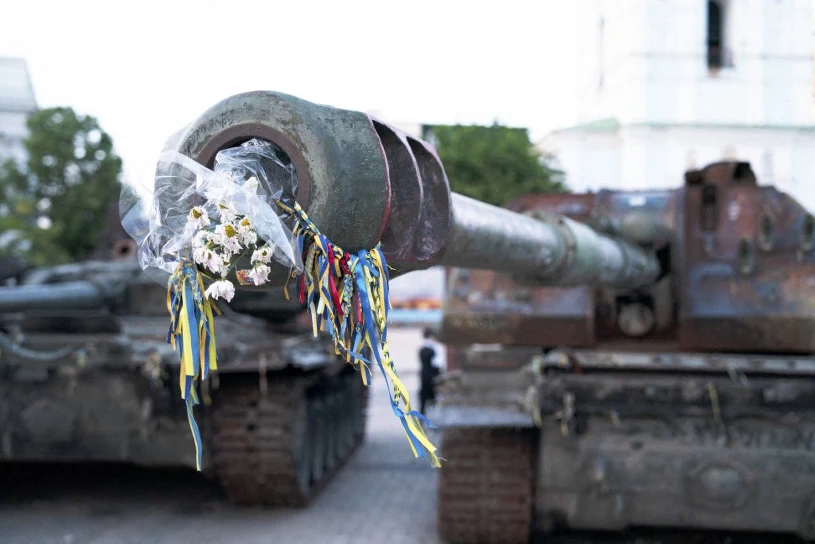
main image credit: Inka Kapturewska /Pexels



Comments
No comments yet — be the first to weigh in 👇
No comments yet. Be the first!