Full text
Boeing revealed an ultra-low-cost radar seeker Tuesday as this year’s Space and Missile Defense Symposium kicked off in Huntsville, Alabama, pitching it as a way to get missile guidance on more weapons for less money.
Installed in the nose of a missile or bomb, the seeker locates the target and guides the weapon toward it. Seekers are among the most expensive parts of a guided weapon, and Boeing’s argument is that their cost is what limits how many the military can buy.
Boeing’s Ultra Low-Cost Seeker, or ULCS, is an active seeker, meaning it emits its own radar signal rather than relying on one from an aircraft or a ground station. Boeing built it largely from commercial parts adapted for military use, and it is still in development.
The company said it is looking at using the ULCS in its air and missile defense interceptors, its guided bombs and its cruise missiles, because its design allows for reuse across all three rather than requiring a different seeker for each weapon.
Boeing said the seeker is designed for strikes from the air, land or at sea, in any weather and against moving targets. The company ran several tests on the ULCS earlier this summer.
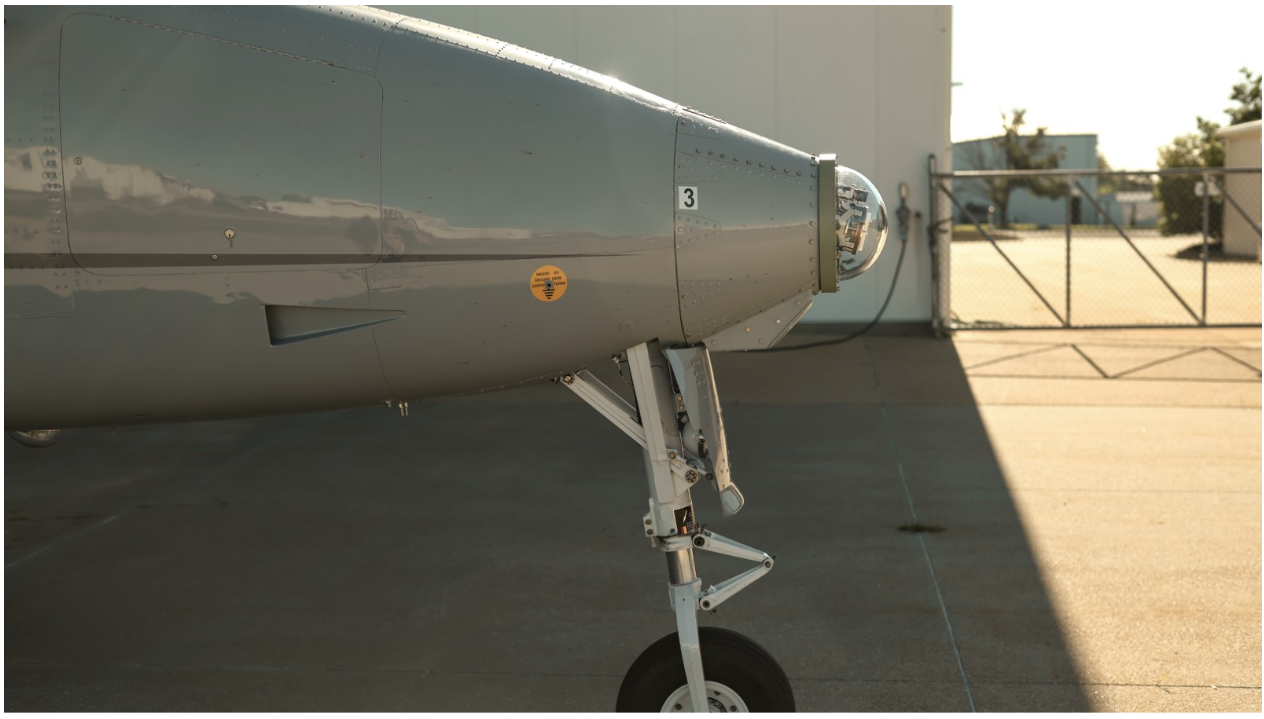
Engineers checked the sensor design in an anechoic chamber, which absorbs stray signal reflections. The seeker also flew aboard a Beechcraft 1900 over land and water, where Boeing said it found and tracked targets as expected.
At Spaceport America in New Mexico, the seeker tracked a passing drone from a fixed position on the ground. Boeing then mounted it on a rocket standing in for a missile and launched it at a second drone carrying a reflector, which bounced radar back as a full-size target would. Boeing said the seeker survived the acceleration and vibration of every test, and detected and tracked its targets each time.
Reuse across weapons is the major selling point, according to Boeing.
“We are developing ULCS with the goal of sharing a common sensor architecture across several of our programs,” said Bob Ciesla, vice president of Boeing Precision Engagement Systems. He said the seeker is modular and built to an open standard so Boeing can fit it to different weapons and change it later without redesigning it.
Boeing already builds seekers for other weapons, some of them for competitors. The company makes the active radar seeker for the Lockheed Martin PAC-3 Missile Segment Enhancement interceptor and said it drew on that work for ULCS while aiming to build something cheaper for use against less sophisticated threats.
Steve Wright, Boeing’s senior manager for weapon sensors and advanced guidance, said work remains to be done.
“We still have more work to do, but the rapid testing our teams have completed prove[s] that this capability is real and will fundamentally change how we look at seeker affordability across our programs,” he said.
Boeing said its teams are studying the test data and using the results to shape the next round of work, including several flight tests in 2027 that will attempt to more closely replicate real-world scenarios.
Boeing is not alone in its attempts to exploit modularity. On Aug. 10, Lockheed Martin announced Strigo , a line of radio-frequency sensors, missile datalinks and seeker technologies built around the same modular premise, designed to serve a variety of weapons.
Boeing did not say whether its ULCS is being funded internally or attached to any existing funded weapons program. Nor did it say just how ultra-low the cost of its new seeker will be.
 Ukraine's Freyja missile defence system integrates tech from 13 European defence firms
Defense News · 7d ago
Ukraine's Freyja missile defence system integrates tech from 13 European defence firms
Defense News · 7d ago
 Defence industry steals the show at Farnborough Airshow 2025
Rzeczpospolita · 22d ago
Defence industry steals the show at Farnborough Airshow 2025
Rzeczpospolita · 22d ago
 US Army downed over 1,400 Iranian missiles and drones in 14 months across two conflicts
The War Zone · 53min ago
US Army downed over 1,400 Iranian missiles and drones in 14 months across two conflicts
The War Zone · 53min ago
Comments
No comments yet — be the first to weigh in 👇
No comments yet. Be the first!