Full text
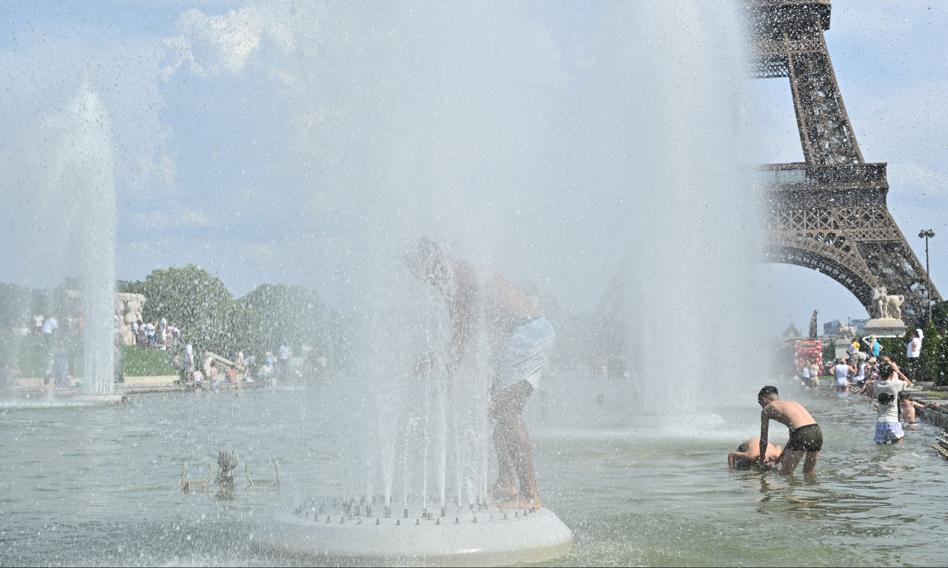
The brutally hot summer is set to cost the EU economy €180 billion this year — that’s equivalent to roughly 1 percent of GDP, which is all the growth the bloc was expected to generate in 2026, according to new analysis.
France could lose 1.4 percentage points of growth, which is enough to push its economy into a 0.6 percent contraction, while an 0.8-point hit could almost wipe out the Netherlands’ expected expansion.
“The result is not simply ‘the hottest countries lose the most,'” notes the analysis by Triodos Bank . “Spain and Italy have the highest physical exposure and the most hot days in absolute terms, but decades of acclimatisation imply that the marginal effect of any single hot day is comparatively small.”
The biggest drag is expected to come from people struggling to work in extreme heat. Triodos estimates lost labor productivity alone could shave around 0.6 percent off EU GDP, while agricultural output could fall by between 3 and 7 percent.
“At first sight this might seem modest, but it is exactly the expected economic growth for the EU this year,” said the bank of the overall €180 billion blow.
And the summer is not over. France and Britain are bracing for their fifth heat wave of the season this week, with temperatures nearing 40 degrees Celsius in southeastern France and 36 degrees forecast in the U.K.
The bill is already mounting beyond GDP. POLITICO estimated at least 14,000 excess deaths across the six hardest-hit European countries during the record-breaking heat wave from mid-June to early July.
Drought has also hammered Europe’s energy system: Low water levels in the Danube in recent weeks have forced sharp cuts at Hungary’s Paks nuclear plant and pushed Romania to blast apart a rock to divert water toward its last operating reactor. Vessels on the Rhine and Danube have had to sail only partially loaded.
In Austria, meanwhile, drought has caused an estimated €1 billion in agricultural losses , according to Austrian Hail Insurance, after some regions received more than 75 percent less rain than normal since mid-June.
Triodos warned against treating this summer as a freak event, saying extreme heat “might become structural” as the planet warms. But governments can soften the damage through irrigation, insulation, cooling and shifting working hours, said the bank.
“Every year adaptation without mitigation is a year borrowed against a hotter baseline.”


Comments
No comments yet — be the first to weigh in 👇
No comments yet. Be the first!