Full text
A close-up of the polygon fractures discovered by NASA's Curiosity Mars rover highlights their honeycomb-like textures. (Image credit: NASA/JPL-Caltech/MSSS) NASA's Curiosity Mars rover spotted surprising shapes in the Red Planet soil while exploring a large valley.
What is it?
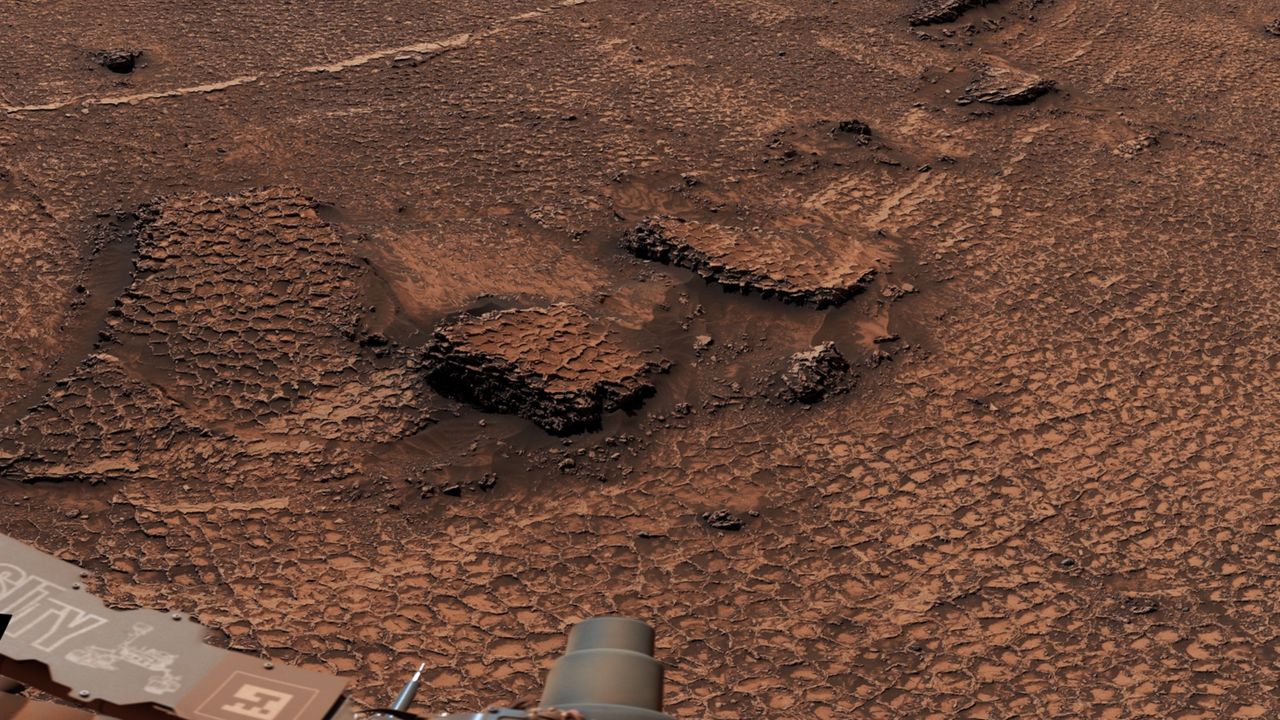
These images were captured on June 19 and 20, 2026, or the 4,930th and 4,931st Martian days of Curiosity's mission. They show honeycomb-like patterns referred to as "polygonal fractures" found in a valley on Mars known as Valle Grande. They measure about 1.5 to 3 inches (4 to 8 centimeters) across.
While Curiosity has seen other curious geometric patterns on Mars before, scientists were surprised by this most recent find.
"We've seen a lot of fascinating landscapes through Curiosity's eyes, but this sea of polygons took our breath away," project scientist Ashwin Vasavada of NASA's Jet Propulsion Laboratory said in a statement . "We measured their shapes and chemistry carefully and are hopeful there are clues in the data as to how these features formed."
A panorama taken by NASA's Curiosity Mars rover showing a large field of hexagonal shapes in the Martian soil. (Image credit: NASA/JPL-Caltech/MSSS) Why is it incredible?
This field of polygons in Valle Grande extends as far as Curiosity's instruments could see, even around the base of a steep hill scientists named "Miraflores."
NASA's Curiosity Mars rover captured this sand-capped butte, nicknamed "Miraflores," estimated to be about 20 feet (6 meters) tall, on June 11, 2026. (Image credit: NASA/JPL-Caltech/MSSS) While mission scientists have theories about how these structures form, it ultimately remains a mystery how they formed.
It's thought that changes in temperatures on Mars could have caused water to squeeze through sediment layers, but scientists will need to collect more data before they can reach a conclusive answer.

Comments
No comments yet — be the first to weigh in 👇
No comments yet. Be the first!