Full text
Keep our news free from ads and paywalls by making a donation to support our work!
Notes from Poland is run by a small editorial team and is published by an independent, non-profit foundation that is funded through donations from our readers. We cannot do what we do without your support.
Poland has urged the European Union to adopt tougher measures in response to the recent migration crisis in Spain’s African exclave of Ceuta, including making migrants who enter the bloc illegally ineligible for obtaining residence rights.
During a special meeting of EU interior ministers on Tuesday, Poland shared its own experience of dealing with “weaponised” migration from Belarus, which prompted the Polish government last year to restrict the right to asylum for people who cross irregularly.
🔵 KOMUNIKAT | Polska przedstawiła swoje stanowisko ws. migracji na nadzwyczajnym posiedzeniu Rady JHA w sprawie ostatnich wydarzeń w Ceucie
🇵🇱🇪🇺 Wiceminister spraw wewnętrznych i administracji @MaciekDuszczyk wziął udział w odbywającym się we wtorek (4 sierpnia br.)… pic.twitter.com/glfyiu5ZW3
— MSWiA 🇵🇱 (@MSWiA_GOV_PL) August 4, 2026
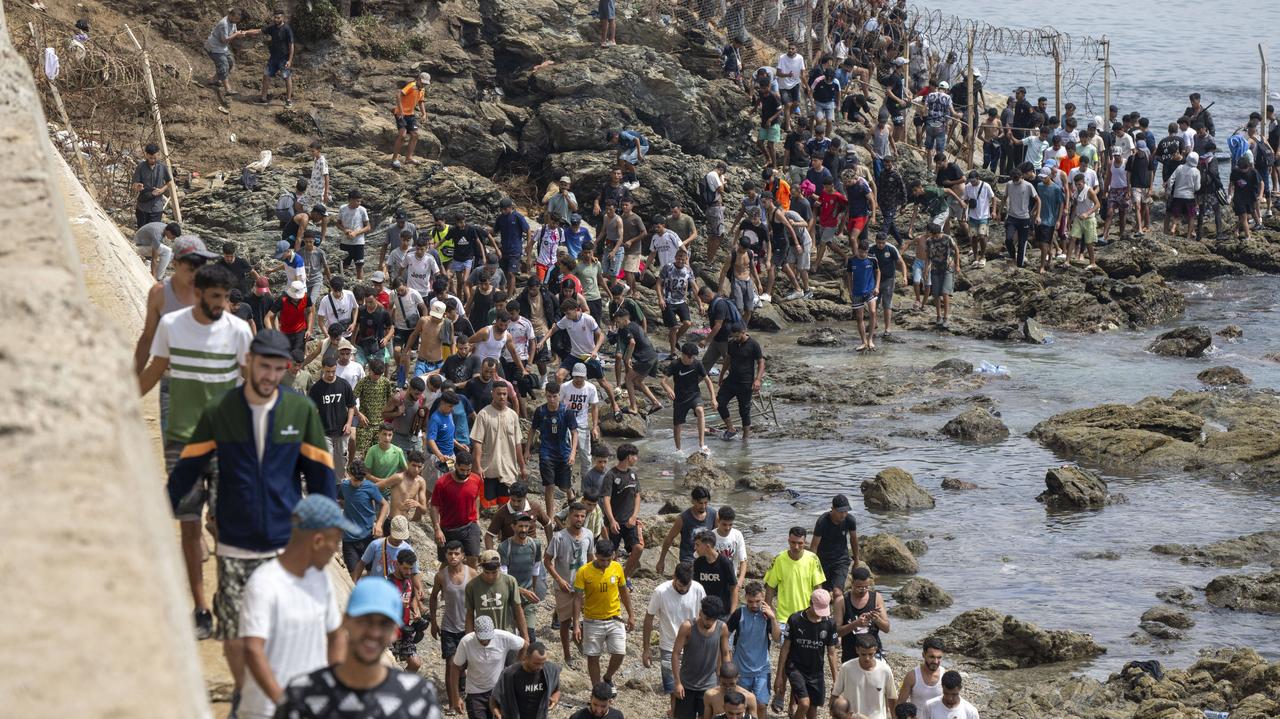
Last week, tens of thousands of migrants entered Ceuta, most of them by swimming there from neighbouring Morocco. Dozens died while trying to cross. Among those who managed to enter Ceuta, Spain says that the vast majority have been returned to Morocco.
The incident prompted expressions of concern from many European leaders, including calls to restrict Spain’s participation in the Schengen free movement zone (despite the fact that anyone leaving Ceuta for the European mainland is subject to identity checks).
Among those to speak out was Polish Prime Minister Donald Tusk, who on Friday called on Spain to “follow our example if Schengen is to survive”.
Poland has tightened asylum laws, border procedures, and has built effective barriers on its border with Belarus, which is the eastern border of the EU. We have invested billions of euros and engaged thousands of soldiers, police officers and border guards. Spain must follow our…
— Donald Tusk (@donaldtusk) July 31, 2026
That was a reference to Poland’s response to a crisis on its eastern border , where since 2021 Belarus has encouraged and assisted tens of thousands of migrants – mainly from Asia and Africa – to try to cross irregularly into the EU.
Both Poland and the EU have accused Belarus and its ally Russia of deliberately “weaponising” migration in an attempt to destabilise European societies as part of Moscow and Minsk’s broader “hybrid threats” against the EU.
Tusk noted that, in response, Poland has restricted the right to asylum , invested billions in strengthening physical and electronic barriers along the border, and has deployed thousands of soldiers, police officers and border guards there (who have also been given expanded rights to use firearms ).
A court has ruled that Poland's recently introduced partial suspension of the right to asylum is justified and lawful.
It rejected a complaint by a Sudanese man who had been denied the right to claim asylum after crossing irregularly from Belarus https://t.co/jx3s1AxRgG
— Notes from Poland 🇵🇱 (@notesfrompoland) October 10, 2025
On Saturday, Tusk and 21 other EU leaders jointly signed a letter expressing “serious concern” at the situation in Ceuta and warning that the EU “cannot allow uncontrolled mass border crossings, the instrumentalisation of migration, or other hybrid threats to create the impression that illegal entry…is possible”.
While they welcomed Spain’s cooperation with Morocco to send most of the migrants back, they also called for an extraordinary meeting of EU interior ministers to “agree on a coordinated European response, including the rapid mobilisation of available EU instruments and the necessary support to Spain”.
At that meeting, which took place on Tuesday, Poland’s interior ministry said that it had expressed the view that “illegal entry into the European Union should automatically exclude the possibility of obtaining residence permits, and therefore the possibility of permanent residence in the future”.
While Poland’s statement did not mention it directly, earlier this year Spain’s government launched an amnesty that allowed undocumented migrants to apply to legalise their stay in the country. Over one million people had signed up for the scheme by the time it closed at the end of June.
Click here to help us continue providing news free from paywalls and ads
In its statement, Poland’s interior ministry warned that “migration must be fully controlled”, as otherwise it can “be used against the values that guide the EU”. It also called for the “official recognition of migration as a challenge directly linked to security”.
Poland said that, at Monday’s meeting, it had “presented its own experiences with border protection in the context of the instrumentalisation and weaponisation of migration and adapting law to migration challenges”, including restrictions on asylum claims.
“The example of Ceuta clearly demonstrates that absolute access to asylum is impossible to maintain in the face of such real threats,” wrote the interior ministry, which said that it “welcomed the shared perspective on migration among a growing number of member states”.
In a statement of its own, the European Council noted that there had been a “common understanding of the need to continue relentlessly fighting migrant smuggling networks, to reinforce returns, to strengthen EU borders, to build deep partnerships with third countries, and to improve foresight.”
It added that member states “were united in expressing strong solidarity with Spain”, appreciated its “swift and effective efforts” to deal with the crisis, and had also expressed their condolences for the people who died while attempting to cross from Morocco to Ceuta.
ESPAÑA: CEUTA PIDE CERRAR LA FRONTERA POR LA LLEGADA MASIVA DE MIGRANTES DE MARRUECOS
Más de mil jóvenes marroquíes se congregaron en la frontera con Ceuta para intentar ingresar al enclave español, y cientos lograron superar las barreras de protección, que en ese momento no… pic.twitter.com/Mx0LuQwMW2
— Clarín (@clarincom) July 30, 2026
When the migration crisis on its border with Belarus broke out in 2021, Poland recorded almost 40,000 attempted illegal crossings that year. Despite efforts to discourage and prevent crossings, the figures remained high, with just under 30,000 attempted crossings recorded in each of 2024 and 2025.
However, those figures have fallen dramatically this year, with only 235 attempted crossings recorded in the first half of 2026.
Meanwhile, the estimated number of successful crossings has been falling, from 12,000 in 2023, to 5,000 in 2024, 1,700 in 2025, and zero in the first half of this year, according to the Polish interior ministry.
Last August, European Commission President Ursula von der Leyen visited Poland’s border with Belarus , where she thanked the Polish authorities for defending Europe from “cynical hybrid attacks” orchestrated by Belarus and Russia.
The number of attempted illegal crossings by migrants from Belarus to Poland fell from 15,500 in the first half of 2025 to 235 this year – a drop of over 98%
Poland also now claims a 100% success rate in apprehending migrants who manage to cross illegally https://t.co/RFZkd7CeIk
— Notes from Poland 🇵🇱 (@notesfrompoland) July 20, 2026
Notes from Poland is run by a small editorial team and published by an independent, non-profit foundation that is funded through donations from our readers. We cannot do what we do without your support.
Main image credit: Combat Camera Poland/Flickr (under CC BY-NC-ND 2.0 )

 Ceuta migrants won't flood Europe — here's how Spain's regularisation program actually works
TVN24 · 1d ago
Ceuta migrants won't flood Europe — here's how Spain's regularisation program actually works
TVN24 · 1d ago
 Swiss NZZ: EU caved to right-wing populists by attacking Spain over Ceuta crisis
Bankier.pl · 1d ago
Swiss NZZ: EU caved to right-wing populists by attacking Spain over Ceuta crisis
Bankier.pl · 1d ago
Comments
No comments yet — be the first to weigh in 👇
No comments yet. Be the first!