Full text
Researchers have designed a material that can "program" the way it releases heat, paving the way for more efficient energy systems and, potentially, devices that store information using heat instead of electricity.
The design, described in a June 25 study in the journal Laser & Photonics Reviews , sidesteps a nearly 160-year-old rule of physics linking how materials absorb and emit heat. Under ordinary conditions, a material that's good at absorbing heat from one direction is equally good at emitting heat in that direction. This rule of reciprocity, first described by physicist Gustav Kirchhoff in the 19th century, has limited engineers' ability to control incoming heat independently from and outgoing heat.
In the new study, the researchers designed a theoretical device that could direct heat radiation in different directions and remember that setting even after the power was switched off.
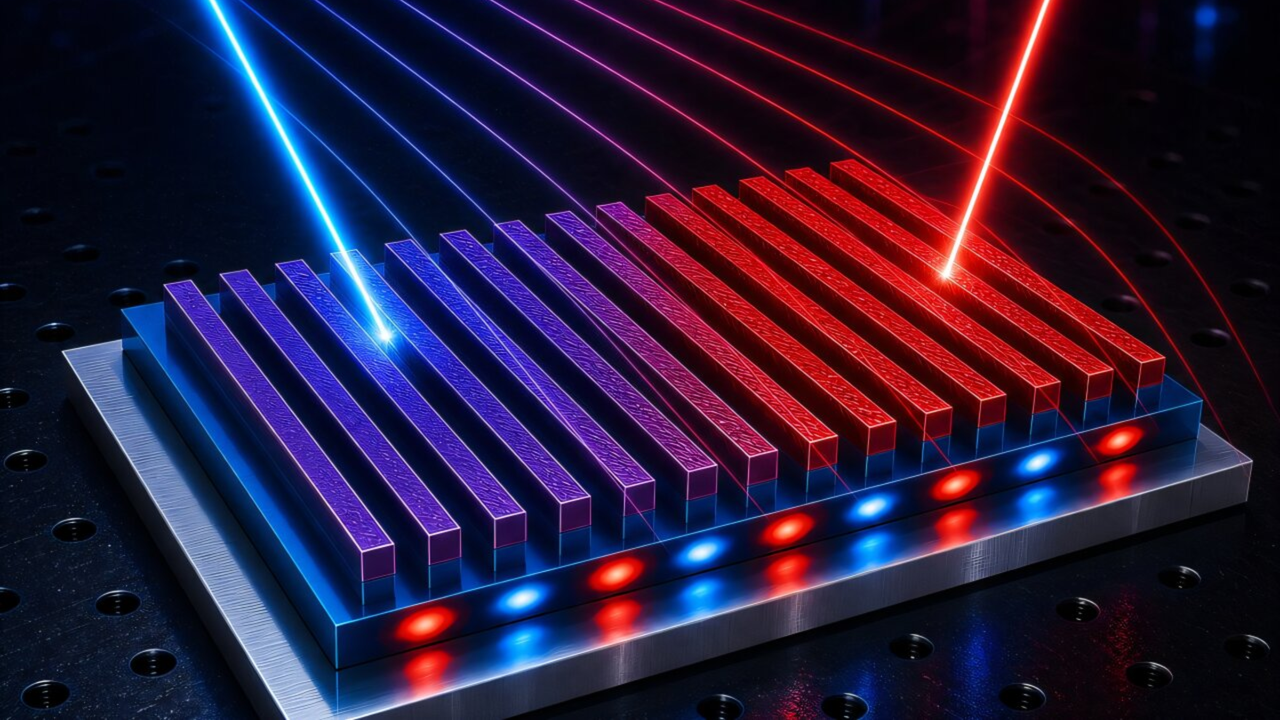
The new device pairs two materials that don't normally work together. Using a magnetic field, the team broke the natural symmetry in a layer of indium arsenide — a material that absorbs and emits infrared light — so that radiation traveling in one direction behaves differently than radiation traveling the other way.
On top of that layer sits a grating made of germanium-antimony-tellurium (GST) — a phase-changing substance that can switch between two distinct physical structures and stay in whichever structure it's set to until it's deliberately switched again. Once the GST is set into position, it locks the directional difference of radiation in place and holds it there without needing continuous power, which is what lets the device's heat-directing behavior be "programmed."
"I was impressed by the elegant combination of magneto-optical nonreciprocity with a nonvolatile phase-change material," Juejun Hu , a professor of materials science and engineering at MIT who wasn't involved in the study, told Live Science in an email.
RELATED STORIES
New wonder material designed by AI is as light as foam but as strong as steel
Chemists broke a 100-year-old rule to make extremely unstable molecules
Mathematicians just solved a 125-year-old problem, uniting 3 theories in physics
That's significant because earlier attempts at this kind of directional control typically worked only at steep angles, which made them impractical. It's "particularly noteworthy" that this device functions when radiation arrives just 3 degrees off an otherwise-straight line, making it far easier to fit into real-world optical systems, Hu said.
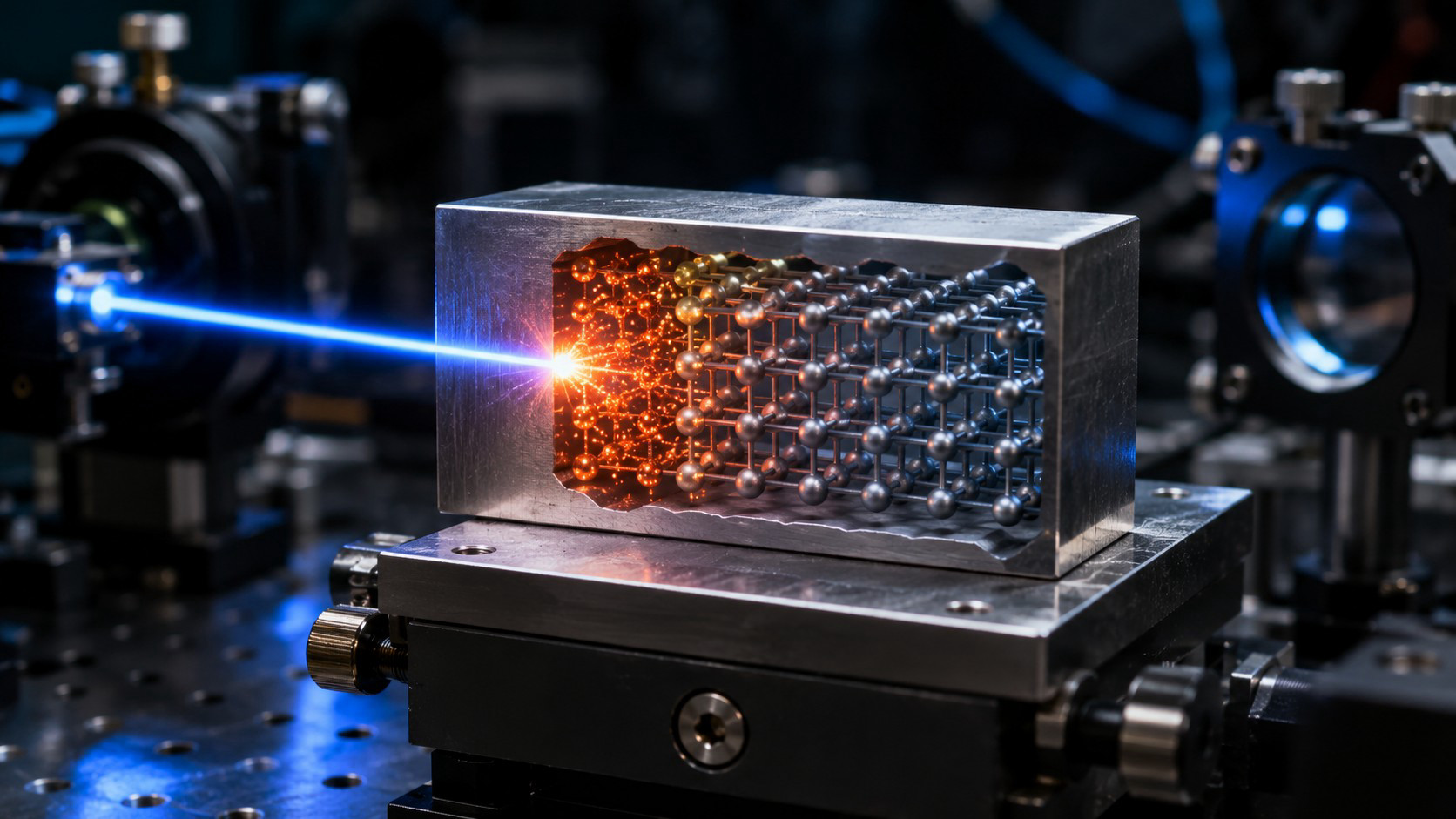
The researchers compared their design to computer memory, since it holds onto its programmed state after the power is cut. However, the device stores a material state rather than heat itself, Hu told Live Science. GST simply keeps its amorphous or crystalline structure without power, which preserves the programmed response.
For now, the device exists only on paper; it hasn't been built or tested. Still, Hu thinks it's realistic, since it relies on well-established materials and manufacturing methods. However, the GST layer is thick enough that switching it back and forth repeatedly would be difficult, though other materials could fix this problem. Once that hurdle is surpassed, Hu expects the first real-world use to be infrared sensing, where compact, direction-selective heat absorption is most directly useful.


Comments
No comments yet — be the first to weigh in 👇
No comments yet. Be the first!