Full text
The U.S. Army is searching for a surface-to-air missile that can destroy small drones.
The Next Generation C-sUAS Missile project comes as the U.S. and other nations are pursuing lasers, microwaves and other alternatives to kinetic anti-drone weapons, such as missiles and cannon, which are seen as too expensive and in short supply.
The Army wants to quickly develop an “extended-range, quick-response missile to defeat Group 2 and Group 3 small Unmanned Aircraft System (sUAS) threats,” according to the Army’s Sources Sought notice. The deadline is August 20.
The initial specifications are for a missile that can intercept a drone flying at 6 kilometers altitude, at a range of more than 16 kilometers. The ultimate goal is to destroy drones flying 8 kilometers high, at a range of more than 25 kilometers. Missile guidance would be via a radar seeker.
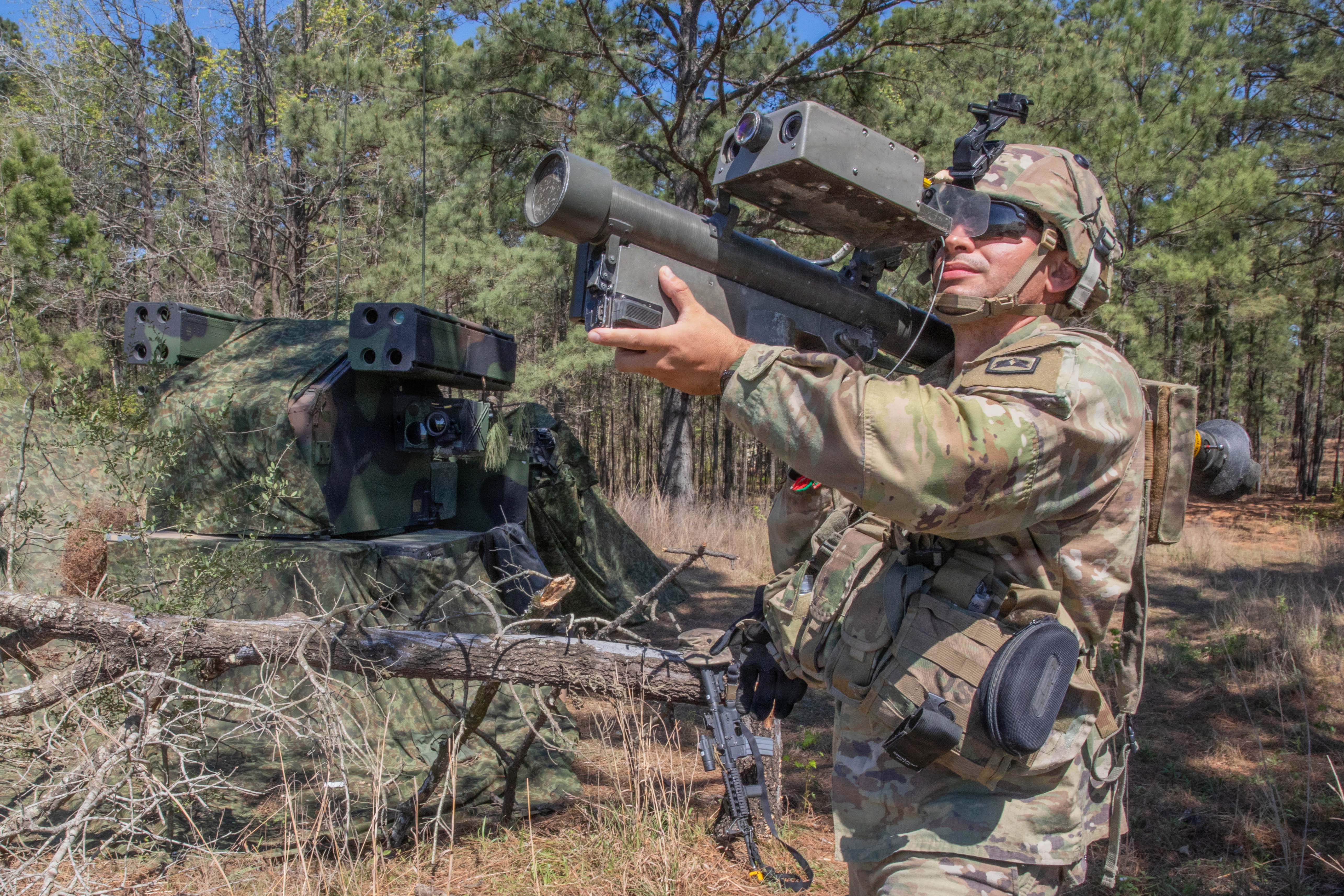
NGCM appears intended as a step up — but still compatible — with the Army’s Coyote C-UAS missile system.
“The Army is looking for NGCM to be produced and integrated into the existing Coyote Launch System to provide extended range, rapid launch time, and reduced time-to-target over current effectors,” the notice said.
The weapon is intended to stop Group 2 and 3 drones. Group 2 drones have a maximum gross takeoff weight of 21 to 55 pounds, fly below 3,500 feet and have a speed of less than 250 knots, according to the Department of Defense’s UAV classification system. This includes models such as Boeing’s ScanEagle. Group 3 drones, such as Insitu’s RQ-21 Blackjack , have a takeoff weight under 1,320 pounds and fly below 18,000 feet at a speed of less than 250 knots.
The NGCM missile should take less than five seconds to leave the launcher after the operator gives the fire command.
“The missile must be compatible with the Coyote Launcher with minimal to no modifications,” the notice said.
In addition, the missile must also fit with existing air defense systems, including the Sentinel A3/A4, LTAMDS and TPQ-53 radars.
The Army envisions the NGCM missile system in two versions. The fixed-site version would be equipped with a variety of sensors. A mobile version would be “mounted on tactical vehicles for employment at the halt and on-the-move, providing a scalable capability at the tactical edge.”
The Army is aiming for Technology Readiness Level 7 — prototype testing in the field — by the end of fiscal 2027. Contractors will need to have 50 missiles ready for operational assessment by the beginning of 2028.
Significantly, the Army desires missiles costing less than $150,000 apiece as part of a bulk purchase of 5,000 missiles. While that’s a bargain compared to a $4 million Patriot air-defense missile, critics may still question the economics: An Iranian Shahed-136 drone costs around $35,000.
That’s one reason for the drive to develop anti-drone lasers that, theoretically, cost only pennies per shot. On the other hand, missiles can function in bad weather that disrupts laser beams.

Comments
No comments yet — be the first to weigh in 👇
No comments yet. Be the first!