Full text
Keep our news free from ads and paywalls by making a donation to support our work!
Notes from Poland is run by a small editorial team and is published by an independent, non-profit foundation that is funded through donations from our readers. We cannot do what we do without your support.
A newly sworn-in judge of Poland’s Constitutional Tribunal (TK) has said he will refuse to sit on the court until four other judges appointed by parliament earlier this year, but blocked by the president, are allowed to take their seats.
It is the latest development in a months-long dispute between the opposition-aligned President Karol Nawrocki and the government, which considers the TK to be improperly staffed and therefore illegitimate.
Although Nawrocki swore in Sławomir Patyra , who was appointed by the ruling majority in parliament in June, as a TK judge on Tuesday, he continues to refuse to swear in four other judges appointed by parliament earlier this year.
Po złożeniu przysięgi Patyra ogłosił, że zamierza odmówić orzekania. To gest solidarności z czwórką sędziów, od których prezydent nie chce przyjąć przysięgi https://t.co/jdbKusQ3H9
— OKO.press (@oko_press) July 28, 2026
Shortly after his swearing-in ceremony at the presidential palace on Tuesday, Patyra arrived at the TK headquarters in Warsaw, where he was accompanied by four other judges appointed by parliament this year, including two whom Nawrocki has refused to swear in.
There, he announced that his decision not to sit on the court was a matter of loyalty to the constitution and his belief in judicial ethos. “I cannot imagine taking an oath today to uphold the constitution, only to start breaking that constitution tomorrow,” he said.
Patyra told journalists that he would “submit a declaration of refusal to adjudicate” due to his solidarity with judges who are “unlawfully deprived of the chance to participate in the work of the tribunal”.
He added that, along with the other judges chosen this year, he is “fully mobilised to restore the Constitutional Tribunal to its proper, constitutional, systemic form”.
Click here to help us continue providing news free from paywalls and ads
Under Polish law, when a vacancy emerges among the 15 positions on the TK, the lower house of parliament, the Sejm, chooses who should fill it. However, to take office, the judge must swear an oath before the president.
In April, after the Sejm had chosen six candidates to fill vacancies on the court, Nawrocki took the unprecedented step of inviting only two of them to be sworn in. He argued there were doubts over the legality of how all six had been chosen, but decided to accept two to ensure the TK had the necessary quorum to function.
Those two have been able to take up their seats on the court, but the other four remain in limbo. Although they arranged their own private swearing-in ceremony without the presence of Nawrocki, TK’s chief justice Bogdan Święczkowski has refused to accept them .
In May, the European Court of Human Rights ordered that the quartet be allowed to take up their positions. But the TK – where judges appointed under the former Law and Justice (PiS) government retain a majority – issued its own ruling endorsing Nawrocki’s right not to swear in the new judges.
The European Court of Human Rights has ordered Poland’s Constitutional Tribunal (TK) to accept four judges whom opposition-aligned President Nawrocki refused to swear in.
The decision was welcomed by the government but rejected by the TK itself https://t.co/9NxInPdYk9
— Notes from Poland 🇵🇱 (@notesfrompoland) May 6, 2026
On 11 June, the Sejm then chose another judge, Patyra, to fill a newly opened vacancy on the court. In his case, the legal doubts Nawrocki had expressed regarding the previous appointments, which in some instances were made more than a year after the vacancies had arisen, did not seem to apply.
Yet for weeks the president refused to confirm whether he would swear him in. That prompted Patyra to write to Nawrocki in early July and then again later in the month, asking the president to indicate a date on which he could take his oath.
After repeated requests, Nawrocki finally decided last week to invite Patyra to the presidential palace. The president’s chief of staff, Zbigniew Bogucki, noted that “there were some doubts” but “the president dispelled them” and added that Patyra was chosen “in accordance with all procedures”.
Nowo wybrany przez Sejm Rzeczypospolitej Polskiej uchwałą z dnia 11 czerwca 2026 r. sędzia Trybunału Konstytucyjnego Sławomir Patyra złożył wobec Prezydenta RP ślubowanie. pic.twitter.com/VLMRAIg1Yj
— Kancelaria Prezydenta RP (@prezydentpl) July 28, 2026
The TK has been at the heart of the rule-of-law crisis that has developed in Poland over the last decade.
In 2015, former PiS-aligned President Andrzej Duda refused to swear in three judges legally chosen by the Sejm. Shortly afterwards, PiS won parliamentary elections and nominated three replacements for those judges, who were sworn in by Duda.
Those three judges and their successors have been deemed illegitimate in a succession of rulings by Polish and European courts . Due to their continued presence on the court, the current government, which replaced PiS in 2023, rejects the TK’s legitimacy and refuses to recognise its rulings.
Under both Święczkowski, a former member of the PiS government , and his predecessor Julia Przyłębska , a close personal associate of PiS leader Jarosław Kaczyński, the TK has been widely seen as issuing rulings aligned with the political interests of PiS.
Fifteen months since the change of government, Poland's rule-of-law crisis continues – indeed, many Poles think the situation has got worse. @J_Jaraczewski explains the roots of the crisis, what its impact has been, and how it might be resolved https://t.co/7KOCURV3dU
— Notes from Poland 🇵🇱 (@notesfrompoland) March 17, 2025
Notes from Poland is run by a small editorial team and published by an independent, non-profit foundation that is funded through donations from our readers. We cannot do what we do without your support.
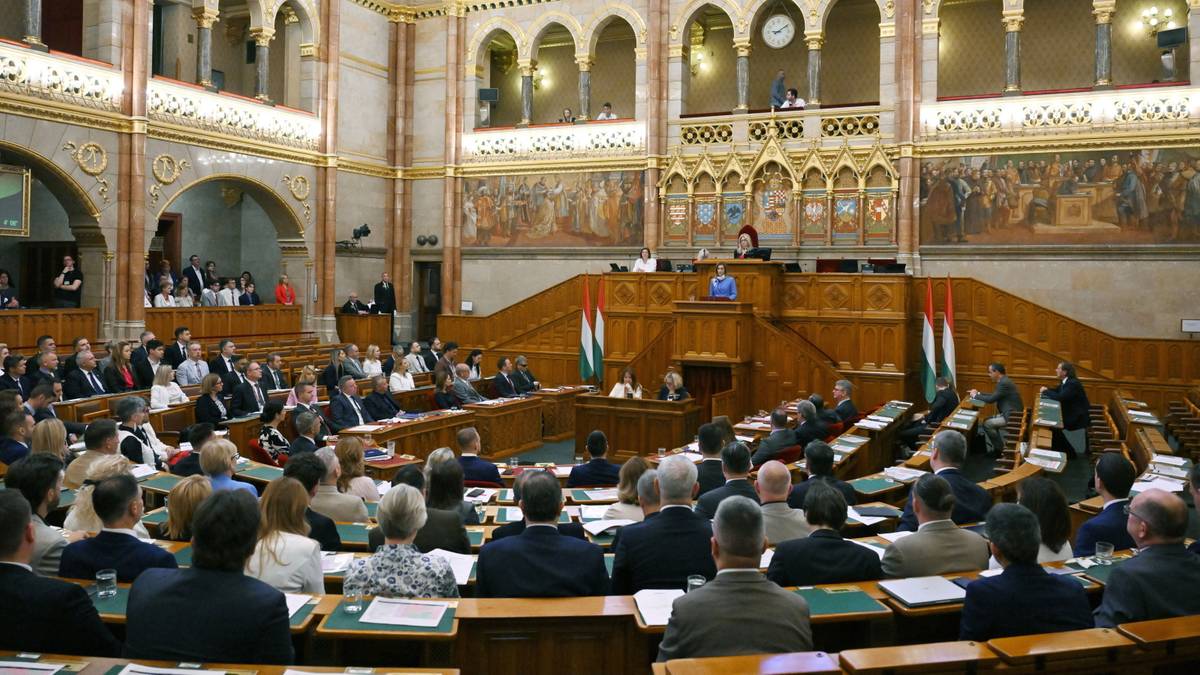
Main image credit: Adrian Grycuk/Wikimedia Commons ( under CC BY-SA 3.0 PL )


Comments
No comments yet — be the first to weigh in 👇
No comments yet. Be the first!