Full text
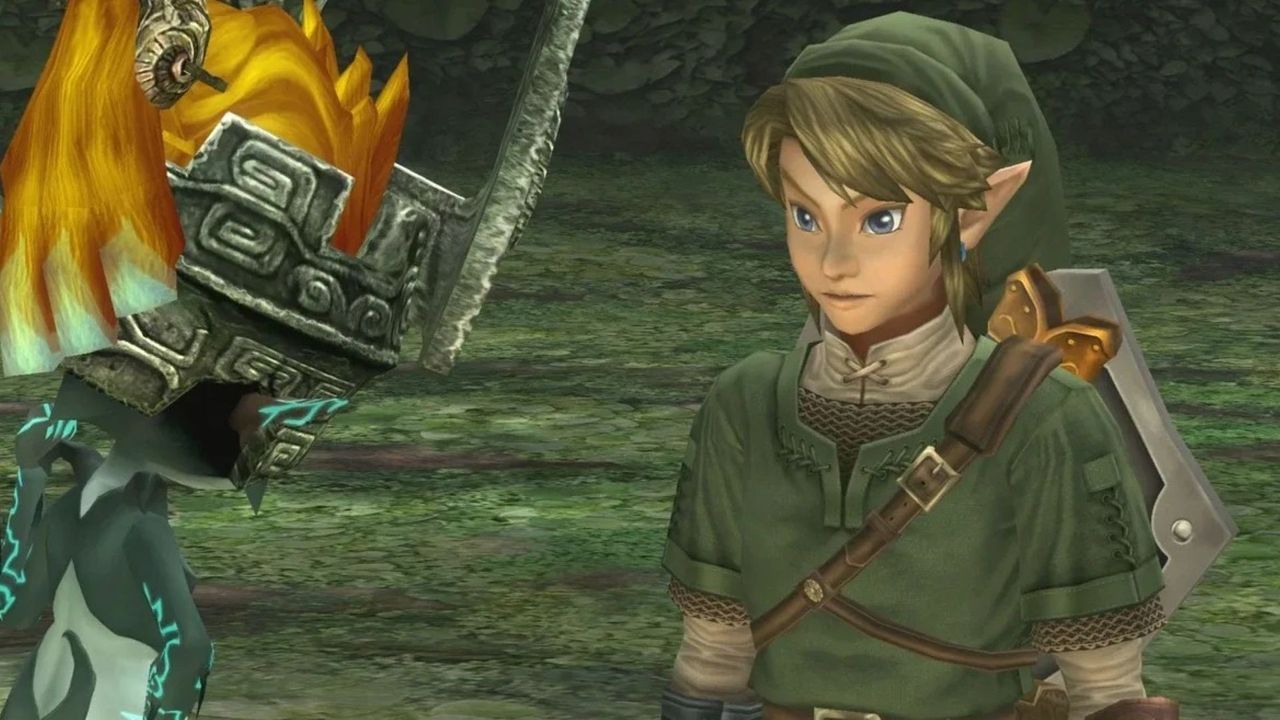
It's December 2006, and after months of eagerly scrubbing through trailers and poring over Official Nintendo Magazine, a brand new Zelda game is on the way. Not just that, it feels like the Zelda game, a gritty successor to Ocarina of Time's throne, bolstered with the incredible motion controls of the Wii. As December 8 rolled around, I queued up at midnight with my best pal, giddy with excitement, and sped home quickly as if the wind of Tulin was behind me.
We stayed up until five in the morning playing Twilight Princess, briefly slept, then went straight back to it. My poor younger brother didn't touch Wii Sports for at least a week. But, it wasn't the much-touted waggle controls that offered the biggest thrills, or the (at the time) incredible graphics. Instead it was Twilight Princess's commitment to tone, to crafting a lived-in world, and the tangible feeling that this space was really right in front of us – if we could just reach in and touch it.
Now 20 years later, it's that attention to detail, along with a mixture of reality and fantasy, that still makes Twilight Princess's dungeons the best the series has ever produced.
Got that dog
(Image credit: Nintendo) Treasure
(Image credit: Nintendo) We've ranked the best Zelda games
Twilight Princess feels quaint in hindsight when compared to BotW, but when it comes to solving puzzles this works in its favour. Each dungeon feels like a distinct part of this world, but it also feels absorbing. Scale works both ways, and spending more time in a small but richly detailed world gives you a real sense of your place in 3D space, especially with the immersive motion controls helping to bridge your suspension of disbelief.
For instance, the Goron Mines in Twilight Princess feel like a functioning part of that world. Heavy doors groan when they're heaved open, and bridges thud with a distinct weight when you fire your arrow to lower them. Breath of the Wild offers so much to do, but occasionally the sheer scope of that world makes smaller moments feel weightless. Twilight Princess makes each room feel consequential, and every solution to a puzzle feels like you've shifted something monumental in the world. You can imagine the Gorons down here smelting all day, which makes it more fun when you interact with elements that feel tangibly useful.
One standout example is Snowpeak Ruins, a dungeon that sneaks up on the player as you slowly realize this frosty new area you have discovered is your latest mystery to solve. Here, you also consistently interact with the Yeti couple Yeto and Yeta as you explore the grounds, further strengthening the belief this is a space that characters actually inhabit. So, when you unlock the fantastic Ball and Chain and start swinging wildly, the sense of power and relief is thoroughly earned. Not to mention, the Snowpeak boss uses both those interactions and your understanding of the space perfectly, turning your time bonding with the Yetis into an emotionally resonant fight instead of just another piece of Ganon fodder.
(Image credit: Nintendo) Speaking of the Ball and Chain, Twilight Princess has one of the best selections of items in any game, let alone a Zelda game. Unlocking the Spinner, and not only discovering a Beyblade-esque method of transport, but the function of those conspicuous jagged teeth in the wall of the Arbiter's Grounds, is immensely satisfying. It is phenomenal dungeon design to add a weapon that feels like a genuine part of this world, then offer both functional ways to use it in this established environment but also ways to attack enemies like the awesome fight against Stallord.
Perhaps it was the overcorrection after Wind Waker's reception, but Twilight Princess works so hard to establish a feeling of unease, of an oppressive and omnipresent sense of dread in the world. Link feels truly up against the world, and you want to help every character you meet in this slim cast. Nintendo consistently makes great dungeons for Zelda games ( except for you Breath of the Wild ), but in Twilight Princess the mixture of tone, a push for realism, and the immersive motion controls really help to elevate already stunning work.
Even on GameCube, stripped of those motion controls, Twilight Princess works on many levels to make every action feel important. Link's quest here feels uniquely intimate; the standout cast of characters offers support and genuine peril, and the unique selection of weapons works overtime to make you feel like you're interacting with a living and breathing world. As we look to the future, I hope even as Zelda continues to grow, we can reclaim the sense of consequence and importance that occur when we interact with a smaller, functional, and uniquely living world.
Zelda: Tears of the Kingdom was so secret within Nintendo, most employees found out about it for the first time at its E3 reveal: "We popped off"
Comments
No comments yet — be the first to weigh in 👇
No comments yet. Be the first!