Full text
The medieval practice of strip forming is similar to the "strip cropping" practices carried out in some midwestern states of the USA, except that the origins come from a need to equitably divide land resources around a settlement (strictly managed by the lord of the manor and his officials) rather than having the specific aim of soil conservation and crop management which seems to drive strip cropping in the USA.
Medieval strip farming did achieve such aims but it was secondary to the resource allocation issue during the feudal medieval period. In England, the evidence of the strip farming (also called open field farming) having taken place over long periods of time, in the past, is very common.
As farmers were allocated long narrow strips of land, in various parts of an open field system (to ensure fair distribution of soil types) the land would be ploughed in such a way that soil would pile up to form a ridge at the centre of a ploughed strip and lower lying furrows at either side. When such arable holdings were put over to permanent pasture the "scars" of the practices were left behind in the form of alternating ridges and furrows that persist throughout the year.
In the UK this farming system has largely died out except in a few localised places but the ridges and furrows of old practices are common.
The two places in England which practice open field strip farming in its most authentic sense are Laxton in Nottinghamshire (which still has its own manorial court to administer it) and Braunton in N Devon. In Wales the practice carries on only at the village of Laugharne.
The survival of the practice around Haxey on the isle of Axholme is less well known. It stems from the fact that until the surrounding marshland was drained, by Vermuyden in the 17th century, the isle of Axholme really was an island of dry land surrounded by water (at least for for much of the year). The intermittantly wet lands could be used for pasture but for crops the higher land on the island was at a premium.
When drainage took place and large enclosed fields became the agricultural method of choice in the drained areas (because individuals now owned large tracts of land) the former dry, island, parts of the district retrained the original system. There is a possibility that around Haxey this was encouraged by the need to have a sufficient area of commonly held land to allow the annual historic proto-football game, the Haxey Hood , to take place. Over the years, land ownership on the "island" has changed considerably and the areas where strip forming persists has gradually reduced. The practice is, however, common enough for the local authority to have designated a cycling route in the area to reveal the extent of strip farming on the island.


 💡 Did You Know
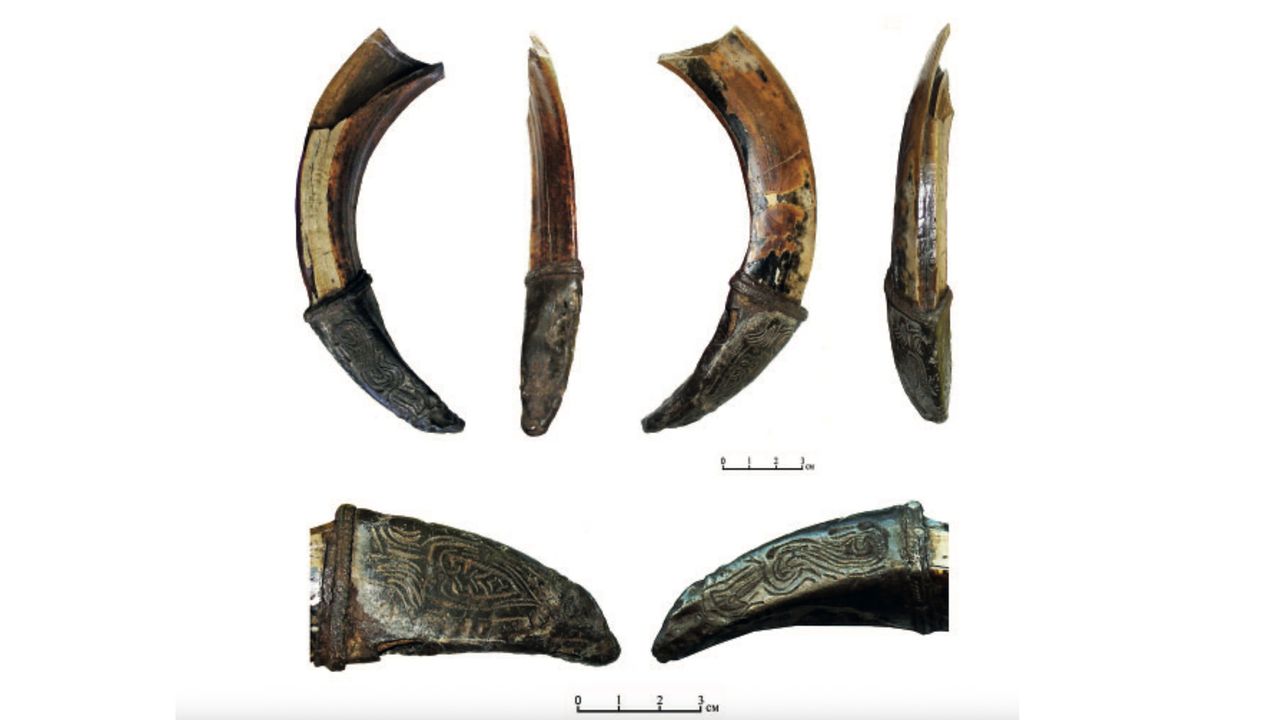
Decorated boar tusk amulet from medieval warrior discovered in Novgorod the Great
Live Science · 4d ago
💡 Did You Know
Decorated boar tusk amulet from medieval warrior discovered in Novgorod the Great
Live Science · 4d ago
Comments
No comments yet — be the first to weigh in 👇
No comments yet. Be the first!