Garmin Cirqa screen-free smart band costs $199.99 and delivers accurate heart rate tracking
Garmin has launched the Cirqa (styled CIRQA), a screen-free smart band priced at $199.99 / £179.99 / AU$299.99, coming in four colours: French Grey, Black, Captain Blue and Mauve. It features the Elevate V4 heart rate sensor used in many Garmin watches, and accuracy tests against a gold-standard chest strap returned very good results. The band competes directly with the Google Fitbit Air and Whoop.
Full text
Garmin Cirqa smart band has finally dropped
The screen-free smart band costs $199.99 / £179.99 / AU$299.99
I tested its accuracy and found it to be very good
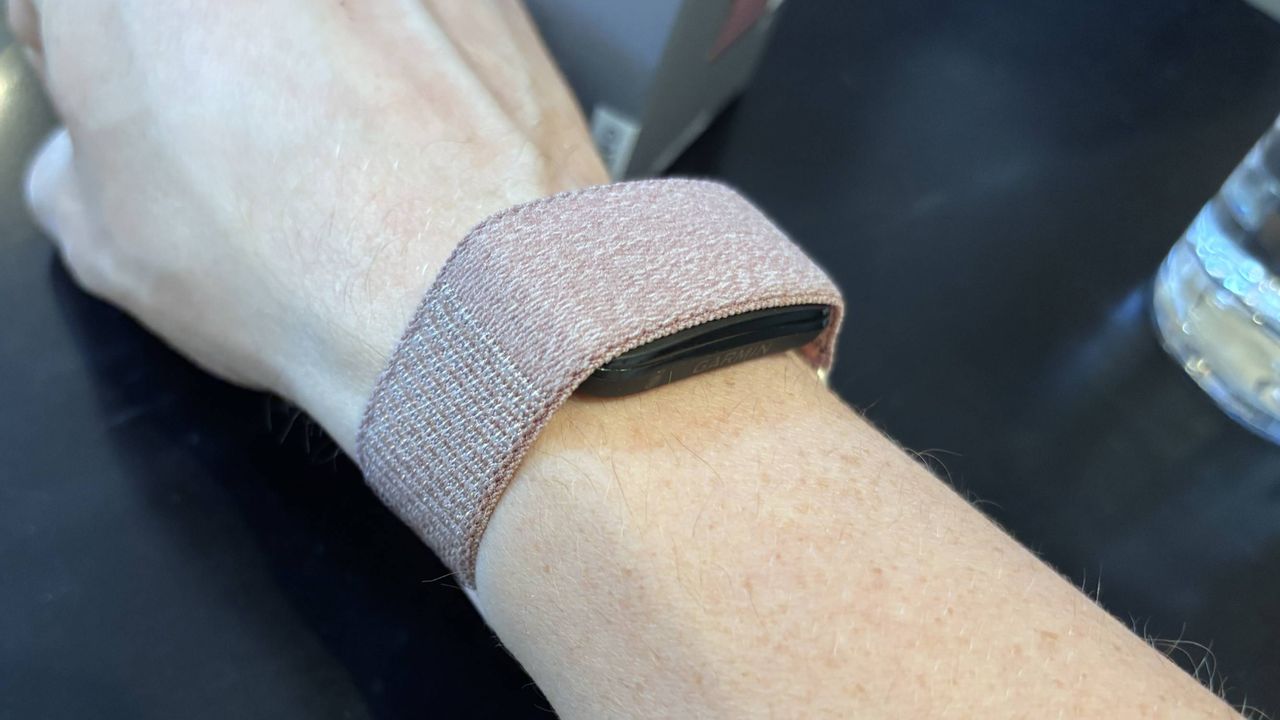
It’s here! After months of leaks, the Garmin Cirqa smart band (styled ‘CIRQA’ by Garmin) has finally arrived. I got a chance to check it out — and wear it for a workout — at the official launch event. A sleek-looking fabric smart band in four colors (French Grey, Black, Captain Blue and Mauve) wrapped around a plastic puck, there’s no denying it looks a lot like a Whoop, Polar Loop or a thicker version of the Google Fitbit Air .
The puck packs an Elevate V4 heart rate sensor, the same one used on some of the best Garmin watches . The more powerful Elevate V5 was apparently too big for the size of the unit, according to Garmin.
The tracker offers some of Garmin’s best features including Health Status (Garmin's feature that monitors your vitals overnight), Body Battery, Training Readiness, pulse ox, women’s health tracking, and stress tracking and lots more. The Garmin Cirqa has a 10-day battery life, and the same proprietary charging port as the brand's watches. As expected, there's no onboard GPS, but it can piggyback off your phone's GPS.
Size-wise, it's slimmer than the Whoop MG but thicker than the Fitbit Air.
(Image credit: Future) Many other screenless trackers have no buttons at all, but here Garmin has stuck with its tradition of creating smartwatches with tactile buttons, and added a button to the plastic chassis.
You can press this button to start and stop a workout, but you can also rely on automatic activity tracking for this. Garmin states this will improve the longer you wear the band, and it's also possible to edit workouts in the Connect app to ensure the right movements are correctly interpreted. For example, if you run a lot, the Garmin Cirqa will interpret the swinging of your arms and acceleration as a running workout and start one automatically.
No subscription... or is there?
(Image credit: Future) The band is subscription-free at its base price. Many screen-free trackers from the likes of Whoop and Oura rely entirely on subscriptions, but there is an element of monthly payment creeping in there. You can access Garmin Coach to get personalized training plans, but only if you subscribe to Garmin’s premium Garmin Connect+ tier.
This is the first time Garmin Coach has been locked behind the Garmin Connect+ paywall — previously, it either came with a watch or it didn’t.
Chrissy Wheeler, Garmin’s EMEA Senior Product Manager for Fitness, was at the launch and spoke about the Cirqa. She said: “You do have the option for premium content under Garmin Connect+. There are additional features, if you want to, you can pay for those, like all of our coaching side of things with this device. For some of our higher-end devices, these come included, but because this doesn’t have a screen, you need Garmin Connect+ to access the coaching size, our nutrition app… as well as Active Intelligence and AI insights.
“The key thing is that disconnect. People wanting to disconnect from phones, electronics on a day-to-day basis, but still want those metrics. It’s ideal, firstly, for people getting into fitness for the first time, but also for a lot of our athletes. Cycling, for example. They might record all their workouts on an edge, but they’re missing out on that 24/7 recovery information, Body Battery, that goes alongside it.”
How I tested
Future Future After the product presentation, we were taken through a short HIIT workout by a trainer at the venue, for which I opted to wear the Polar H10 heart rate monitor . The Polar H10 is an electrical heart rate monitor worn on the chest, rather than an LED-based heart rate monitor worn on the wrist like the Cirqa.
It’s the gold standard for heart rate accuracy, used by many athletes all across the world. As fitness trackers use heart rate as the basis for almost all their metrics, it’s the perfect device to use as an accuracy benchmark.
During my workout, the Polar H10 recorded an average heart rate of 155 beats per minute, or bpm. The Garmin Cirqa recorded an average heart rate of 153 bpm, just 2bpm shy of the other device and well within the statistical margin for error. Graphs also aligned very closely.
Based on this first early test, I’m satisfied with the Garmin’s accuracy, but of course more testing will be required. Stay tuned.
Is the Garmin Cirqa worth $199.99 compared to rivals like the Fitbit Air and Whoop?
Comments
No comments yet
Comments
No comments yet — be the first to weigh in 👇
No comments yet. Be the first!