Full text
To protect their borders, the “Roman Empire” built the “Limes”, a fortified line, which was a protective barrier to keep the enemies out. This border line can be traced through whole Europe, and all through Germany. The parts in Germany are called the “Rhaetian Limes” and “Upper Germanian Limes”. In some places the borderline, guard towers or forts can still be viewed. Since 2005 the “Limes” and its structures are protected by UNESCO as a World Heritage Site.
Starting in the year 9 AD, when the “Roman Empire” was terribly beaten by the Germanic “Barbarians”, there have been repeated problems for the Romans in today's Germany. Almost 100 years later they started to build the “Limes”, and while doing so, annexing parts they did not yet conquer. The line against the Germanic peoples was especially fortified by wooden palisades, frequently interrupted by guard towers and bigger and smaller forts, always in visual range from one to the other.
One of the forts was the small “Kastell Holzheimer Unterwald” right at the “Limes”, which was built between two guard towers and housed about 30 soldiers. Inside the walls of the fort, only measuring 19 x 17 meters, two wood-timbered barracks with wooden roof tiles were built to house the soldiers. To guarantee the supply of water, a 9.5-meter-deep well was dug. The fort had a gate, wide enough to allow small carriages to come inside, which was topped by a tower and could be closed with a drawbridge, leading over the 2-meter-deep ditch that surrounded the fort.
The small fort in Holzheim has two specialties. For once, because of its small size, the usual parapet walk along the walls is missing, probably to save space for the buildings. The other is that the corners of this fort were not rounded, as can be found in other forts of the area.
Since 1894, several archaeological excavations have taken place. During one of them, a batch of ancient coins was found, the oldest of them dating to the year 69 AD, which proves that the Romans have been interested in this part of the land for a long time. An explanation could be that the area, the “Wetterau,” has had and still has very fertile soil and has provided the necessary aliment to the troops.
During the excavations, the archaeologists were able to understand how the fort was constructed and what it looked like. From 1991 to 1995 the base of the fort was reconstructed and can be viewed today. On plaques, the history and structure are explained. Right along the fort, the “Limes” is very well preserved. The ridge is up to two meters high and makes it easy to imagine how the soldiers saw the place almost 2000 years ago.

 Hoard of five Roman silver denarii unearthed in Halle-Nietleben, Germany
National Geographic PL · 9h ago
Hoard of five Roman silver denarii unearthed in Halle-Nietleben, Germany
National Geographic PL · 9h ago
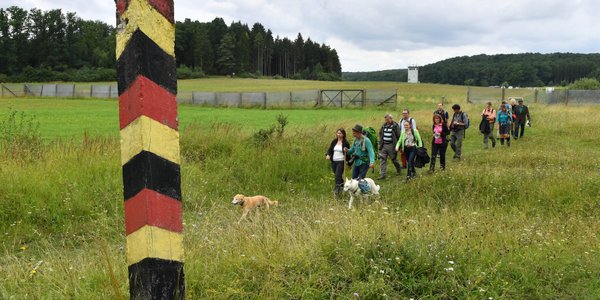 Germany's former 'death strip' border zone bids for UNESCO World Heritage status
Rzeczpospolita · 4d ago
Germany's former 'death strip' border zone bids for UNESCO World Heritage status
Rzeczpospolita · 4d ago
 Darß's ornate front doors in Prerow, Germany – a UNESCO World Heritage gem
Atlas Obscura · 10d ago
Darß's ornate front doors in Prerow, Germany – a UNESCO World Heritage gem
Atlas Obscura · 10d ago
Comments
No comments yet — be the first to weigh in 👇
No comments yet. Be the first!