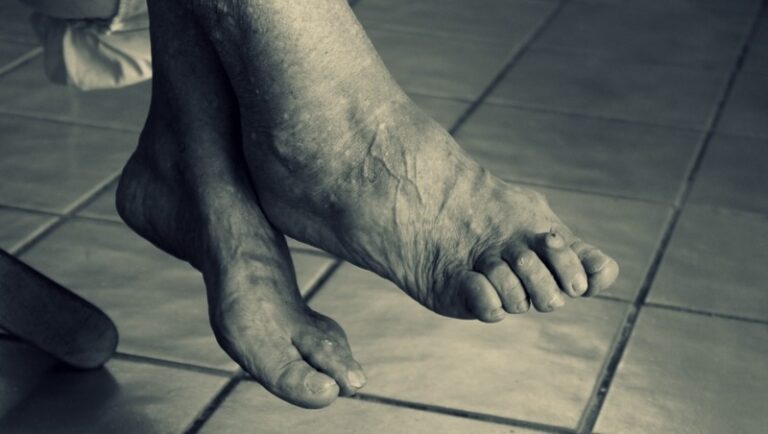
What our treatment of the elderly reveals about our culture
A personal essay uses daily dog walks through Pittsburgh neighbourhoods as a starting point to reflect on how Western culture views and treats elderly people. The author considers what our everyday interactions — or lack thereof — with older generations reveal about our deepest cultural values. The piece is a meditation on ageing, community and social isolation.
Full text
Each day, my dog, Helgi, and I walked about eight miles. We started on Wymore Street, in the heart of Elliott, my neighborhood, and strode past the baseball field with its weird sign, past the city workers’ fueling station and dump, where the same old boats sat for months, rained on and sagging. Then we climbed Round Top Street, which punished my legs deliciously, and like many such streets in Pittsburgh, boasted a series of extraordinarily many stairs running parallel to the tilting asphalt, which once, in an icy winter, I saw a moving van slide helplessly down, its driver’s mouth making a quaking O.
We made a soft landing into Crafton, a different neighborhood whose semi-downtown, boarded up, boasted a lone business, a seemingly empty massage parlor named PINCH ME (“Experience THE PINCH”). Beyond lay a stretch of woods bordering a thicket of huge, old houses whose front lawns we promenaded past, deciding one hill or another to be our midpoint. At its crest we would begin the long arc back home to the tiny house on the side of a now faraway incline. Thanks to its topography, and the presence, everywhere, of water and of bridges, Pittsburgh neighborhoods were fairly distinct from their neighbors, and old-timers would later tell me that there really was no reason to “cross the bridge”—any number of bridges—to go anywhere else.
Old stairways of wood or sometimes concrete laced the steeper hills, remnants from the days in which workers found them the quickest way to traverse the city’s wild voluptuousness and get to a job at a mill or a plant. Groundhogs sometimes lived underneath the stairways, and people, too, and once I saw, while huffedly raising my head on my climb, a plastic bag so strangely affixed underneath the landing of one of these stairways, that it looked for a second like a shrine.
Like liquid mercury, old age wobbles and slides upon viewing. But it has to start somewhere, at least bureaucratically.
In the memoir Bibliophobia , Sarah Chihaya writes of her “diffuseness”—how, in her “most lost moments, I see myself disintegrating and drifting into everything and everyone else, floating unseen and dispersed.” When I read this line, five years after leaving the city, I underlined and starred it, and wrote PITTSBURGH in the margins: This was the feeling I often wanted then, because it would mean that I could finally stop living inside my own brain, and my brain and body’s adherence to chronological time. This was why I walked farther into the neighborhoods still new to me, and why I began to take on mountains of work that would hopefully allow me to forget that I sat there on a creaking chair until it was dark again.
Of course, it is one of the oldest things in the world, at least in some cultures, being afraid of time passing. Taken further, it is one of the oldest things in the world, the fear of emerging as older, and among the ranks of the aged. “Every man desires to live long, but no man wishes to be old,” wrote Jonathan Swift. In Western antiquity, writes academic William Ian Miller, old age could be looked at in one of two ways—as a glorious time of virtuosity and wisdom, or as the representation “of everything that is vile about embodied existence.”
For the humors-focused, centuries ago, old age was “the age of phlegm.” Oldness was “about rot, meanness, avarice, cowardice, peevishness, irascibility, moroseness, whining, bad eyes, deafness, dripping noses, hacking coughs, baldness, loss of teeth, reeking breath, loss of libido, sagging flesh, forgetfulness, repetitive garrulity.” Opened at random, Simone de Beauvoir’s book on older age reminds us of Horace’s words toward an old woman: “Antiquity ploughs furrows in your ancient forehead…your breasts are as flaccid as the dugs of a mare…what a reek enwraps every part of her flabby limbs.” Centuries later, in the 1980s, one Illinoisan market researcher likened old age to a “Peoria winter,” a term that did, to some degree, make me shudder, having spent my adolescent years not far from Peoria, a city that has always stunned me for its riverine, post-industrial beauty, but where winter hits hard and icy and Spare.
From my pink couch in Pittsburgh, I read this hodgepodge of age-fear, the sunlight slanting down through the dark wood windows. I had gone to a few branches of the Carnegie Library—West End, Mt. Washington, Main—to collect the reading. (One day, I combined that errand with a trip to one of the Carnegie museums, where I noted the feedback pinned to a wall by museum visitors, in response to a prompt asking for “your Pittsburgh story.” “I don’t really have one, I’m 12,” wrote one visitor. Another: “I moved here and I will leave hopefully soon.”) In my house, the piles of books around me bore the name of the famous industrialist printed on their fleshy stacks of pages, so many years after his life and death here. Reading on this theme felt less about quelling a fear than it did trying to explore it, trying to understand, better, the reality of oldness, which turned out to be a vast, nearly impossible to define category— how old was she , that question with both one answer and none that made any sense.
My own fear had little to do with the body. It was something more diffuse. And others’ fears around oldness, I read, reflected old age’s largeness and variability. One 1974 report I found, administered by the National Council on the Aging, and titled Myth and Reality of Aging , asked more than four thousand people to respond to countless questions about their feelings on getting older. The report was not actually much of a report. Rather, it was a dense collection of coding categories such as:
WORST OF BEING 65 OR OLDER
Worst of >65-brain weak
Worst of >65-neglected
Worst of >65-disabled
Worst of >65-wear out
Worst of >65-loneliness
Worst of >65-bordom [sic]
And also, I noted, with some degree of wry perturbation:
WHEN AND WHY ARE WOMEN OLD
Women old—menopause
Women old—others dead
Women old—set in ways
Women old—feels old
Distilled like this, to coding categories, a certain clarity shimmered. “Women old—feels old.” It was a spare but mysterious, even nonsensical assertion. I kind of liked it. The phrases bumped along in my brain in the following days. How old was she? Women old—feels old. Did I feel old? Did my age line up with what was going on for me, in the way that I had made the tree line up perfectly with the telephone line back in Central New York? These questions obviously didn’t have answers, but as time moved forward, they seemed to sharpen.
It was self-indulgent and embarrassing to claim anything like old age. And yet the last few years, in part thanks to the pandemic, had been such a strange blur that I felt far older.
I parsed the blurry, swimmy data set from a decade and a half before I was born. A good number of people had identified that when a woman was “psychologically old, or she thinks or feels old, or she worries about aging and dying,” this was when she was “old.” But a larger number of people didn’t provide a response to the question. This was because, it turned out, there was some basic confusion, or disagreement, about when people became old to begin with. Forty-one people had said that they thought “the average woman becomes old” before the age of forty, a striking idea in 1974, when the life expectancy at birth for the average woman was around seventy-six years. Then there were some streaks of about three hundred people identifying the advent of oldness to the early, mid, and late sixties. But the largest number of people—nearly one thousand—offered up the following vague, perfect answer: “It depends.”
Just recently, I read a statistic that more than 20 percent of Americans between the ages of twenty-five and thirty-four considered themselves to be middle-aged. If this was the case, then technically I was not far from the advent of older age, a realization that spun me.
It is true that there is no clear onset to old age. Like liquid mercury, old age wobbles and slides upon viewing. But it has to start somewhere, at least bureaucratically. In the United States, we might say that old age begins at sixty-five—this is when you can begin (if you have not already begun) to use Medicare and collect Social Security. In Australia, the bureaucratic onset of old age, or when you might collect your pension, anyway, is at age sixty-seven, China, sixty-three (for men, fifty-five to fifty-eight for women), Greece, sixty-seven (and many European countries are slowly raising it to this number). Internally, it’s murkier. People tend to place old age in the distance—the older you are, the more you think old age is still in front of you, according to a twenty-five-year-long study in Germany. Speaking of that study, one academic: “Some people have such negative views of the elderly that they don’t want to be associated with them…So if they’re 70 years old, they’ll say old age begins at 75. And when they get to 75, they’ll say old age begins at 80.” Like death, “old” bobs on the horizon, a buoy to watch but never pass.
Yet it can also appear suddenly and irrevocably, as in a Cynthia Ozick essay I love, which ends as such: “Your hair is whitening, you are a well of tears, what you meant to do (beauty and justice) you have not done, papa and mama are under the earth, you live in panic and dread, the future shrinks and darkens, stories are only vapor, your inmost craving is for nothing but an old scarred pen, and what, God knows, is that?” Ozick was in her fifties when she wrote that essay. In Pittsburgh, if I was feeling something similar, I had less of a right: I was only in my thirties. It was self-indulgent and embarrassing to claim anything like old age. And yet the last few years, in part thanks to the pandemic, had been such a strange blur that I felt far older, swimming out far beyond the last buoy I remembered. I had the impression of time speeding up underneath me. Many people seemed to feel that the world was hurtling ahead, and that the early days of the pandemic were both very far away and very, very close.
To be more precise, I felt as if my life had done a kind of record-skip from my late twenties to my mid-thirties. I had not yet found a partner or begun to think about children; I did not yet have a “real” career; I was alone in this new place, cobbling things together with no one to really talk about them with. No one besides a few family members knew I was here. A terror surged at night that I would spend the rest of my life this way: without the shell I had prided myself on until now, which, I realized, depended on other people to see it. Alone, I was understanding, a shell served no purpose at all.
____________________________
Excerpted from Aging Out: An Exploration of Caregiving, Community, and How Americans Grow Old by Lucy Schiller. Copyright © 2026 by Lucy Schiller. Reprinted with Permission from Flatiron Books, an imprint of Macmillan. All rights reserved.
Does Western culture treat elderly people with the respect they deserve?
Comments
No comments yet













Comments
No comments yet — be the first to weigh in 👇
No comments yet. Be the first!