Full text
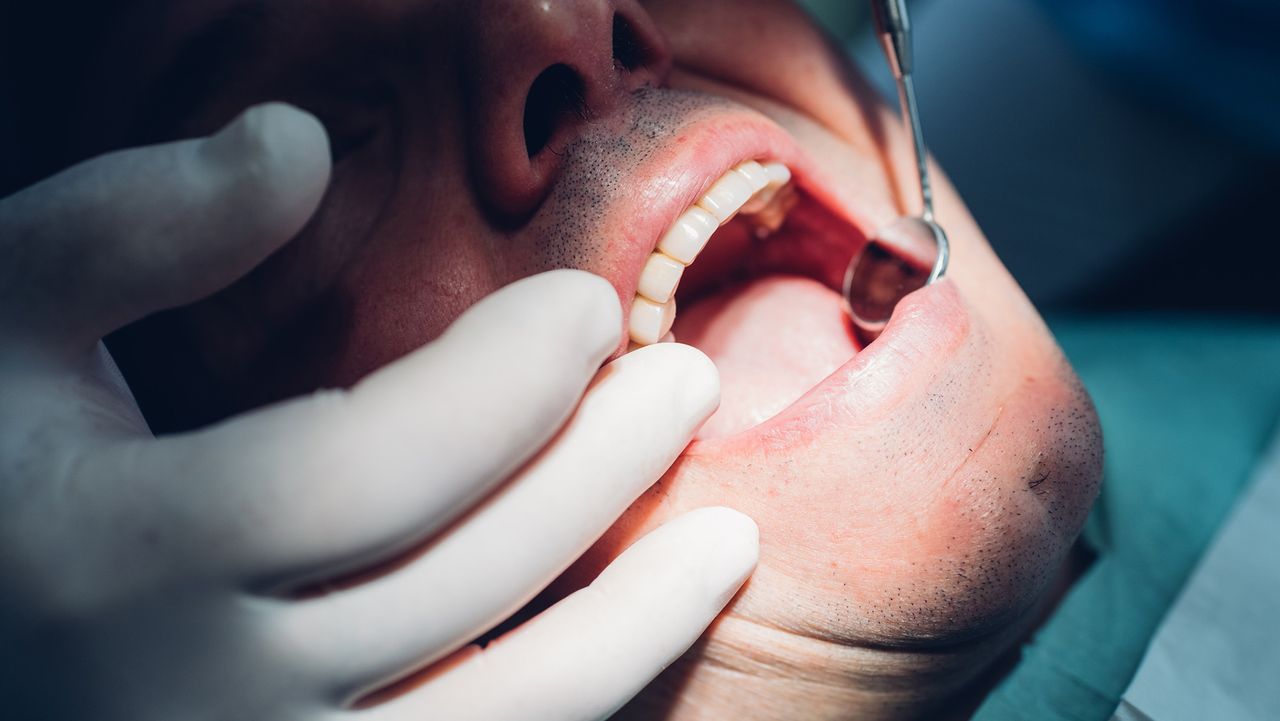
A common culprit behind severe gum disease may also stiffen and narrow the heart's aortic valve, preliminary research suggests. This may help explain links between gum problems and poor heart health.
Scientists have long linked severe gum disease to inflammation throughout the body and a higher risk of heart problems , including coronary artery disease , which can raise the risk of heart attack. Studies have also found that treating gum disease can improve blood-vessel health.
Now, researchers suggest that Porphyromonas gingivalis , one of the main bacteria involved in severe gum disease, may also contribute to calcific aortic valve disease (CAVD), a condition in which calcium builds up in the heart's aortic valve. The findings were presented in July at a meeting of the American Heart Association in Boston and have not been peer-reviewed yet.
Dr. Elena Aikawa , a professor of medicine at Harvard Medical School who was not involved in the study, said the findings "fit well with our current understanding of calcific aortic valve disease as an active, inflammation-driven disease rather than simply wear and tear of the valve."
Periodontal disease is likely just one contributor among many, rather than the sole cause of CAVD, she added. But the study does identify a biologically plausible pathway linking oral health to heart health that could open new opportunities for prevention and treatment.
How mouth bacteria harm the heart
CAVD affects millions of people worldwide , and there are no approved drugs that slow or stop its progression. As the disease worsens, people may develop fatigue, shortness of breath and chest pain, and in severe cases, they often require valve-replacement surgery .
Meanwhile, prior to the new research, it was known that bacteria and inflammatory signals from the mouth can sometimes enter the bloodstream and affect distant tissues, said Richard Lamont , chair of oral immunology and infectious diseases at the University of Louisville School of Dentistry, who was not involved in the study. Over time, these effects can accrue and gradually reshape how the immune system behaves, he said.
In CAVD, calcium builds up in the aortic valve, which connects the left side of the heart to the large artery that carries oxygen-rich blood to the body. (Image credit: Noctiluxx via Getty Images) P. gingivalis is known to be particularly destructive to gum tissue, causing lots of inflammation, and it's been tied to cardiovascular disease in the past. To see if the bacterium might be directly impacting heart health, researchers at Fuwai Hospital in Beijing looked for P. gingivalis in aortic valve tissue removed during valve-replacement surgery. They compared this diseased tissue to valves that weren't calcified.
The calcified valves contained much higher levels of P. gingivalis DNA and proteins made by the bacterium. " P. gingivalis was about 30 times more abundant in calcified valves than in non-calcified valves," study first author Dr. Chenyang Li , a doctoral candidate at Fuwai Hospital, told Live Science in an email.
To test whether the bacteria might directly contribute to valve damage, Li and colleagues injected live P. gingivalis into the bloodstreams of healthy lab mice. The bacteria reached the animals' aortic valves, triggering inflammation, calcium buildup and narrowing of the valve.
"We were surprised to see valve calcification even in mice without high cholesterol," Li said. "This suggests P. gingivalis may directly contribute to valve disease, beyond traditional cardiovascular risk factors."
A comparison group of mice was given antibiotics before the injection and had less bacteria in their aortic valves and slower disease progression. Meanwhile, mice injected with dead P. gingivalis bacteria did not show any changes in their aortic valves.
Related stories
How does plaque cause cavities?
Scientists gave mice flu vaccines by flossing their tiny teeth
'Night owls' may have worse heart health — but why?
The researchers traced the changes in the mice's hearts to interleukin-1 beta, a signalling molecule that normally helps the body fight infections. Exposure to P. gingivalis ramped up the production of this molecule, and in turn, the immune signal switched on genes that pushed healthy valve cells to behave more like bone-building cells, which is a hallmark of CAVD . This switch causes the cells to lay down calcium in the surrounding valve tissue.
When the scientists blocked interleukin-1 beta in some mice, the animals developed much less valve calcification even when the bacteria reached the valve. Lamont said that the mouse experiments strengthen the case that there's a biological mechanism directly linking gum and heart diseases. However, he cautioned that mice have very different oral microbiomes than humans, making it difficult to know whether the exact same process occurs in people.
That said, the team also saw the same pattern in human valve cells grown in the lab. Exposure to P. gingivalis increased inflammation and calcium buildup among the cells, while blocking interleukin-1 beta blunted those effects.
Both Aikawa and Lamont said more research is needed to confirm the relationship in humans. The findings give researchers a new pathway to explore for future treatments, raising questions of whether targeting inflammatory signals like interleukin-1 beta could help slow the progression of this widespread heart disease.
This article is for informational purposes only and is not meant to offer medical advice.
What do you know about the body's hardest-working muscle? Find out with our heart quiz!
















Comments
No comments yet — be the first to weigh in 👇
No comments yet. Be the first!