Full text
Researchers have discovered that children's brains can contain cells with their mother's DNA and that these cells can persist for decades.
The findings, which were posted to the preprint database bioRxiv June 10 but have not been peer-reviewed yet, are part of a growing body of work showing that a mother and fetus exchange cells during pregnancy — a phenomenon known as "microchimerism." Previously, scientists had found that a mother's brain harbors cells with her children's DNA.
The findings are important for several reasons, said Amy Boddy , co-director of the Microchimerism, Human Health and Evolution Project at the University of California, Santa Barbara, who was not involved in the study. Past work mostly found evidence of maternal microchimerism in infancy, and in blood samples, she told Live Science in an email. "What's exciting here is that it's tissue, not blood; it's real human data, not an animal model; and the methods are cutting-edge."
More broadly, the work reinforces the idea that microchimerism is "a normal process of mammalian biology," Boddy said.
Hunting down maternal cells in the brain
Before this study, there was sparse evidence for maternal microchimeric cells in brains, mostly because it is hard for researchers to get samples of human brain tissue and DNA from both parents and their children.
To overcome this challenge, a team led by Sami Kanaan , a staff scientist at the Fred Hutchinson Cancer Center in Seattle, analyzed brain tissue that had been surgically removed from dozens of children with severe epilepsy as part of their treatment. The patients ranged in age from 28 days to 19 years at the time of their surgery, and their mothers provided DNA samples through cheek swabs.
Kanaan's team used a tool called quantitative PCR to identify and count maternal cells hiding among millions of cells in the children's brains.
Out of 37 mother-child pairs, 26 children — 70% — had their mother's cells in their brains. These maternal cells were distributed across multiple regions of the brain, including the frontal, temporal and parietal lobes, which sit on the brain's outer surface, and the hippocampus, which is buried deep inside. Each sample had, on average, about 2.2 maternal cells per 100,000, though one sample from the hippocampus had 459 maternal cells per 100,000 and 11 children had no evidence of maternal DNA in their brains.
That prevalence is probably underestimated, Boddy said, "due to the limits of detecting rare cells at low frequency with this method."
Being a firstborn child seemed to increase the odds of having maternal cells in the brain. Of the children who carried their mother's cells, 14 were firstborns and 12 were later-born. In contrast, among the children who didn't have these cells, only one was a firstborn and 10 were later-born.
Using a technique called single nucleus RNA sequencing, which reveals what a cell is doing by showing which genes within the cells are switched on, the researchers found that the maternal cells had transformed into several types of brain cells. Likely, these cells were originally leukocytes and stem cells and had been transferred to the fetus via the placenta or during pregnancy or breastfeeding.
The transformed cells included neurons; oligodendrocytes, which produce the protective sheath around neurons; astrocytes, which support many brain functions and help fuel neurons; microglia, the brain's immune cells; and endothelial cells, which line blood vessels.
"Being able to use single-nucleus RNA sequencing to identify what type of cells the maternal microchimeric cells actually are is amazing," Boddy said. "We've been so limited in understanding the function of these cells, and papers like this, with these methods, are getting us closer."
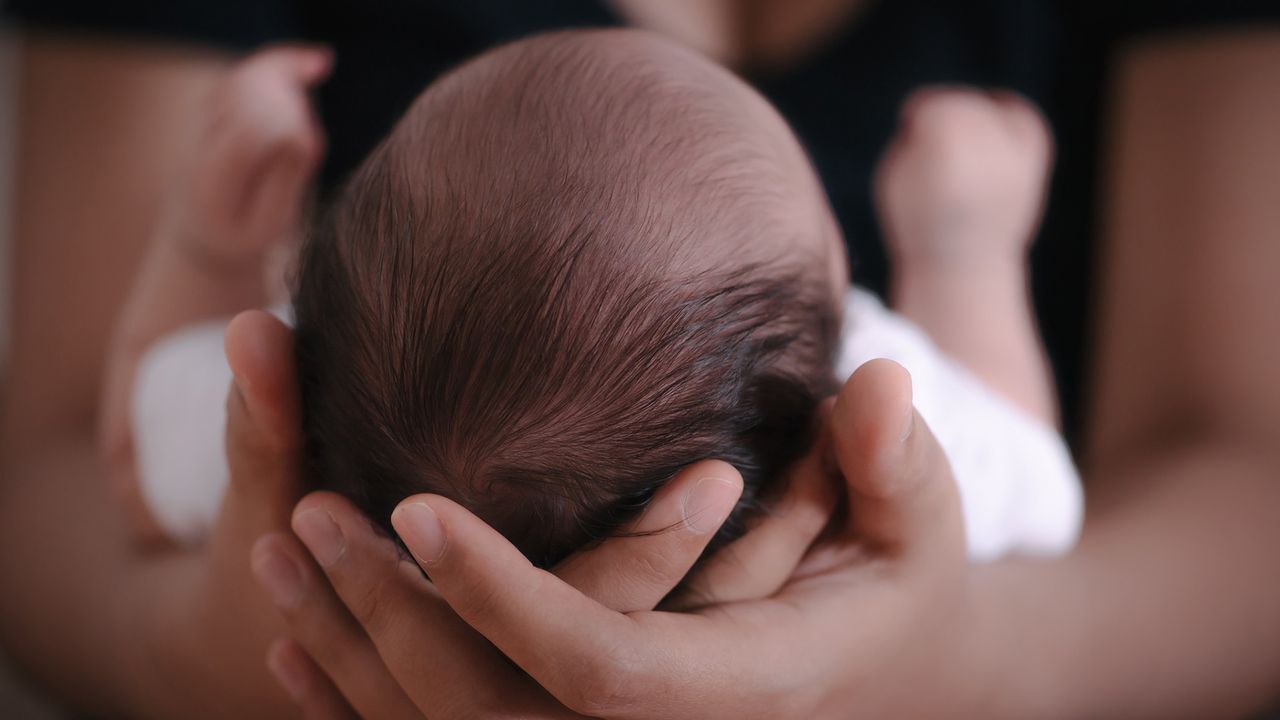
During pregnancy, the mother and fetus exchange cells — a phenomenon called "microchimerism." (Image credit: Rhenizara S via Getty Images) Checking healthy brains
To see whether these findings also applied to people without epilepsy, the researchers examined brain autopsy data from 29 individuals with no known neurodevelopmental conditions, ranging in age from 22 weeks of gestation to 40 years. They also analyzed brain tissue from three men in their late 80s and early 90s without any known brain conditions originally collected as part of an Alzheimer's disease study.
In total, the researchers found foreign cells in 25 of 32 people — about 78% — including in the brain of a man in his 90s.
The researchers suspect these foreign cells are maternal, but they couldn't confirm it because they didn't have DNA from the mothers. It is possible that the foreign cells came from a twin; an older sibling; a past pregnancy, miscarriage or abortion (in females); or, rarely, from a maternal grandmother, the team wrote in their paper.
As in the epilepsy patients, these cells had matured into several types of working brain cells. In younger brains, they most often became a specific kind of neuron, a layer 2/3 neuron, while in older brains, maternal cells were more likely to be microglia.
Given that these microchimeric cells take on very different roles, it would be interesting to know whether that diversity reflects their origins — for example, whether they came from a mother, an older biological sibling or a maternal grandmother, said Dr. Sing Sing Way , a microchimerism researcher at Cincinnati Children's Hospital Medical Center who was not involved in the study.
The number of maternal cells declined with age, but they never completely disappeared.
Related stories
'It doesn't lie. So who are you?': What happens when DNA tests show a woman is not the mother of the child she gave birth to?
Diagnostic dilemma: Woman had her twin brother's XY chromosomes — but only in her blood
Why does a mother's body keep some of her baby's cells after birth?
Boddy said the findings mostly raise new questions. "Do we maybe need microchimeric cells to 'help out'?" she asked. "Is diversity of cells in the brain important, or is it just a byproduct of being a placental mammal?”
Because microchimeric cells appear to be common, Boddy suspects they "are doing an important job in the brain, so understanding their function could be very important for understanding healthy brain development."
By using new analytical tools to pinpoint microchimeric cells, the study "pushes the boundaries" of previous research, but future studies would benefit from larger and more uniform datasets, Way said. That would mean obtaining more brain biopsies, analyzing more cells from each sample, collecting specimens at different ages, and sampling similar brain regions across individuals to better compare the results.
This article is for informational purposes only and is not meant to offer medical advice.





















Comments
Join the discussion — what's your take?
No comments yet. Be the first!
no i co z tego, jutro i tak zapomnę że to był
Report