Full text
As of 2025/2026, Berlin is home to no fewer than 175 museums and collections. Among them are the temples of high culture—places where one can practically torture children—featuring dusty exhibits, endless explanations of cultural context, and, in the case of contemporary art, over-the-top essays on the intended "depth" of the works, ensuring the curators' 20 semesters of art history weren't in vain.
But then there are the small, quirky, and sometimes extremely specialized museums: dedicated to Bud Spencer, David Hasselhoff, the Ramones, currywurst, sugar, hemp, disgusting food, or the Trabant as a cult vehicle. Some are developed as potentially lucrative business ideas and vanish as soon as the zeitgeist shifts. What these specialized museums have in common, however, is that they usually begin with the hobby, enthusiasm, or "collector's mania" of a single person—a passion that is often difficult for outsiders to grasp.
For the Computerspielemuseum (Computer Games Museum), Andreas Lange was that gaming-obsessed nerd. A graduate of Religious Studies, he dedicated his thesis to computer games and, after graduating, became an evaluator for the "Unterhaltungssoftware Selbstkontrolle" (the German age-rating body for software). In this role, he had to play all the new games in question for age restrictions from A to Z. Also, a large collection emerged.
The idea for the museum emerged from the Förderverein für Jugend und Sozialarbeit e. V. (Association for Youth and Social Work). As founder and curator, Andreas Lange, together with Klaus Spieler, opened a permanent exhibition on the history of computer games on February 1, 1997, in provisional quarters in Mitte’s Rungestrasse. The response was overwhelming; game developers from the US were constantly dropping by, temporary exhibitions at trade fairs and festivals followed, and the collection grew. Soon, the space was no longer sufficient, but the sponsoring association was unable to finance larger premises. Consequently, in December 2000, after four years of operation, the team decided to close the museum—partly to put pressure on the Berlin Senate.
However, the "emergency brake" turned into a long-term sidetrack. Due to a change in political leadership, a new Senator for Culture took office and attached little importance to the museological value of computer games. Furthermore, Berlin's coffers were notoriously empty. Between 2000 and 2011, the Computerspielemuseum existed only virtually as a website; the hardware was stored in Hellersdorf, while the software remained with the museum’s sponsor.
Persistence, political goodwill, and the fact that the former Café Warschau on East Berlin’s grand boulevard, Karl-Marx-Allee, had stood empty since 1999, finally led to the reopening of the Computerspielemuseum on January 21, 2011. Andreas Lange stayed until 2018.
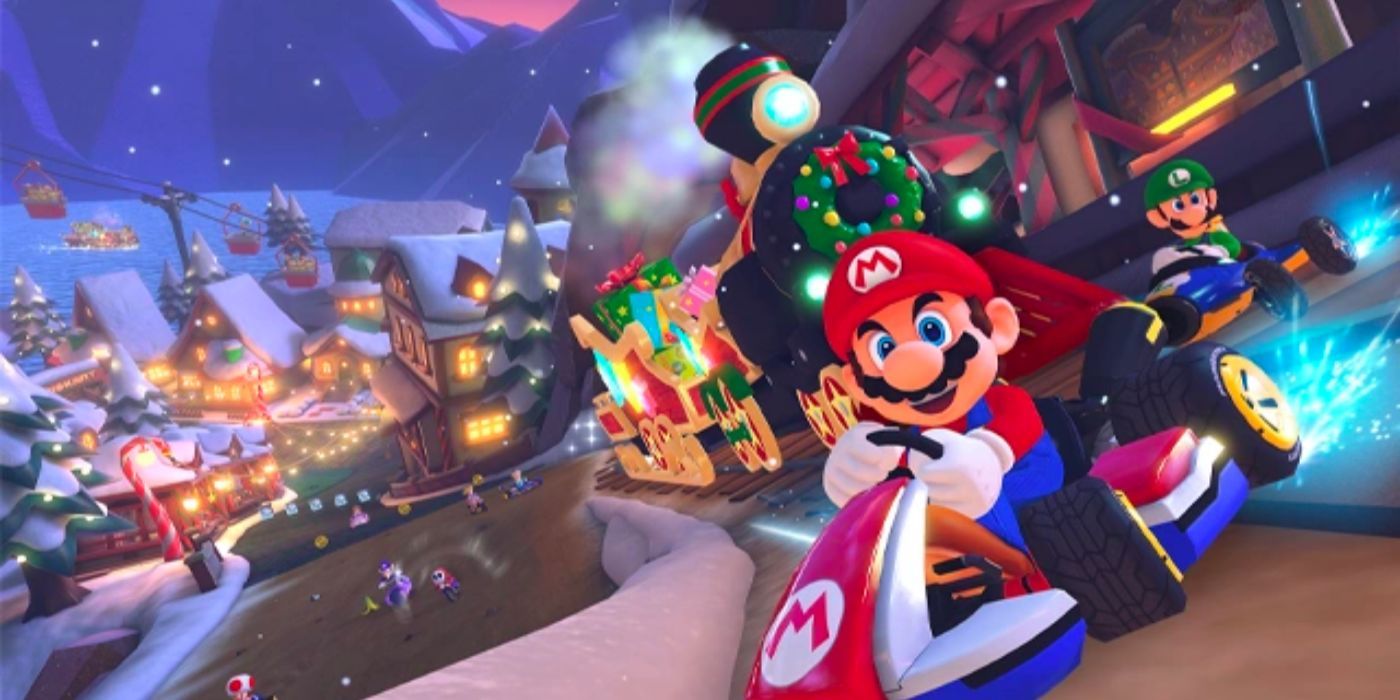
Unlike many other museums, children and grandchildren actually burst with excitement when a visit is planned. For the children of the 70s and 80s, it is a trip back to childhood with Pong , Space Invaders , Donkey Kong , and Super Mario . The "Wall of Hardware" is designed as a green arcade hall, where over 70 historical gaming machines are functional and playable. Over 300 exhibits invite visitors into the world of the "gaming human" of the 21st century—turning them into " Homo Ludens digitalis ". Naturally, only a fraction of the archive can be displayed. The museum's holdings include over 35,000 original data carriers, 350 consoles and computer systems, 12,000 magazines, as well as merchandise and giant figures of Link and Mario. Since its reopening, the CSM has welcomed more than a million visitors to its permanent exhibition, "Computer Games: Evolution of a Medium."
Less suitable for children is the "Pain Station," a curious crossover between gaming and performance art. Based on the game Pong , artists Tilman Reiff and Volker Morawe added a drastic twist: losing a point results in punishment via heat, whip lashes, or electric shocks. The creators aimed to tear down the boundaries between the virtual and physical worlds, noting that while modern games become increasingly realistic, they offer no real danger to life and limb. The loser is the one who pulls their hand away. No pain, no game.












Comments
No comments yet — be the first to weigh in 👇
No comments yet. Be the first!