Egyptian princesses buried 4,000 years ago were skilled archers and weapon users
A new study in Frontiers in Environmental Archaeology has re-examined the mummified remains of royal women buried at Dahshur, Egypt, dating to roughly 1850–1700 BCE. Analysis of bone markers shows the princesses were practised archers and likely used other weapons including maces and daggers. The findings challenge the assumption that weapons buried with ancient women were merely symbolic grave goods.
Full text
Welcome back to the Abstract! Here are the studies this week that loosed arrows, made sacrifices, prepared for battle, and took the hit.
First, a bunch of ancient princesses were buried with weapons. Did they know how to use them? You bet! Then: a deadly Inca ritual, animal war games, and the mystery of the dinosaur-killer.
As always, for more of my work, check out my book First Contact: The Story of Our Obsession with Aliens , or subscribe to my personal newsletter the BeX Files .
Disney princesses…OF DEATH
Hashesh, Zeinab et al. “Bioarcheological Reassessment of Dahshur Royal Skeletal Remains from the late middle kingdom (c. 1850 to 1700 BCE).” Frontiers in Environmental Archaeology.
Egyptian princesses who lived nearly 4,000 years ago were skilled archers and likely handled other deadly weapons, including maces and daggers, according to a new study that revisits their mummified bones and upends expectations about gender in the ancient world.
For more than a century, archaeologists have puzzled over the remains of ancient royals entombed in the Amenemhat II pyramid complex located in Egypt’s Dahshur necropolis.
Four of these mummified bodies have been identified as the daughters of the pharaoh Amenemhat II, known as Princess Ita, Princess Khenmet, Princess Itaweret, and Princess Sathathormeryt.
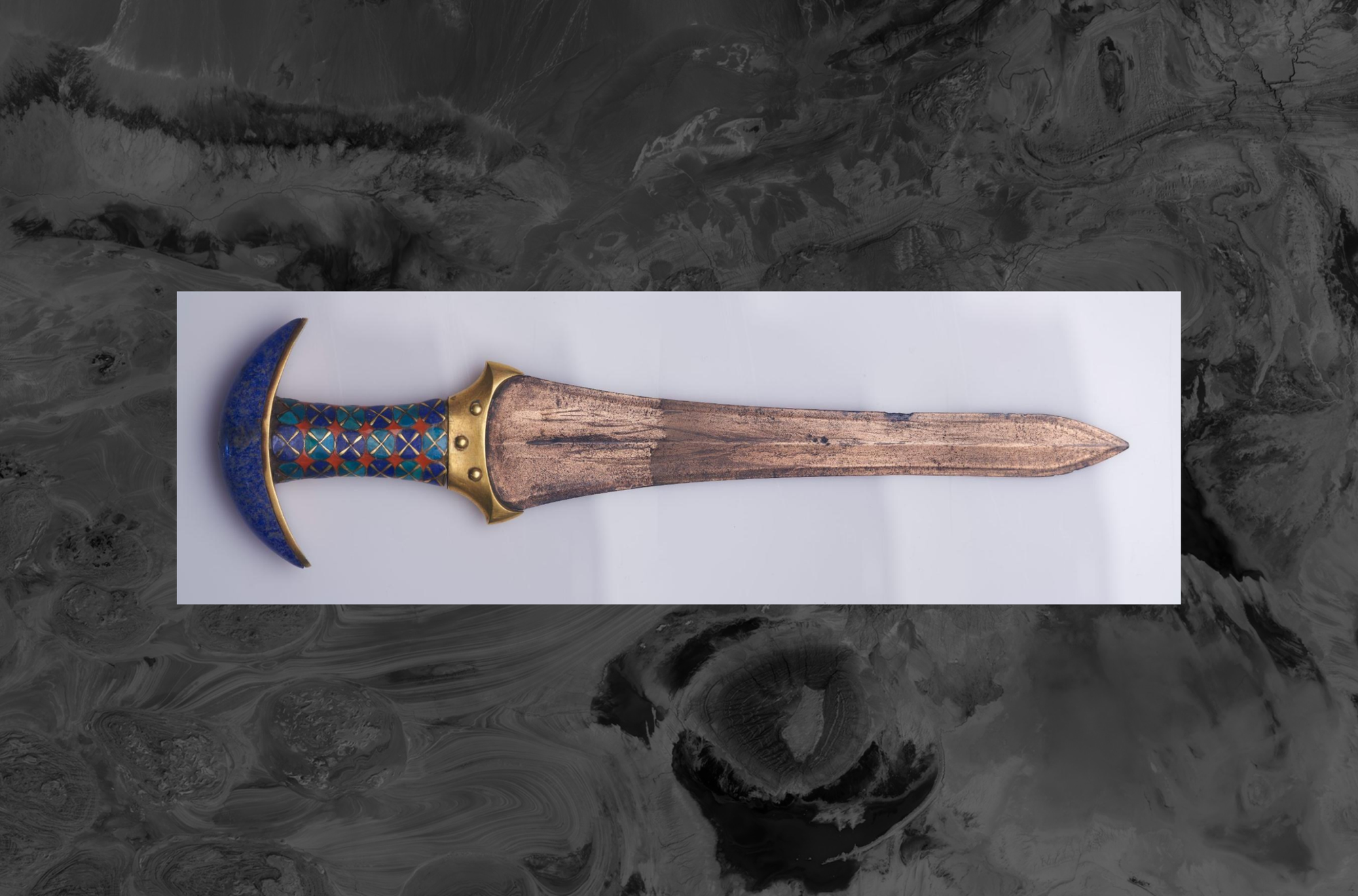
These women were buried with weapons, including bows and maces, which are grave goods normally found in male burials; Princess Ita’s tomb also contained a stunning dagger. Another pair of royals, Princess Noub-Hotep and her father King Hor, are buried in the same complex with weapons in their graves, and were also part of the study.
The presence of weaponry in the graves has led to a debate over whether the items were selected for symbolic purposes, or if the women used them in life. To resolve this question, researchers conducted a thorough re-examination of the mummified remains using osteological analysis, X-ray imaging, and advanced spectroscopy.
The results revealed that all of these individuals showed signs of bodily strain associated with repeated use of bows and melee arms, suggesting that not only King Hor, but the five princesses, knew their way around a weapon.
Pronounced muscle attachments across the mummified upper limbs “indicates repetitive, high-intensity actions consistent with archery and weapon use,” said researchers led by Zeineb Hashesh of the University of Beni-Suef.
“This evidence directly informs long-standing debates about the function of weapons in female burials,” the team continued. “Rather than purely symbolic objects, these items appear to have been actively used, as reflected in skeletal adaptations such as asymmetry, muscle hypertrophy, and metacarpal modification. Princess Noub-Hotep provides a particularly clear example, where skeletal changes align with the presence of arrows in her burial.”
In other words, these women don’t appear to have been the damsels in distress depicted in traditional princess stories. The mummification of their bare arms hints that they did, in fact, bear arms.
In other news…
The last days of the sacrificial children
Silva-Pinto, Verónica et al. “Pilgrimage to sacrifice: Mechanisms, causes, and time of death of the Western Andean Capacocha of the Southern Tawantinsuyu.” Science Advances.
We’re not wrapped up with the mummy beat just yet. In another new study, scientists took a fresh look at the mummified bodies of three young victims of human sacrifice in the Inca empire, who were ritually killed as part of a ceremony called the Capacocha in the 15th century.
“Selected for their perceived purity and exceptional beauty, the individuals chosen for sacrifice were either taken from their home communities or offered by local authorities” and “undertook a long, final journey to sacred mountain summits, where they were ritually killed,” said researchers led by Verónica Silva Pinto of the University of València.
The Boy of Cerro El Plomo. Image: Silva-Pinto, Verónica et al The results revealed that the Boy of Cerro El Plomo, a child of about 8-years-old discovered at an elevation of nearly 18,000 feet, was likely killed by blunt force trauma to the head, and not by hypothermia or strangulation as previously proposed. Using advanced imaging, researchers discovered a cranial lesion that may have been inflicted by “a blunt-lobed lithic star-shaped mace,” according to the study.
Meanwhile, the team found that two female victims found at Cerro Esmeralda, aged roughly 9 and 18, had an indeterminate cause of death, despite strangulation being put forward as the likely explanation.
In all three cases, the victims were brought from distant homelands and traveled for several months prior to their killings, according to isotopic analysis of the elements in their remains. The enormous effort invested in these pilgrimages, combined with the careful placement of the bodies in special costumes and poses after death, demonstrate the significance of the Capacocha in Inca statecraft and cosmology.
The art of war for animals
Arbon, Josh & Radford, Andrew. “Pre-emptive behavior in a landscape of intergroup conflict.” Trends in Ecology & Evolution.
Humans have a rather catastrophic habit of getting into wars, but at least we aren’t alone in our military misery. A diverse array of species—from ants, to woodpeckers, to chimpanzees—also engage in violent intergroup conflicts that require careful preparation for success.
Scientists have now helpfully pulled together a comprehensive review of how animals ready themselves for battle in part “to provide insights into our own conflict ancestry,” according to their new study.
A group of meerkats standing together in the face of an outside threat. Image: Andy Radford, University of Bristol Many behaviors are eerily similar to our own: Chimpanzees surveil rivals from hilltops, patrol perimeters, and march in single file. It is also common for animals to invest a lot of time and energy into sizing up their opponent’s force, including by carefully monitoring scent marks.
Some animals “travel considerable distances to eavesdrop on the contests of other groups to gather social information that is used only days or weeks later, as seen in acorn woodpeckers ( Melanerpes formicivorus) ,” said study authors Josh Arbon and Andrew Radford of the University of Bristol.
But by far the most memorable prep work comes from the Nevada termite, which erects “faecal fortresses” as barriers to intrusion by larger colonies. For all the fancy weaponry we’ve devised as humans—from guns, to nukes, to drones—how did we overlook the ultimate obstacle: poop barricades?
The case of the killer carbonaceous chondrite
Makhatadze, Georgy V. et al. “The origin of Cretaceous-Palaeogene impactor revealed by nickel isotopes.” Science Advances.
Deadly princesses, human sacrifice, widespread warfare. Let’s close with something lighter: The apocalyptic extinction of almost all life on Earth. It’s time to revisit the longstanding mystery of the dinosaur-killing space rock that smashed into our planet some 66 million years ago, causing the Cretaceous-Paleogene (K-Pg) mass extinction that wiped out about 75 percent of all animal and plant life at the time.
For decades, scientists have debated the nature of this epic deathbringer, which is known as the Chicxulub impactor. Now, a team has narrowed down the possible source to a class of asteroid called carbonaceous chondrites by studying nickel isotopes embedded around the impact crater in Mexico’s Yucatán Peninsula.
Concept art of Chicxulub impactor and its soon-to-be victims. Image: Donald E. Davis The identification of the impactor as a likely carbonaceous chondrite “is possible given nickel’s high abundance in primitive meteorites compared to the Earth’s crust and the distinct isotope compositions they record,” said researchers led by Georgy V. Makhatadze of Université Paris Cité.
“Our study highlights the extraterrestrial origin of the K-Pg mass extinction and the isotopes of nickel as a well-suited tool to characterise the nature of extraterrestrial material on Earth,” the team concluded. “Finally, it opens the door for further research into the connection between the impact and the mass extinction.”
Mummies, war, and doomsday. You’re welcome for the beach reads.
Thanks for reading! See you next week.
Should weapons found in women's graves be treated as proof of combat by default?
Comments
No comments yet



















Comments
No comments yet — be the first to weigh in 👇
No comments yet. Be the first!