
African POWs who fought for Russia want to return — to Russia, not their home countries
African prisoners of war captured by Ukraine after fighting for Russia say they want to be exchanged back to Russia, where they have built lives and families, rather than returned to their home countries. Ukraine is using their cases to argue across Africa that Moscow is recruiting African citizens as expendable frontline manpower. Ukraine's ambassador to South Africa, Olexander Scherba, said Russia "lies about this war" while Kyiv tries to tell the truth to African nations.
Full text
KYIV — Avatar says he does not want to go home.
The prisoner of war from the Democratic Republic of the Congo, captured while fighting for Russia in Ukraine, says his future is in Russia and his hope is to be included in a prisoner exchange that sends him back to the country whose army he joined.
“I have family in Russia, why should I want to go back to Congo?” said the POW, whom POLITICO agreed to identify only by his call sign. “Ukraine just thinks we will return to war.”
For Kyiv, men like Avatar have become evidence in a geopolitical argument Ukraine is trying to make across Africa: that Moscow is drawing African citizens into its war and using them as expendable manpower.
“[Russians] tell lies about this war — we tell the truth,” Olexander Scherba, Ukraine’s ambassador to South Africa, told POLITICO. “They want the blood of this war to be more African and less Russian. We tell Africans not to allow Russia to use them in a meat grinder.”
But the prisoners themselves complicate that message.
In interviews with POLITICO at a Ukrainian detention facility, several African POWs rejected Kyiv’s claim that they had been deceived into fighting. They said they had knowingly signed contracts with Russia’s military and wanted to be exchanged back to Russia, not repatriated to Africa.
“Some of us are here for two or more years,” said an Egyptian POW who uses the call sign Cairo. “Ukraine tags us as African countries’ citizens, and we think it’s because they don’t want to let us go back to Russia. And we all want to go back.”
Their cases have become one of the most visible fronts in a wider struggle between Russia and Ukraine for influence across Africa, where Moscow has deeper diplomatic roots, a larger embassy network and years of Soviet-era goodwill to draw on.
Ukraine says Russia has recruited almost 3,000 citizens from 36 African countries since the start of the full-scale invasion, often through false promises of work. The interviews with POLITICO, conducted with a Ukrainian official observing from a distance but not intervening, exposed the difficulty of making that case: Several of the men now in Ukrainian custody insist they knew what they were signing up for.
“It’s not true that Africans were tricked into the Russian army,” said Avatar. “They tell you about the job when you sign the contract. It’s just a job.”
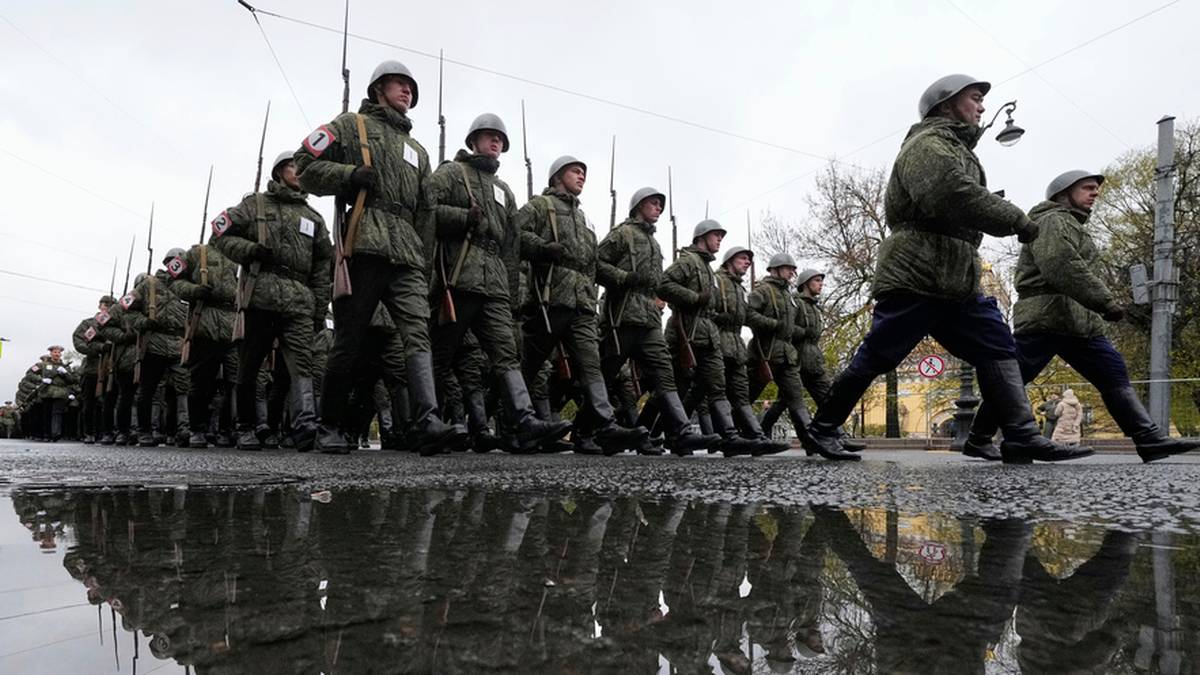
Russian military officers and cadets rehearse for a parade in Moscow on April 29, 2026. | Contributor/Getty Images
POLITICO agreed to the prisoners’ requests that they be identified only by their call signs. The Geneva Conventions discourage the publication of information about POWs that could attract public attention to them.
African recruits
Across Africa, the prisoners have become part of a larger argument over Russia’s war: whether Moscow is recruiting willing fighters with lucrative contracts or preying on vulnerable men with promises that lead to the front line.
Many have been killed, and hundreds are now prisoners of war, held by Ukraine in detention centers around the country.
“We see a very dangerous tendency of Russia recruiting citizens of many African countries into the Kremlin army,” Ukrainian Foreign Minister Andrii Sybiha told journalists earlier this year. “This stimulated many governments to apply for our help in return for their citizens.”
In a February speech to the Kenyan parliament, majority leader Anthony Kĩmani Ichũng’wah alleged that over 1,000 Kenyans had been recruited by Russian agents.
“Investigations have established the existence of an organized transnational trafficking syndicate recruiting Kenyan citizens under false pretenses, deploying them to active conflict zones in Russia,” he said.
But when POLITICO asked the POWs why they wanted to enlist, the answer they got was: money.
“It’s just business,” said Avatar. Russia offers a one-time signing bonus of about $13,000 for African recruits, and a monthly salary of at least $2,000 — a large amount of money in most of sub-Saharan Africa.
Losing ground
The recruitment battle is just one front in Kyiv’s broader campaign to counter the Kremlin’s influence in Africa.
Ukraine used to have only 10 embassies on the continent, which significantly limited Kyiv’s ability to spread its worldview and interests. It now has 18 embassies, but Russia is also expanding its footprint and now has 49.
Until the Russian invasion in 2022, Ukraine hadn’t prioritized relations with Africa.
“Then the full-scale invasion happened, and all of a sudden everyone realized that this huge, future-oriented continent largely didn’t understand Ukraine’s story because it did not hear it,” Scherba said. “And that it was, in many cases, a sandbox for Russian propaganda.”
So far it’s a battle in which Ukraine has been losing ground. In 2022, the only African country to vote against a U.N. resolution condemning Russia’s invasion was Eritrea. This year, six African countries opposed a Ukraine-backed measure condemning Russia’s invasion.
“Russia has been forming Ukraine’s image as a neo-Nazi state ruled by racists and supporters of apartheid,” a Ukrainian foreign intelligence service official said. “Moscow spreads these messages through their propaganda outlets, in universities, and through loyalist associations.”
A 55-year-old Ghanaian citizen, who asked to be identified only by his call sign Future, hopes that Russia and Ukraine will eventually exchange the international prisoners fighting on both sides of the conflict.
“If Ukraine really wants to be friends with Africa, it should let us go, in exchange for other internationals fighting for Kyiv,” Future said as prisoners took a cigarette break after lunch.
Should Ukraine repatriate African POWs to their home countries?
Comments
No comments yet












Comments
No comments yet — be the first to weigh in 👇
No comments yet. Be the first!