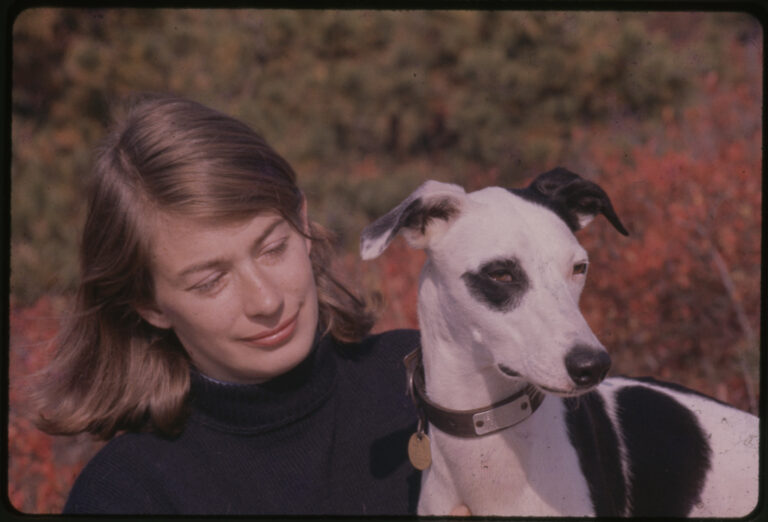
New Mary Oliver Documentary Complicates the Poet's "Nature Poet" Image
Filmmaker Sasha Waters has released a documentary about Mary Oliver, one of the most widely read American poets, who died in 2019. The film challenges the simplified image of Oliver as merely a romantic "nature poet," revealing a more complex artist. Oliver reached mainstream audiences with the help of champions like Oprah Winfrey, and poems such as "Wild Geese" became cultural touchstones.
Full text
At the time of her death in 2019, the late Mary Oliver was one of the most successful American poets to ever publish. She wrote dozens of collections, and several highly quotable bangers that a reader would be as likely to encounter on the family bookshelf as the SAT.
With champions like Oprah and Maria Shriver, Oliver bypassed the cultural barrier that’s often left poetry siloed from the other letters, tethered to the academy.
Her greatest hits—”Don’t Hesitate,” “ Wild Geese “—were that rare thing: recognizable, which helped her curry a reputation as a people’s poet. Beloved for writing accessible, romantic odes to the natural world.
A new documentary from Sasha Waters, the filmmaker behind Garry Winogrand: All Things are Photographable , aims to stir up that genteel impression, and complicate an artist who’s sometimes been dismissed as a “nature poet.”
Waters, a filmmaker with avant-garde origins, discovered Oliver’s work more than 30 years ago care of Garrison Keillor’s Writer’s Almanac. She was drawn to film Oliver’s life story care of a lifelong fascination with images. “There’s a relationship between representational photography and poetry,” she told me in a recent phone interview.
“In the best case scenario they both draw from the actual world—the visual world, the social world—and then transform their materials through metaphor.”
Oliver in her adopted Provincetown.
Produced by Kino Lorber, Mary Oliver: Saved by the Beauty of the World uses Mary’s “materials” to show the poet’s unruly side. This was no easy task, for Oliver was notoriously fierce about guarding her private life. And very little filmed footage of the artist exits.
That plus a predilection for writing about untrendy animals combined to give the impression that Oliver was—as Waters told me—”a sweet little old lady,” more accessible than sophisticated. But in Saved by the Beauty of the World , a more dynamic picture emerges.
Composed of interviews with Oliver’s close friends (John Waters, David Keplinger) and admiring peers (Major Jackson, Ariana Reines), and interspersed with recitations from celebrity fans (Stephen Colbert, Lucy Dacus), there’s an ekphrastic quality to the film. We drift between homage and analysis.
In early scenes, weight is given to Oliver’s eccentricity and ambition, two under-sung traits. Casual fans may be surprised by the film’s categorization of the poet: this Mary is bohemian, dogged, and desirous.
A young Mary Oliver, surrounded by books.
This reader did not know, for instance, that Mary Oliver was a teenage runaway—though she forsook the charms of a major city for the wild. (“Some people go into the library,” Mary narrates at one point. “I went into the woods.”) I also did not know that she left home again at 17 to talk her way into an internship at Steepletop, the home of Edna St. Vincent Millay.
I did not know that Oliver had a bohemian era in Greenwich Village, or that she was a lifelong smoker. Or that for most of her life, she lived at the poverty line so her devotional practice could be structured around daily walks in the woods surrounding her home in Provincetown.
Mary and her partner of decades, Molly Malone Cook. In the film, Oliver refers to their incredible bond. “We were talkers. It was a 40 year conversation.”
I also did not know that Oliver was a lesbian poet, partner to the gallerist and photographer Molly Malone Cook for thirty years. In the film, John Waters (no relation to the filmmaker), offers an especially fond reflection on their love story, which shaped Oliver’s early work and facilitated her career.
And though Oliver never wrote about bodily lust the way certain peers did, Saved by the Beauty of the World insists over and over that love was the writer’s guiding star.
More than nature, her true subject—both Waters’s suggest—was awe. Oliver trafficked in deep feeling, and insisted on honoring life in every gesture. She measured a poem’s success by a three question metric: if a work served a spiritual purpose, had a sincere energy, and a genuine body, she felt she could stand behind it.
Mary Oliver with her two dogs.
The film works well enough as a detailed homage with flashes of lyricism (see: celebrity recitations). But for all its revelations, Saved… is not full blown hagiography. This is to its credit. There are the dotty, endearing asides—as when John Waters relates the time when Mary was bitten by a badger on a woodland stroll.
Then there are darker mysteries.
Space is given to Oliver’s detractors, who wish she we would have weighed in on the AIDS crisis as a queer woman writing during its heyday. Another hole in the poet’s life circles a late in life relationship Oliver commenced after Cook’s death. The film casts Mary’s second partner Anne in angry shadow, as friends question the couple’s compatibility, and a late life move to Florida.
In another key moment of wobble, the poet Nick Flynn offers a summary critique of the guardedness Oliver was known for on the page. “She always presented herself in the light,” he says, seemingly when asked about the limits of his fandom. There was “no wrestling with her own shadow.” Which feels fair, given highlights in her canon.
Oliver at her typewriter.
But in the film’s final chapter, as Oliver is collecting laurels and the profound public recognition she would die with, the poet comes into speech about sexual abuse she experienced in childhood.
This ability to speak about her own life at last is framed as an artistic victory—though the poems selected to frame this revelation were not necessarily written during Mary’s later years.
In general, the work is presented as a kind of thematic thru-line, a non-chronological companion to Mary’s biography. And as for the darkness circled, Waters (Sasha) told me that all unflinching light in the film was included by design, as a testament to Oliver’s most sacred covenant: attention is tantamount to love.
“I think she genuinely was indifferent to the trends of the literary establishment,” said Waters. “She was playing the long game. She wrote for an audience she always believed was out there, and also for the future…in her lifetime and beyond.”
As a viewer who went into Saved… a general but maybe not-so-rapturous Oliver fan, I can tell you I left stirred up and tender, with poetry on my tongue. I wanted to yell at a canyon or walk in the woods—and these activities did not strike me as prosaic or gentle so much as sensual and profound.
I hope you can find Mary Oliver: Saved by the Beauty of the World playing in limited release near you.
Images via Kina Lorber
Can documentaries effectively bring poets' work to a mainstream audience?
Comments
No comments yet












Comments
No comments yet — be the first to weigh in 👇
No comments yet. Be the first!