
Warsaw's clean transport zone cuts NO2 levels by 18% within the zone
Warsaw's Office of Air Protection and Climate Policy reports that average annual NO2 concentrations within the city's clean transport zone have fallen 18% since the scheme launched, compared with only 5% outside it. The biggest declines were recorded at monitoring stations on Grochowska Street and Solidarności Avenue, two of Warsaw's busiest roads. Clean Cities Polska cautions that the preliminary data still require further verification.
Full text
Keep our news free from ads and paywalls by making a donation to support our work!
Notes from Poland is run by a small editorial team and is published by an independent, non-profit foundation that is funded through donations from our readers. We cannot do what we do without your support.
Average annual concentrations of nitrogen dioxide (NO2), one of the main traffic-related air pollutants, have fallen by 18% within Warsaw’s clean transport zone since the scheme was introduced, compared with a 5% decline outside the zone.
The preliminary data from Warsaw’s Office of Air Protection and Climate Policy also show that between 2023 and 2025, the largest declines in NO2 concentrations were recorded at monitoring stations on Grochowska Street and Solidarności Avenue, some of Warsaw’s busiest traffic corridors.
However, Clean Cities Polska, an organisation campaigning for cleaner air in cities, which published the data, cautioned that the findings do not conclusively show that Warsaw’s restrictions on older vehicles are having an effect, as pollution levels are also influenced by other factors.
Poland has long had some of the worst air pollution in Europe , causing an estimated tens of thousands of premature deaths annually. Over the past decade, national and local authorities have introduced a range of measures to improve air quality, including in Warsaw, which banned older cars from its city centre.
The clean transport zone came into force in July 2024 , initially banning diesel cars more than 18 years old and petrol cars more than 27 years old from entering a designated area covering 37 km2, or around 7% of Warsaw, including the central Śródmieście district, and parts of other districts.
The restrictions will be tightened in stages until 2032, when diesel cars more than 11 years old and petrol cars more than 17 years old will no longer be permitted.
Click here to help us continue providing news free from paywalls and ads
Nina Bąk, director of Clean Cities Polska, described the results as “promising” but cautioned that they do not prove that the clean transport zone alone caused the larger decline.
Air pollution levels are also influenced by meteorological conditions, changes in traffic volumes and the gradual replacement of the vehicle fleet.
Alongside the clean transport zone, Warsaw has introduced other measures aimed at reducing transport emissions, including expanding its electric bus fleet and increasing the length of its cycling network to 874 kilometres in 2026 from 585 kilometres in 2018.
From 1 July, older cars will be banned from the centre of Warsaw in what will be Poland's first "clean transport zone".
The city has launched a website allowing drivers to check if their car is among those affected https://t.co/AhyMdK8Dci
— Notes from Poland 🇵🇱 (@notesfrompoland) June 19, 2024
According to Mariusz Panczyk, a researcher at the Medical University of Warsaw, the findings are an “important signal for public health”.
“If we observe a more pronounced reduction in NO2 concentrations within the clean transport zone than outside it, this provides strong grounds for reducing residents’ exposure to one of the best-documented components of traffic-related pollution,” he said, quoted in a Clean Cities Polska statement.
The organisation said long-term exposure to NO2 increases the risk of asthma, chronic respiratory diseases and respiratory infections in children, while broader traffic pollution is also linked to cardiovascular disease, cancer and cognitive problems.
Exposure is uneven across the city, with residents near busy roads, children at schools close to traffic, older people and those with chronic illnesses facing the greatest risks. Research also suggests air pollution disproportionately affects lower-income communities.
Nowy Sącz has the EU’s second-most-polluted air, with two other Polish cities also featuring among the worst ten in @EUEnvironment 's latest ranking.
Poland as a whole also has the EU's highest annual number of deaths linked to air pollution https://t.co/G5PyGkPSpj
— Notes from Poland 🇵🇱 (@notesfrompoland) September 5, 2024
Warsaw has also sought to reduce other types of pollution, including by introducing a ban on the burning of coal to heat households , a major source of particulate matter (PM10 and PM2.5), which can penetrate deep into the lungs and bloodstream and is linked to respiratory and cardiovascular disease.
A separate report by Breathe Cities, a global initiative launched in 2023 by Bloomberg Philanthropies, the Clean Air Fund and C40 Cities that supports Clean Cities Polska, found earlier this year that Warsaw reduced PM2.5 concentrations by 46% between 2010 and 2024.
That was the second-largest decline among the 19 cities included in the study.
According to the European Clean Air Centre (ECAC), improvements in PM2.5 air quality between 2018 and 2022 helped prevent an estimated 6,723 premature deaths in the Masovian province where Warsaw is located, including 2,382 in the city itself.
Warsaw has reduced its level of fine particulate matter (PM2.5), a particularly harmful type of air pollution, by 46% since 2010.
That was the second biggest decrease among 19 global cities included in a new international report, behind only Beijing (48%) https://t.co/8GuNOcg0l0
— Notes from Poland 🇵🇱 (@notesfrompoland) March 15, 2026
Notes from Poland is run by a small editorial team and published by an independent, non-profit foundation that is funded through donations from our readers. We cannot do what we do without your support.
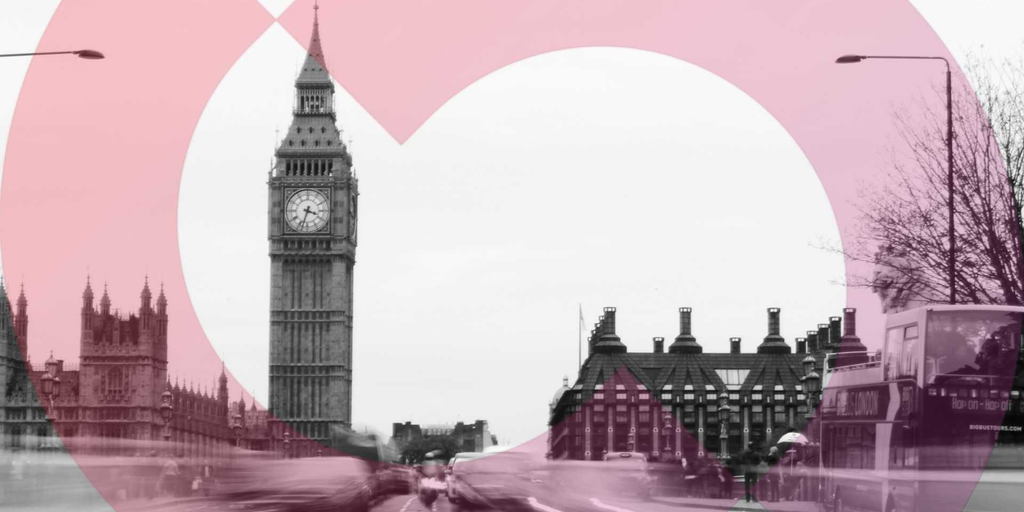
Main image credit: Marta Zwierzchoniewska/Pexels
Should Warsaw's clean transport zone be expanded to cover the entire city?
Comments
No comments yet







Comments
No comments yet — be the first to weigh in 👇
No comments yet. Be the first!