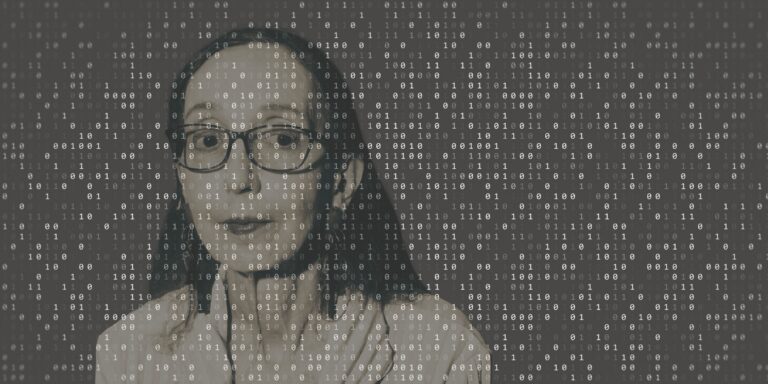
Joyce Carol Oates publishes her 49th story collection while going viral on X
Hogarth Press published "The Frenzy: Stories," Joyce Carol Oates's 49th collection, on June 16th. On the same day, Oates posted over 40 times on X, commenting on police brutality, cats and Dick Cavett. With nearly 200,000 followers, the celebrated author often attracts more attention through viral tweets than through her critically praised books.
Full text
On June 16th, The Hogarth Press published The Frenzy: Stories , Joyce Carol Oates’s 49th collection. The same day, “America’s foremost woman of letters” posted and reposted 40 odd times on X, commenting on, among other things, Dick Cavett, tiger lilies, cats, and, repeatedly, police brutality. A volume of exceptional short stories, The Frenzy has already received appreciative reviews, yet Oates’s tweets will likely garner more attention. With nearly 200,000 followers, the celebrated author commands a social media audience that usually exceeds her reading public.
Stephen King (6.7 million), Margaret Atwood (1.7 million), Gary Shteyngart (487,000), and a few other novelists have more followers on X—bots included—than Oates. Yet Oates has a far greater talent for going viral on the increasingly conservative social media site. In 2022, critics condemned Oates for her infamous tweet asserting the unrecognized value of “young white male writers… who may, in fact, be brilliant, & critical of their own ‘privilege.’” Three years later, she basked in online acclaim for a brutal takedown of Elon Musk, the first of several critiques.
“So curious that such a wealthy man never posts anything that indicates that he enjoys or is even aware of what virtually everyone appreciates,” wrote Oates. “The poorest persons on Twitter may have access to more beauty & meaning in life than the ‘most wealthy person in the world.’” Offering scrollers and twitterers a lively mixture of snark, wit, and empathy, Oates consistently attracts an enviable number of views.
Not to everyone’s liking, of course. Troubled by some early tweets, Gawker ’s Michelle Dean urged the deletion of @JoyceCarolOates, while Lit Hub ’s Eric Thurm worried that the posts would detract from Oates’s literary reputation. Recently, the writer’s anti-MAGA posts have garnered praise with Sophie Lee of Culture Magazine dubbing Oates a “Gen Z Twitter meme” and Mary Kate Carr of AV Club celebrating her as perhaps the most dangerous “gunslinger” in the wild West of X.
But what of Oates’s fiction? How do her roughly one hundred novels and collections bear upon her online celebrity? Oates’s “social feed” is not her “greatest contribution to literature,” as the Guardian ’s Patrick Lenton cheekily claims, but her writing may have informed her surprising Internet popularity. Like so many 21st-century posters and influencers, Oates has long found in troubling news the material integral to her work. The National Book Award-winnng them (1969) depicts the Detroit riots of 1967; Black Water (1992) draws on the Chappaquiddick incident; Zombie (1995) is based on the story of serial killer Jeffrey Dahmer; Blonde (2000) reimagines the life and death of Marilyn Monroe; and Sacrifice (2015) centers on the Tawana Brawley case. Long before Twitter and Instagram, Oates devoted herself to the graphic representation of unsettling figures and events.
This urge to draw on—and sometimes fuel—public controversy continues in The Frenzy , not with the fictionalization of a headline story, but with the representation of a more nebulous phenomenon: the crisis of selfhood in the digital age. With this volume, as in recent publications like “Subaqueous” (2021) and “This is Not a Drill” (2023), Oates highlights the dispiriting effects of technology on contemporary life, calling our attention to the alienation and anomie endemic to our cell-phone era. Yet, perhaps unsurprisingly, the literary queen of X also emphasizes that computer platforms have no special claim on human self-destruction. For all their ubiquity, Oates indicates that these devices are hardly the only cause of our problems.
Oates doesn’t indulge in the predictable condemnation of social media. She may have claimed that Twitter is “largely a waste of time,” but she also recognizes that we sometimes scapegoat technology to avoid confronting our own limitations and failures.
The titular story suggests as much. The frenzy cited alludes to protagonist Matthew Cassidy’s experience witnessing a cannibalistic orgy of fish off the New England coast (“writhing silvery bodies in the dark water, savagely feeding”) but it’s not hard to understand the bloody scene as an allegory for the viciousness of American capitalism. Keenly attune to economic inequality—her novels attest to this—Oates knows full well that in our society the big fish usually consume the small.
This insight also applies to the frenzied world of X, but Oates doesn’t indulge in the predictable condemnation of social media. She may have claimed that Twitter is “largely a waste of time,” but she also recognizes that we sometimes scapegoat technology to avoid confronting our own limitations and failures. Dedicated to his own midlife crisis, Matthew has no qualms about cheating with Brianna, the nineteen-year-old daughter of family friends, but he finds objectionable her inability to stop “scrolling through emails. Or Instagram, TikTok,” and commit herself to their Jersey Shore tryst.
Furious that Brianna seems to have forgotten his “very existence, totally immersed in her damned phone,” Matthew throws his young lover’s iPhone into the ocean. Brianna treats this act as a complete betrayal, and she responds in kind. Yet Oates hardly suggests that we should side with Matthew. His desire to be “off the grid,” like his aggressive response to Brianna’s behavior, reveals far more about his selfishness than it does his critical relation to communication technology. In this story—perhaps Oates’s finest short fiction since “Where Are You Going, Where Have You Been” (1966)—the cell phone serves not so much as an obstacle to meaningful human connection as a mirror reflecting a middle-aged man’s infidelity.
Oates’s fascination with dynamics of self and other persists in “The Fear,” a wrenching narrative about Janette and Juliet, two near identical cousins, the latter of whom develops jaw cancer and then has multiple surgeries. The title of the story refers to the fear of physical difference that underwrites demonization and violence. As the narrator puts it when describing the reaction of teenage boys to Juliet’s atypical face, her mouth and eye marked by multiple operations: “Like looking into a mirror. Seeing in your own (familiar) face something profoundly unfamiliar, unexpected. Unfathomable.” Terror over the vagaries of human embodiment leads to mob-like behavior, and Oates is, as usual, extraordinarily sensitive to the brutal treatment of young women in modern America. Centering mainly on how Janette wrestles with her failure to accept her sick cousin, this beautifully crafted narrative asks us to consider how we reject the other in a panic over our own alterity. “The Fear” teaches the reader that deep-rooted human anxieties over being seen and objectified, isolated and dissected, exist within and without the world of digital technology.
Oates is also very much aware of the loneliness of contemporary life, and she comments in various stories on what it means for humans to interact primarily through cell phones. Maud, the first-person narrator of “The Return,” understands that her widowed friend Audra yearns for real contact, to “not speak at her, coolly detached as in an email” but to “speak with her.” Seeing someone “on a computer screen, in an email or text message, had no ring of intimacy,” Maud informs the reader. Indeed, if one reads “The Return” in light of Oates’s long experience with X, the story seems to imply that the solipsism of a world dependent on online communication necessarily leads to the desperate need for recognition typical of social media.
Yet Oates also makes evident that any attempt to escape this dilemma is doomed to failure. In “The Refuge,” Marcus, a self-loathing techie intolerant of his wife Lorene’s interest in computers, goes “off the grid” in search of enlightenment. He visits a local Buddhist shrine, but instead of finding wisdom and peace, he ends up mentally unstable, and then homicidal. For Marcus, jettisoning “idiotic devices like cell phones” degenerates into something far worse than the isolation and cruelty of online culture: the human capacity for physical violence. In the world of “The Refuge,” the viciousness of even the nastiest post pales before the terrifying prospect of bloodletting.
Throughout The Frenzy , Oates doesn’t so much indict as attempt to apprehend, dialectically, our culture of cell phones and social media, of Apple and X. She forces the reader to confront, like Matthew, the discomfiting reality that our use of—and response to—technology says significantly more about us than it does the software and hardware integral to our lives. Digital culture, even oligarch-controlled digital culture, isn’t the problem; it’s what human beings say on and through platforms that is for Oates the real cause for concern. Machines are only what we make of them, and, thanks to this talented writer, we are reminded that sometimes we can make them speak subversively indeed.
Does writers' social media activity harm their literary work?
Comments
No comments yet









Comments
No comments yet — be the first to weigh in 👇
No comments yet. Be the first!