FIFA's Secret Tech Command Center at World Cup 2026 Stays Mostly Under Wraps
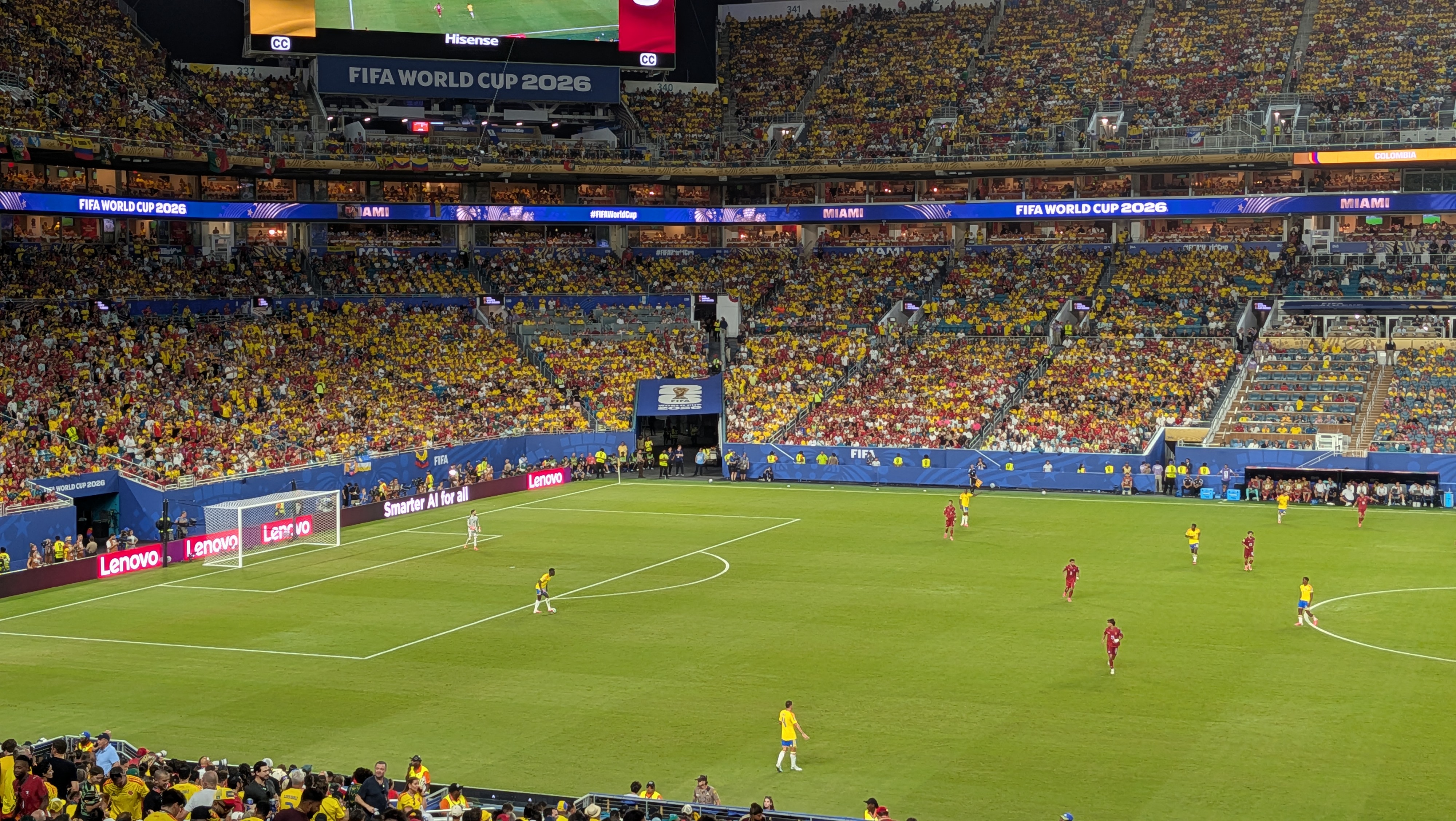
Lenovo, the official technology partner of FIFA and the 2026 World Cup, invited a journalist to Miami to see its tournament command centre in action. Due to security concerns, most specifics and photos from inside could not be shared. The 2026 edition is described as the most technologically advanced World Cup yet, featuring AI-powered tools and new broadcasting innovations across 48 teams.
Full text
With the FIFA World Cup 2026 now well underway, the excitement is building as the tournament reaches its most crucial stages.
But this edition of the world's biggest sporting event is also notable for being the most technologically-friendly so far, with a raft of new AI-powered tools, services and broadcast innovations.
As the official technology partner of the World Cup and FIFA itself, Lenovo has been at the heart of much of this innovation, and the company invited me to Miami to see it all in action.
Behind the curtain
Now - a word of caution - sadly this article isn't going to delve too much into specifics, or include photos of all the amazing work the FIFA team is doing to keep this World Cup safe and running smoothly.
That's because the organization is understandably pretty focused on making sure the tournament (the biggest and most spread-out yet, with 48 teams competing at 16 stadiums across 3 countries) continues to do so, and for that reason we weren't allowed to take any video or photos during our visit - for obvious reasons.
However the Technology Command Center (TCC), situated in the sleepy Miami suburb of Coral Gables, is a dream come true for tech nerds like me - banks of screens showing detail on everything from network infrastructure strength to any possible cyberattacks to the live match feeds themselves.
We're visiting on a day when six matches are scheduled to take place - a huge strain on the FIFA networks, Nacho Fresco, Director of Technology at FIFA explains.
The TCC is able to monitor in real-time across the entire tournament's tech stack, which includes 30 proprietary apps, spotting any issues before they happen, and ensuring fans around the world continue to get access to the action.
Inside the TCC is a huge team of analysts, managers and other tech experts making sure all the services are functioning properly, with direct links to the wider FIFA organization along with remote teams at all 16 stadiums.
This includes Lenovo engineers, who are present at stadiums but also the central International Broadcast Center (IBC) in Dallas overseeing the global distribution of the action to the estimated six billion people watching across the globe.
We saw a screen showing the various connections between the 16 venues and the IBC, all including fallback options in case any issues should occur, making sure the broadcast continues.
In order to help boost this, Lenovo has deployed servers at the IBC to provide the power needed for the most expansive broadcast operation in FIFA World Cup history, with a total of over 17,000 Lenovo and Motorola devices also deployed across venues and Team Base Camp training sites.
Lenovo is the first ever official technology partner of the FIFA World Cup (Image credit: Future / Mike Moore) Under threat
Probably the most intriguing screen was the one showing cybersecurity threats targeting FIFA's systems and services at the World Cup.
In real-time, the team can see exactly how many attempts are being made to hack or disrupt the platforms, including the location of the criminals, and even what kind of bots are being used.
It's fascinating to see the sheer scale of attacks - Fresco says they currently face around a staggering 300-500 million cyberattacks a day, a number that seems crazy, but shows just how attractive a target FIFA is.
Fresco notes that attacks have been slowly ramping up over the last few months, and expects the total number to top that seen in the 2022 World Cup in Qatar, which saw around 11 billion attempted attacks.
I ask Fresco what would constitute success for FIFA when it comes to the technology stack at the tournament - is it making sure everything runs smoothly, or just keeping the lights on?
Unsurprisingly, he replies that delivering a great viewing experience for the fans is the priority, as the organization looks to continue with its Lenovo partnership and take it further in the future.
"It's a game changer," he says, "it's what we need for this tournament."
So - no pressure then. But as Fresco pointed out, the mere fact that all the talk around the tournament has been about the football itself, not any issues with the technology, is the best outcome FIFA and Lenovo can hope for.
Is FIFA right to keep its technology command centre details secret?
Comments
No comments yet


















Comments
No comments yet — be the first to weigh in 👇
No comments yet. Be the first!