Ultralytics has published a research paper on arXiv introducing YOLO26, a new generation of unified real-time end-to-end computer vision models. The paper describes a system designed to handle the full detection pipeline in a single integrated model. The preprint is available at arxiv.org/abs/2606.03748.
Amflow, an e-bike brand spun out of drone maker DJI, has unveiled its TL series — an all-terrain eSUV-style electric bike designed for both bikepacking adventures and family commutes. The bike is powered by Amflow's compact Avinox M2 mid-drive motor producing 125Nm of torque. The top-tier model in the range is the TL Carbon.
India's Toonz Media Group and Tokyo-based Supersub LLC announced the co-production of "The Taste of Water," an animated feature documentary about Japanese sake, at the Annecy Animation Film Festival. The film is directed by Riki Ohkanda and executive produced by Ryo Nakajima, tracing the history, culture, and future of the iconic Japanese drink. The project is currently in production.
The Milwaukee Bucks have traded superstar Giannis Antetokounmpo to the Miami Heat. Analysts are grading both sides of the blockbuster deal to determine which franchise came out ahead. The Bucks effectively begin a rebuild by parting with their franchise cornerstone, while the Heat land one of the NBA's premier players.
Scientific research shows that multi-day road trips have measurable benefits for the human brain. Changing landscapes, long routes, and unexpected situations activate cognitive processes including memory and concentration in ways that everyday routines do not. Researchers say the combination of novelty and sustained attention during road travel is key to these mental health benefits.
Following a storm delay in Philadelphia during France's match against Iraq, Kylian Mbappé was seen gesturing sharply at the pitch-cleaning crew. The French star explained after the game that he was making sure both halves of the field were dried equally, so Iraq wouldn't gain an unfair advantage on a wet pitch. Mbappé described the episode as "a little frustrating."
Comedian Jon Stewart took aim at Donald Trump's personal involvement in the renovation of the National Mall's Reflecting Pool in Washington, D.C. Stewart quipped that upon hearing the pool had an algae problem, he immediately hoped the President of the United States was personally overseeing the fix. The joke riffs on reports of Trump closely monitoring the renovation work.
Gartner forecasts that around 40% of enterprise applications will include task-specific AI agents in 2025, up sharply from just 5% the previous year. Many organizations embed AI agents directly into legacy systems, bypassing approval workflows and access controls — creating a significant governance gap where agents can access restricted data or execute transactions without a full audit trail. Security experts argue that safe AI must emulate human behavioral constraints and operate within the same access boundaries as human employees.
Agentic AI is moving rapidly from boardroom ambition to enterprise reality. Gartner forecasts that roughly 40% of enterprise applications will incorporate task-specific AI agents this year, up from just 5% last year. This surge forces every CIO, CISO, and technology leader to consider: What should AI be allowed to access, and how should it operate once inside the enterprise?Many organizations begin by embedding AI agents directly into legacy systems, connecting them to backend databases, APIs, and workflows in the name of speed. While this inline approach can work in modern, well-governed environments, it often bypasses the approval workflows and controls that legacy systems were built around. Agents can access restricted data, skip approvals, or execute transactions without a complete, attributable record. The result is a growing governance gap. Decisions tied to sensitive data can’t be reliably reconstructed or defended with the same confidence as human-driven work. Even advanced models stall in pilots because organizations can’t prove how outcomes were produced. The solution is not to slow AI adoption. It’s to change how AI interacts with the systems that already run the business.When AI bypasses the system, it breaks itConsider a finance workflow in an ERP software system. An agent updates vendor bank details and pushes a payment through a fast-track path, bypassing a required approval step and segregation-of-duties check. Later, when the transaction is questioned, the organization can’t prove who approved the change, why it was made, or whether proper controls were followed. That’s where accountability breaks down. Changes are made inside core systems, but the evidence is incomplete, inconsistent, or disconnected from the system of record. Emulated human behavior offers a more secure and practical path. These agents operate exactly as a human employee would: logging in with standard credentials, navigating the existing user interface, reading screens in context, following established workflows, and executing tasks while remaining fully subject to every control already in place. No new APIs. No raw backend data exposure. No rewriting of decades-old business logic or security rules. The guardrails designed to protect against human error or misuse — validations, permissions, approvals, and audit logging — remain 100% intact. This UI-first approach is especially effective for organizations running mission-critical processes on older platforms. Building secure, governed APIs for legacy systems is expensive and time-consuming, often leaving out protections built into the interface layer. While emulated human agents may not match the speed of direct backend calls, they provide far more valuable enterprise advantages: immediate deployability, ironclad accountability, and zero disruption to proven controls. Secure operation doesn’t require avoiding AI. It requires rethinking how it fits into the systems around it.Preparing for emulated human in the enterpriseThree priorities can help organizations prepare for the emulated human approach as AI scales into critical workflows.1. Place AI at the points where work happensMost enterprise AI strategies assume deeper backend integration creates better automation. In environments shaped by legacy systems, it often does the opposite: introducing new complexity while bypassing the workflows and controls already built into the interface layer. Instead, focus AI at the points where it can operate without requiring systems to be rebuilt. This approach dramatically reduces integration overhead, limits exposure of core systems, and allows AI to scale within existing operating models rather than forcing costly modernization.2. Align AI accountability with human accountabilityAgents should operate under named identities and the same policies as employees. They preserve approval workflows, follow role-based permissions, and generate the same audit artifacts — including log entries, change histories, tickets, and recorded approvals — that organizations already rely on to review human activity. This removes the dangerous two-tier governance model where AI operates under different standards than employees. Organizations can maintain visibility, accountability, and established compliance and risk management controls as AI takes on greater responsibility.3. Design for adaptability rather than brittle automationTraditional robotic process automation (RPA) relied on rigid, click-by-click scripts that broke the moment screens changed or exceptions appeared. Emulated human agents interpret context in real time, adjust to variation, and continue operating, just as skilled employees do. That adaptability is essential in dynamic enterprise environments where policies change, exceptions are common, and systems are rarely static. Instead of constant break/fix maintenance, organizations gain AI that can operate more resiliently inside real-world workflows.Scaling AI with the systems already in placeAs agentic AI scales, enterprises will be judged not only by the intelligence of their systems but by their ability to govern them. The pressure to balance innovation with control will only intensify. The most durable strategies will be those that embed AI safely within the systems already in place, rather than racing around them. When an agent’s actions can be audited and justified with the same rigor applied to a human colleague, it’s finally ready for production. That’s how secure, scalable AI will be defined in the enterprise.We feature the best small business software.This article was produced as part of TechRadar Pro Perspectives, our channel to feature the best and brightest minds in the technology industry today.The views expressed here are those of the author and are not necessarily those of TechRadarPro or Future plc. If you are interested in contributing find out more here: https://www.techradar.com/pro/perspectives-how-to-submit
The UK Competition and Markets Authority (CMA) has fined ticket reseller StubHub for failing to display full prices to buyers upfront. The company must refund approximately 50,000 customers who were misled. The action is part of a broader crackdown on hidden fees in the secondary ticketing market.
Jordan has qualified for the FIFA World Cup for the first time in history, and for millions of Palestinians living in the country, it feels like their moment too. Palestinian flags and emblems were prominently displayed at the match, turning the game into a show of national identity. The historic qualification has resonated deeply across the Palestinian diaspora.
Russian forces have entered Kostiantynivka, a key Ukrainian stronghold in the Donbas region, according to The Telegraph. The city risks falling under Russian control, and the situation in other nearby towns is also described as difficult. Kostiantynivka has long been a critical node in Ukraine's eastern defensive line.
This Saturday's SGP2 qualifiers — the Junior Speedway World Championship — will feature five Polish riders competing for a spot in the finals. However, one of the Polish competitors has already lost any chance of fighting for the world title. The start lists for the elimination rounds have been published.
Argentina secured victory in their World Cup 2026 group stage match, with the result discussed in the Mundial studio show. Lionel Messi was highlighted as the standout figure for the team. The studio panel reviewed the match performance and its implications for the tournament.
Despite the widespread use of GPS, geodetic control networks — grids of fixed reference points with known coordinates — remain essential for accurate land surveying in Poland. Specialists known as "guardians of coordinates" maintain and update these benchmarks. Without them, modern navigation and construction projects would lose critical precision.
Norway defeated Senegal 3-2 to maintain a perfect record after two group-stage matches at the World Cup. The result sets up a direct top-of-Group-I showdown between Norway and France. The Haaland vs. Mbappé duel is now the most anticipated fixture of the group stage.
Ukraine's permanent representative to the UN, Andriy Melnik, stated on Monday at an emergency UN Security Council session that Kyiv remains ready for direct negotiations with Russia. However, he warned that Ukraine's patience is not unlimited. The statement was reported by the Ukrinform news agency.
Porsche AG's CEO has promised to cut the brand's model range and increase integration with parent company Volkswagen AG. The sports car maker is battling compressed margins caused by US tariffs and sluggish demand in China. The restructuring aims to restore profitability for the maker of the iconic 911.
French animation studio Passion Paris has partnered with anime streaming service ADN to produce an animated series based on a popular South Korean webtoon. The adult action title has accumulated 80 million views worldwide, according to Passion Paris managing director Caroline Audebert. Passion Paris is known for productions including "400 Boys" and "Not a Box."
France secured a place in the last 32 of the 2026 World Cup with a 3–0 win over Iraq, but the match in Philadelphia was interrupted by a violent thunderstorm. The delay lasted two hours — the longest stoppage coach Didier Deschamps said he had ever experienced. The French squad waited in the dressing room before play eventually resumed.
Julian Alvarez publicly stated after Argentina's 2026 World Cup match against Austria that leaving Atlético Madrid is the best option for his club career. Barcelona are the front-runners to sign him, but Atlético, frustrated by repeated Catalan interest, are reportedly planning an alternative scenario to block the move to Camp Nou.
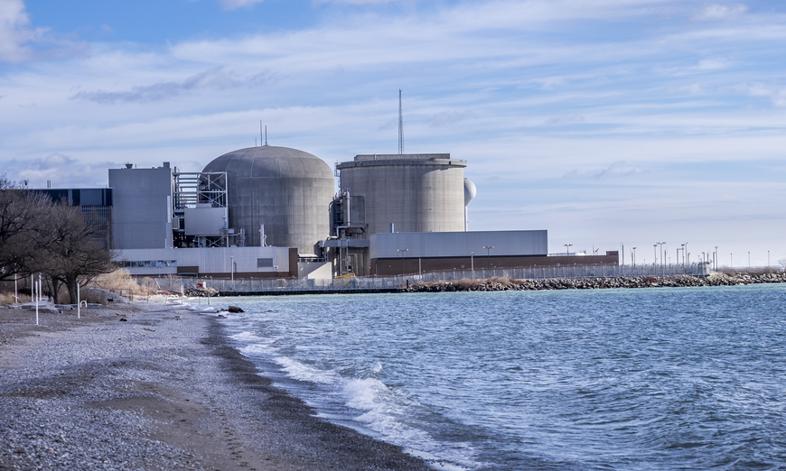
Canada has unveiled a nuclear strategy to build 10 new reactors within 15 years, double its uranium exports, and sell Canadian-designed reactors abroad. Energy Minister Tim Hodgson called the plan a "new civilian nuclear renaissance." It represents one of the country's most ambitious expansions of atomic energy.
Comments
Loading…
Swipe up
⚡
You're all caught up
You've seen all the latest stories. Check back later for more.


















Comments
No comments yet — be the first to weigh in 👇
No comments yet. Be the first!