Scientists study why some people don't cry when cutting onions
A new research paper examines why people vary in how much they cry when cutting onions, linking the reaction to individual differences in chemosensory sensitivity. Not everyone responds equally to the irritant compounds released by onions. New Scientist's Feedback column covers the study with a light-hearted take.
Jaecoo has launched the Jaecoo 5 Hybrid in Poland, starting at 119,900 PLN. The model is pricier than rivals like MG, Dacia and its sister brand Omoda, but the brand justifies the premium with stronger hybrid powertrain performance. It is the cheapest hybrid SUV in Jaecoo's Polish lineup.
A new Airbnb report shows that Gen Z travellers are increasingly swapping traditional week-long holidays for short, two-day intensive getaways. Solo travel for self-discovery and trips tied to major events are also growing in popularity among young adults. The trend reflects a fundamental shift in how the youngest generation approaches rest and recreation.
The number of published ESG reports is growing, driven by both regulatory requirements and voluntary disclosure. The article discusses the expanding readership of sustainability reports and the importance of reading them critically. However, no specific criteria or red flags to watch for are named in the text.
US President Donald Trump voiced support for the American national team ahead of their 2026 World Cup clash with Turkey. He also congratulated FIFA president Gianni Infantino and highlighted the tournament's record-breaking figures. Trump compared the World Cup to the Super Bowl, the NFL's championship game.
Researchers have concluded that the optimal age for a woman to have her first child is between 26 and 31 years old. Within this age range, the statistical risk of pregnancy complications and health problems is at its lowest. The question of the ideal age for motherhood has long been a subject of scientific and social interest.
An international research team has successfully extracted prehistoric human DNA directly from the rock surfaces of 11 caves in Spain and Portugal, including the famous Altamira site (UNESCO World Heritage since 1985). Published in Nature Communications, the findings confirm that cave walls can serve as genetic archives of ancient human presence. The discovery opens new avenues for studying prehistoric communities without damaging cave art.
Malta Festival in Poznań invites audiences on June 26 to "The Second Woman," a 24-hour theatrical performance featuring Magdalena Cielecka. The actress will perform a love or separation scene with one hundred partners selected through an open casting call. The day before, on June 25, musician Devendra Banhart will perform at the festival.
Nearly 300 U.S. Air Force recruits fell ill with influenza during training at Lackland Air Force Base. The Pentagon confirmed it will reverse its earlier decision and reinstate mandatory vaccinations for recruits, after only 40% voluntarily chose to be vaccinated. The announcement was reported by the Associated Press.
Scientists have detected thousands of previously unknown tiny earthquakes forming a perfectly straight line near Alaska's Denali Fault, revealing the edge of the Yakutat microplate. This oceanic plateau, thicker and more buoyant than surrounding Pacific crust and formed by volcanoes tens of millions of years ago, is being pushed under the North American Plate in a process called subduction. Its buoyancy forces up the Alaska Range, including North America's highest peak, Mount McKinley (Denali), and may contribute to large earthquakes and small volcanoes in the region.
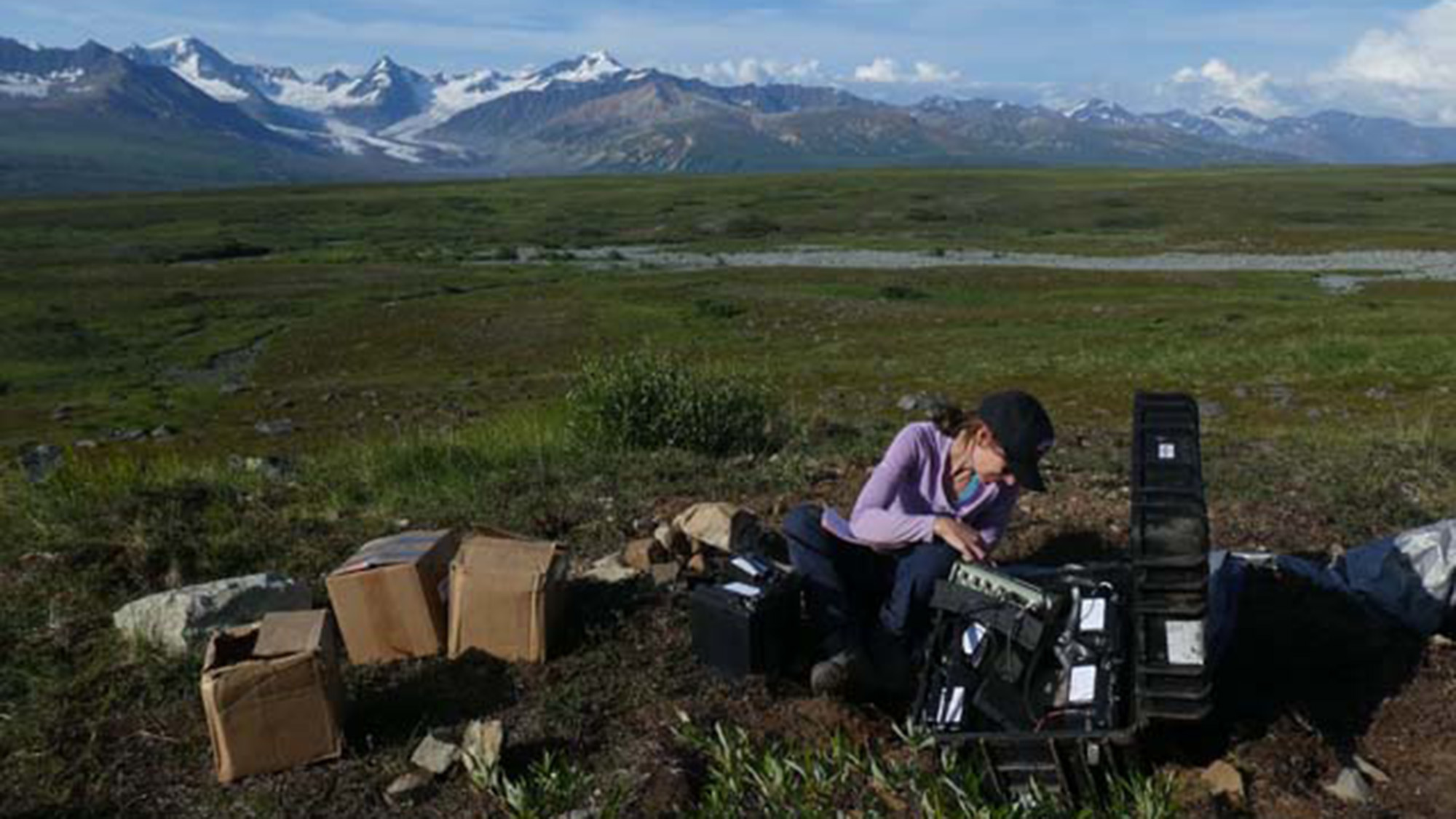
Thousands of previously undetected tiny earthquakes have revealed the edge of a miniature tectonic plate slamming into Alaska near the Denali Fault.The microplate could be focusing seismic energy in a straight line in a region under the Alaska Range of mountains, potentially contributing to large earthquakes and the development of small volcanoes in the area. The Yakutat microplate is an ocean plateau that is thicker than the Pacific oceanic crust surrounding it. Formed by volcanoes tens of millions of years ago, this block of crust is now being pushed under the North American Plate in Alaska in a process called subduction. But because it is thicker and more buoyant than the surrounding oceanic crust, the microplate pushes up the Alaska Range, which includes North America's highest mountain, Mount McKinley (also known as Denali). "Being able to identify where the Yakutat microplate is in the subsurface has helped us understand the tectonics," said Meghan Miller, the study's first author and a seismologist at the Australian National University. Study co-author Meghan Miller deploys a temporary seismic station. The data from these stations revealed a hidden microplate's location. (Image credit: Sarah Roeske.)Part of the plate is still off the coast of Alaska, sticking out like a slipper under a rug. But the precise location of the edge of the plate that has already subducted under the continent has been hard to pinpoint. Miller and her colleagues installed seven new seismometers south of the Denali Fault, which runs through the Alaska Range. This is a tectonically active region, most famous for a 2002 magnitude 7.9 earthquake that was felt as far away as Seattle. Related storiesThere's a massive fault hidden under America's highest mountain — and we finally know how it formed'New' island emerges from melting ice in AlaskaTectonic plates can spread subduction like a contagion — jumping from one oceanic plate to anotherBut it wasn't a giant temblor like 2002's that revealed the hidden edge of the Yakutat. Instead, it was unmasked by about 3,000 newly discovered minuscule earthquakes clustered in a clean line running from northwest to southeast for 155 miles (250 kilometers) under the Denali Fault. The "very sharp, linear pattern" also aligns with a series of small volcanic cones and rock-type changes in the deep subsurface, Miller and her colleagues reported in the new study, published June 4 in the journal The Seismic Record.The researchers suspect that the leading edge of the plate is focusing seismic energy toward the surface. The plate's location also aligns with the initiation point of the 2002 Denali quake, which started on a nearby fault, Miller told Live Science, but exploring that idea further will require computational modeling. "What we were postulating is that the edge of the Yakutat plate is influencing all these different types of processes," Miller said.
The author argues that the energy transition is fundamentally an economic project, not an environmental one. Whoever controls energy costs controls the competitiveness of their economy — a fact that public debate has long obscured by framing the issue purely as a climate question. This political oversimplification is increasingly at odds with reality.
Organisations worldwide are investing heavily in artificial intelligence — licences, pilots, training and proprietary solutions — yet measurable business results remain the exception rather than the rule. The article identifies a paradox: investment scale is growing while tangible returns are hard to demonstrate. This raises serious questions about the effectiveness of current AI deployment strategies.
German tennis player Eva Lys shared social media posts revealing messages from a stalker named Austin after her first-round loss to Emma Navarro at the Bad Homburg tournament. The man initially professed love before sending death threats. Lys made the messages public to raise awareness of the stalking problem faced by athletes.
Italian veteran director Daniele Luchetti, whose "The Ties" opened the 2020 Venice Film Festival, is returning to directing with drama "Your Little Matter" ("Dove Non Mi Hai Portata"). The film follows a young writer investigating her parents' dark past, with rising Italian actress Tecla Insolia in the lead role. Italy's Fandango and Vision Distribution are co-producing the project.
Hospitals across England have declared critical incidents after extreme heat caused radiotherapy machines, MRI scanners and critical IT systems to fail, with cooling units serving entire buildings breaking down. Emergency departments faced severe overcrowding due to a surge in heat-related admissions, putting further pressure on sleep-deprived staff. Doctors have warned of the disastrous impact of heatwaves on the NHS infrastructure.
Viral social media posts claim Ukrainian President Volodymyr Zelenskyy was killed in a Russian airstrike — DW fact-checkers confirm these claims are false. The disinformation spread during a period of escalating violence between Russia and Ukraine. Zelenskyy remains alive and in office.
Researchers at the Diocesan Library in Pelplin, Poland, have discovered two previously unknown sermons by St. Augustine of Hippo, hidden within a medieval manuscript. The texts address the biblical story of King Saul and the Witch of Endor, a passage that has long fascinated and troubled theologians. The find could reshape understanding of this biblical episode and Augustine's thought.
During heatwaves and drought, gardeners can check soil moisture with a simple screwdriver test — push it into the ground and gauge the resistance. The best time to water a lawn is in the evening or early morning to minimise evaporation. Proper watering timing helps keep grass healthy even in extreme heat.
NASA's Perseverance rover has detected the highest concentration of complex organic molecules ever found on Mars, discovering macromolecular carbon in mudstones inside Jezero crater. The find alone doesn't prove life existed, but it was made near other potential biosignatures announced in 2025, strengthening the case for ancient microbial life. The results were published on June 24 in the journal Science Advances.
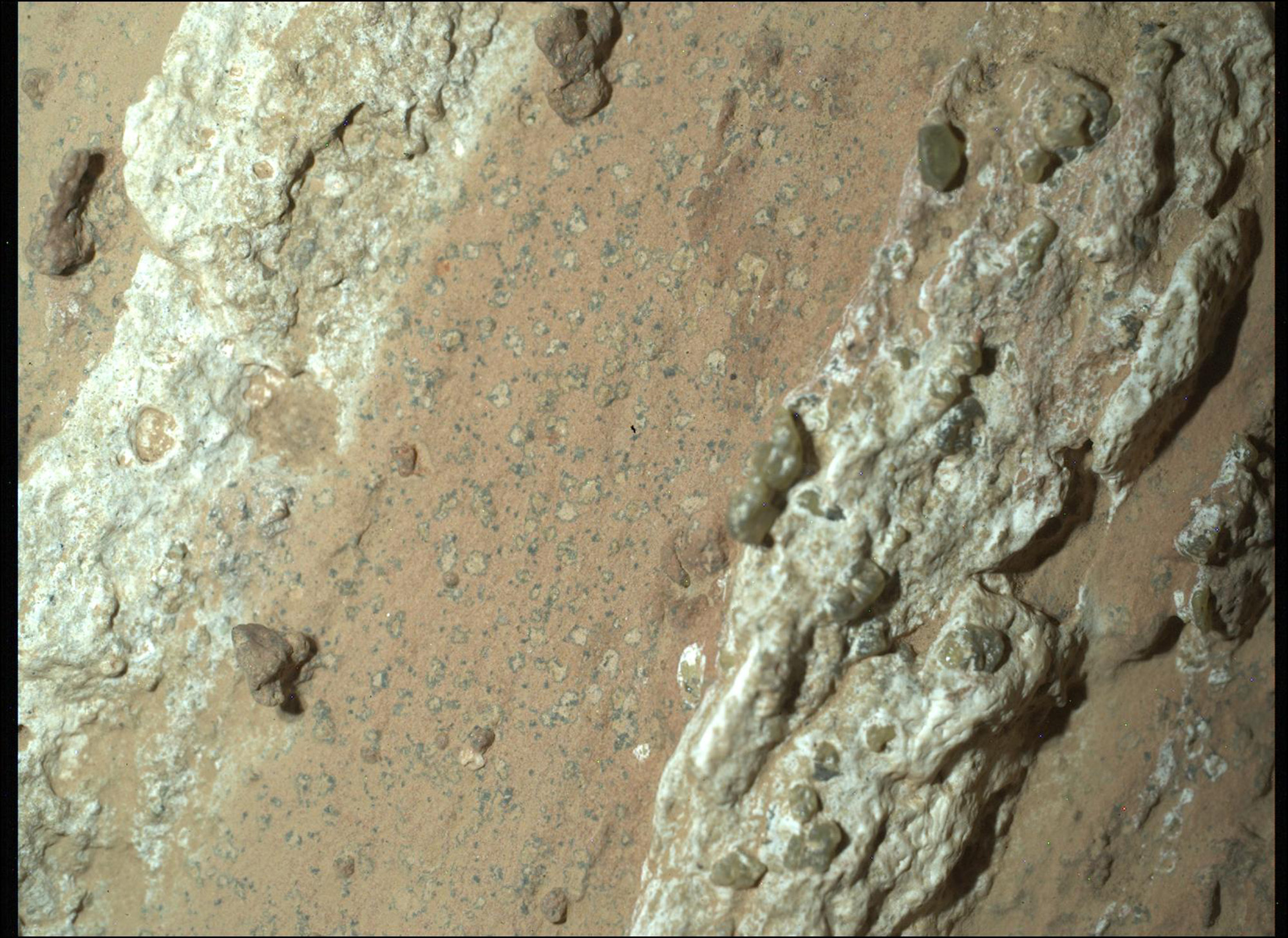
Researchers have found a new puzzle piece in Mars' geological history that hints that the Red Planet may have once harbored life. New data from NASA's Perseverance rover indicates that mudstones in Jezero crater contain a complex form of carbon, the chemical foundation of all known life. It's the highest concentration of organic molecules found on Mars to date. Although the mere presence of carbon isn't proof that life once evolved on Mars, the location of the discovery adds to the excitement. This "macromolecular carbon" was discovered near other potential signs of life, or biosignatures, touted by NASA with great fanfare in 2025. This geological context adds credence to the case that microbes may have once colonized the Martian surface. The results were published Wednesday (June 24) in the journal Science Advances.Perseverance landed in Jezero crater on Feb. 18, 2021. Since then, the site has emerged as one of the most geologically interesting places on Mars. "Jezero crater was once fed water and sediment from rivers, and, billions of years ago, it hosted a lake," Ashley Murphy, a researcher at the Planetary Science Institute and co-author of the new study, told Live Science in an email. It may have hosted more than that. A study published last year in the journal Nature found that some of the stones in an area of Jezero known as the Bright Angel outcropping contain clays and other minerals that are known to preserve fossils on Earth. One sample, in particular, raised eyebrows: a piece of a rock nicknamed Cheyava Falls, whose patterns resemble those left by terrestrial microbes. Although these patterns could have been created by nonliving sources, NASA officials proclaimed it one of the clearest signs yet of past microbial life on the Red Planet.The backbone of lifeThe new research builds on this work by confirming the widespread presence of complex carbon molecules in and around the Bright Angel outcrop. In the study, the researchers used the rover's Scanning Habitable Environments with Raman and Luminescence for Organics and Chemicals (SHERLOC) instrument to map the carbon distribution in these rocks and sediments. They compared them with carbon data from NASA's Curiosity rover taken at Gale crater some 2,300 miles (3,700 kilometers) away, a distribution that suggests water may have been widespread on Mars in the deep past. Murphy's team also determined that the carbon was not too weathered, indicating that it may have been exposed recently. However, it’s impossible to say whether the newly discovered carbon is related to life or not.The work is an important step in unraveling Mars' geological history, including the planet's potential habitability and how water shaped its surface. But Murphy cautioned that it is far from a definitive answer. "Macromolecular carbon on Mars does not prove the existence of life there," Murphy said. The molecules could indicate the presence of fossilized microbes, but they also could have formed through nonbiological means, like meteor strikes or running water. ‘Leopard spots’ on the rock formation Cheyava Falls could be linked to microbial life on Mars. (Image credit: NASA/JPL-Caltech/MSSS)Related storiesNASA rover discovers out-of-place 'Skull' on Mars, and scientists are baffledGiant string of organic molecules on Mars may be one of the best signs of life yetA giant 'shadow' has been creeping across Mars for 50 years — and scientists aren't sure whyUntil scientists get their hands on a sample directly, it will be hard to tell exactly how this complex carbon arose and whether it represents a true biosignature. But that research may now be decades away — if it happens at all. The Cheyava Falls sample was originally supposed to be brought to Earth in the 2030s as part of NASA and the European Space Agency's joint Mars Sample Return program. However, in its 2026 budget proposal, the Trump administration deemed the mission "financially unsustainable" and proposed slashing the project. Currently, the project is considered dead. It may be China that gets the first shot at bringing Martian samples back to Earth for analysis. The country's Tianwen-3 sample-return mission will aim to collect several samples — albeit in a more accessible but less-promising site than where Perseverance has looked for biosignatures — in a mission due to launch no sooner than 2028.What do you know about the Red Planet? Test your knowledge with our Mars quiz!
The ESG debate is polarised between demands for heavy regulation and blind faith that free markets will solve climate and resource problems on their own. The author argues both positions are false alternatives that prevent meaningful progress. A more pragmatic approach combining market incentives with targeted oversight is needed.
KS Śląsk Świętochłowice, fresh from a match against the second-placed team, now faces the Krajowa Liga Żużlowa leaders in speedway. Both coaches have announced their squads for the upcoming fixture. It is a significant challenge for the Świętochłowice side in the standings.
Comments
Loading…
Swipe up
⚡
You're all caught up
You've seen all the latest stories. Check back later for more.















Comments
No comments yet — be the first to weigh in 👇
No comments yet. Be the first!