Morgan Stanley Doubles China Humanoid Robot Shipment Forecast
Morgan Stanley has sharply raised its outlook for China's humanoid robotics market, doubling its shipment forecast as early commercial deployments in real-world environments accelerate. The revision reflects faster-than-expected progress in bringing humanoid robots into practical industrial and commercial use. Specific figures for the old and new forecasts are not provided in the source.
The Karlovy Vary International Film Festival awarded an honorary prize to Slovak actress and former ambassador Magda Vašáryová, whom the festival describes as "one of the greatest Slovak actresses of all time." The honour also recognises the unique artistic bond between Czech and Slovak filmmakers. The festival drew a colourful comparison between Vašáryová's Renaissance-woman career and that of footballer-turned-cultural-figure Eric Cantona.
Venezuela is preparing to disclose its true financial liabilities, which insiders say will far exceed current market estimates of $150–$200 billion. The scale is expected to surpass Greece's 2012 debt restructuring of $200 billion, making it the largest sovereign debt restructuring in history.
France has confirmed its first case of Ebola, detected in a doctor who returned from a humanitarian mission in the Democratic Republic of Congo. Health authorities have activated isolation protocols and begun contact tracing. The case marks the first recorded Ebola infection on French soil.
Spanish Prime Minister Pedro Sanchez on Wednesday rejected allegations of "widespread corruption" within his Socialist party after a former top aide was jailed in a graft scandal. The case is the latest in a series of corruption investigations touching Sanchez's inner circle, including his wife Begoña Gómez and former senior political allies. Sanchez insisted the problems are not systemic within his government.
Maja Chwalińska's manager Piotr Szczypka is in London during Wimbledon, holding talks with agents about a major sponsorship deal for the Polish tennis player. Szczypka stated plainly that he hopes to return with a one-million-złoty advertising contract, which he believes could further boost Chwalińska's career. The player herself has not yet been informed about the ongoing negotiations.
Polish supermodel Anja Rubik attended the Saint Laurent menswear show on June 23, 2026, during Paris Fashion Week. She chose a bold, contrasting outfit featuring sheer fabrics and lace that quickly became one of the most talked-about looks at the event. Her appearance drew widespread attention from fashion media around the world.
US Secretary of State Marco Rubio launched a week-long visit to Gulf Arab states to pitch Washington's peace deal with Iran to nervous regional allies. Gulf leaders fear that excessive concessions to Tehran will strengthen Iran and reshape the region's security balance and oil flows. Rubio himself acknowledged the diplomatic mission is a delicate one.
Chinese Premier Li Qiang warned on Wednesday at the World Economic Forum in Dalian — dubbed the "summer Davos" — that failing to regulate artificial intelligence could have "serious consequences." He urged governments to urgently step up oversight of AI before it spirals out of control. The remarks represent one of the strongest calls for global AI governance from a senior Chinese leader.
A charcoal grill has been fitted with Wi-Fi connectivity, allowing users to monitor temperature and ember status via a smartphone app. The feature is aimed at giving grillers more precise control over the cooking process rather than enabling fully remote operation. It marks the digitalisation of one of the last household rituals to resist smart-home technology.
Polish volleyball player Natalia Murek, coming off a successful season with FC Porto, married fellow volleyball player Mateusz Paszkowski. The couple shared photos from the ceremony on social media, which quickly spread widely online.
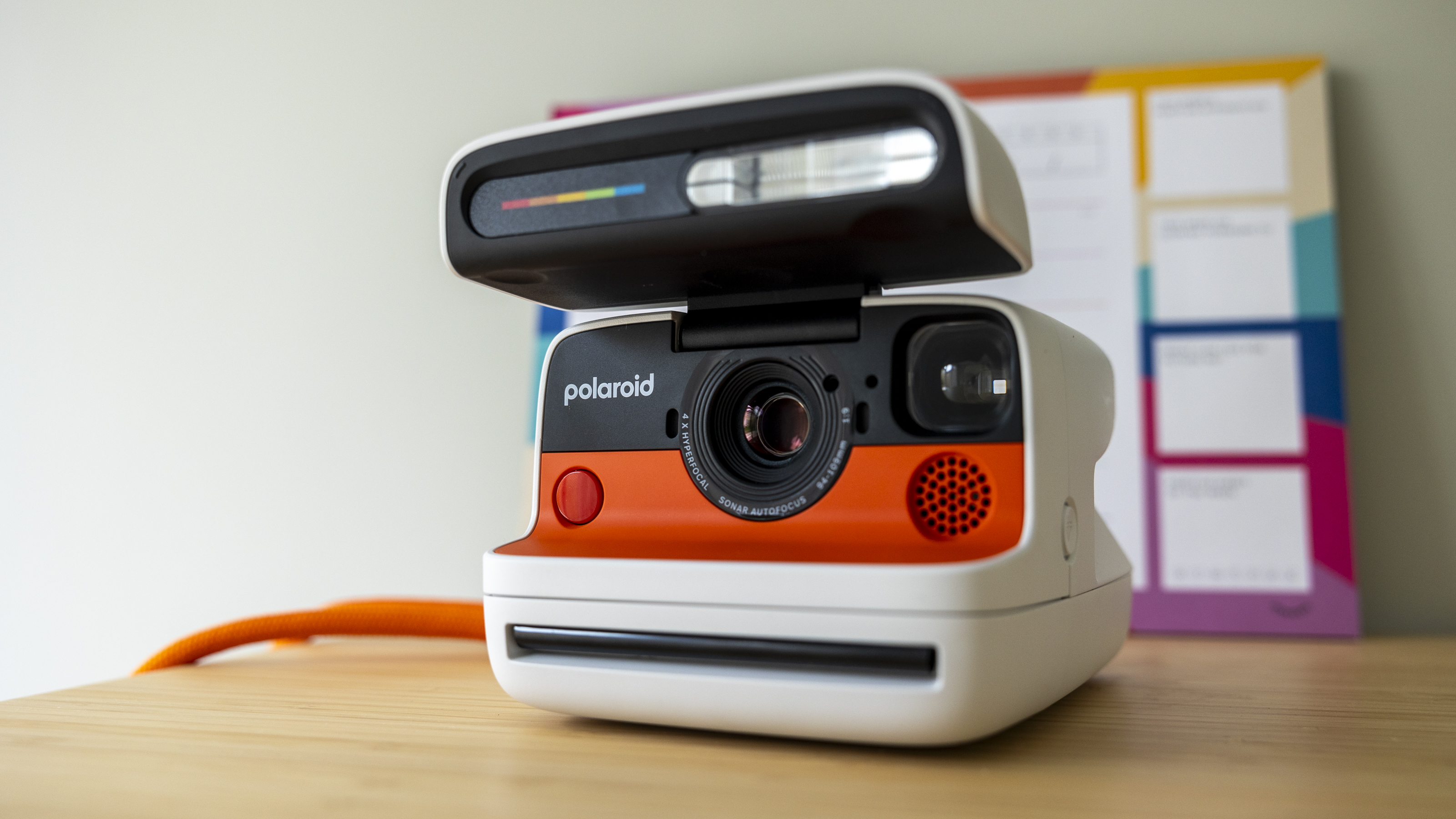
The instant camera market is dominated by two brands: Polaroid and Fujifilm Instax. Polaroid has the longer history, dating to the 1940s, and was revived in 2017 after an early-2000s bankruptcy when it was acquired by analog film collective The Impossible Project. The author argues Polaroid is the superior choice for fans of true instant film photography.
If you’re looking to buy an instant film camera, there are only two serious names in the game: Polaroid, and Fujifilm Instax. While some manufacturers like Canon and Kodak offer digital instant-print cameras that use techniques like dye-sublimation to create instant prints of digital images on specialist paper, it’s not the same. For the true alchemical magic of instant film, you Polaroid and Instax are the big hitters. Polaroid is undoubtedly the better-known brand name due to its long history, dating back to the 1940s (though hitting major popularity in the 70s). It spent a few years in the wilderness following a bankruptcy in the early 2000s, before being purchased and revitalised in 2017 by an analog film collective called The Impossible Project. All the proper Polaroid cameras you can buy new today have been released since this renaissance. Instax cameras may not have the historical cachet of Polaroids, but they are massively popular — Fujifilm reported last year that its Instax line has sold more than 100 million units since its inception in 1998. I don’t have similar sales data on post-revival Polaroid, but frankly, I don’t think it’s anywhere close. Ultimately, there are compelling reasons to choose either brand. The Instax mini 12 is TR's pick as the best instant camera, and I can see why — it's a great option for the majority of users. But for me personally, it’s Polaroid all the way. (Image credit: Lauren Scott)Why I’ll pick Polaroid every timeIt’s not a question of print size, as both brands have similar offerings. Fujifilm Instax Wide film is about the same size as a Polaroid I-Type (or SX-70) print, just rectangular rather than square. Polaroid’s smaller ‘Go’ film produces prints of comparable dimensions to Instax mini.What it’s all about is vibe. Scoff if you want, but come on — you’re shooting instant film. You’re not here for accurate colors or pitch-perfect sharpness, you’re here because you love the tangibility of holding a print in your hands, the transportative lo-fi look of a format that’s been around for half a century. It’s all vibe.I’ve shot Polaroid and Instax prints side by side before for comparison. Once, while I was viewing them, my partner made an astute observation that I have since stolen and made my own: the Instax catches your eye first, but you end up liking the Polaroid more. Instax prints are bright and vivid, with naturalistic colors and a decent level of detail, especially the Wide format. They’re fun and kitschy.But Polaroid images just have that inimitable retro glow that instantly transports me back in time. The softer, more muted color palette makes images less immediately striking, but more satisfying the longer I look at them. There’s a richness to them, a greater sense of depth and subtle tonality. If I were embarking on an artistic project with instant film, there’s no question which format I’d choose. It wouldn’t even be a decision.This isn't an entirely fair comparison, as full-size I-Type is always going to beat Instax mini. But for me, while the sky in the Instax looks truer to life, that stylized retro glow on the Polaroid is just so appealing. (Image credit: Jon Stapley) Instax cameras are easier to use for sure — most are just point and shoot. If I were recommending an instant camera for a family, or for someone who isn’t an experienced photographer, I’d go with Instax. But for me, as someone who knows my way around a camera, the depth of control offered by the top-end Polaroid cameras leaves Instax in the dust. Connect to the Polaroid app, which works very smoothly and is highly intuitive, and you can completely program in your settings, taking total control over your images. Want to try your hand at creating long exposures on instant film? It’s straightforward on a Polaroid Flip or Polaroid I-2, and impossible on an Instax Mini 99.Sure, Polaroids aren’t perfect. The ongoing cost of I-Type film is a sore point, with packs of eight shots costing the same as a pack of 20 shots of Instax Wide or Mini. This sucks. No way to pretend it doesn’t. Buying in bulk can help a little, though honestly not a lot. At least the smaller Polaroid Go film is much cheaper, and I prefer it to Instax Mini. Again, its subtler look is less striking, but richer.I really enjoyed shooting with the Go Gen 3. My shots weren't all hits, but there were some that I loved. Again, it's not quite true to life, but it has distinctive character. (Image credit: Jon Stapley)Do you agree? Let me know which is your preferred instant-film format in the poll above. And if you’re looking for an instant-film camera to buy, see my explainer on why the Polaroid Go Gen 2 is the best buy you can make this Prime Day and click on today's best deals where you live using the links below.
Scientists have discovered that the catastrophic March 2011 earthquake permanently shifted nearly all of continental Japan 5–6 mm to the east. Researchers link the phenomenon to seismic waves that bounced off Earth's core. The finding adds a new dimension to understanding the long-term physical consequences of one of history's largest natural disasters.
China's Vice Minister of Justice Hu Weilie confirmed on Wednesday that the new ethnic unity law can be applied to prosecute foreigners and is fully legal. Beijing insists the law is designed to strengthen national cohesion, but critics warn it could be used to repress ethnic minorities and pressure foreign businesses operating outside China's borders.
Katia Aveiro, Cristiano Ronaldo's sister, posted a sarcastic message on social media after Portugal beat Uzbekistan 5–0 at the 2026 World Cup. The post targeted critics of her brother who had been vocal after Portugal's earlier draw with DR Congo. Aveiro mocked the "haters," pointing to the team's turnaround in form.
Burbot is one of the healthiest freshwater fish in Poland, outperforming carp and salmon in several nutritional respects. It has tender meat, a subtle flavour and few bones, and is caught from clean Polish waters. Despite these qualities, it remains largely absent from Polish kitchens.
Meghann Fahy and Glenn Howerton, co-stars of the Netflix miniseries "Sirens", are reuniting in a comedy film called "The Girlfriend". The plot follows Elliot, who moves his wife Claire from New York to Alabama for a lucrative job, then hires a sex worker to befriend his lonely spouse — played by Fahy. The project was announced today by Deadline.
Poland's men's volleyball team opens its Nations League campaign against Belgium in Gliwice on Wednesday, June 24, 2026 at 8:00 PM. Belgium are ambitious debutants in the competition, making them an unpredictable opponent for the opening match. It marks Poland's return to Nations League action.
The US dollar broke through key technical resistance levels against the Polish zloty, reaching its highest point in over a year. Analysts say the breakout could open the way toward the psychological barrier of 4 PLN per dollar.
In early 2026, AI agents and bots generated billions of web requests, surpassing human internet traffic for the first time. Most companies cannot distinguish legitimate AI agents from imposters scraping data under trusted brand names. Experts warn that treating all AI traffic as a single category is a costly mistake that leaves organisations blind to a growing and persistent threat.
Most executives have no idea how much of their website traffic comes from AI agents. If you were to ask which AI agents are legitimate and which are impersonating trusted names to scrape data, they’d struggle to tell them apart, a problem that’s growing by the day.In early 2026, AI and bots generated billions of requests, outpacing internet traffic from humans. This is no longer a fringe activity; AI agents are now a persistent, substantial portion of the traffic hitting websites. Yet most organisations can’t tell you what that traffic is doing, where it’s really coming from, and whether it’s helping or hurting their business.The Volume TrapWhen organisations hear that AI agent traffic is creating billions of requests, the instinct is often to treat it as a monolithic category. It’s not. Lumping all AI agents together is like treating all humans as identical users; it misses the nuance that determines value.Take two agents from the same company: one built to improve search relevance, potentially driving referral traffic back to a website, and another designed purely for large-scale data extraction to train AI models, offering zero benefit to organisations. Both show up in traffic reports, both generate similar volumes, but only one has any upside for businesses. Without the ability to distinguish between them, companies can’t make informed decisions about either. Organisations are flying blind, and the cost of that blindness is steep.The Trust ProblemHere is where it gets trickier: even when an AI agent identifies itself, organisations can’t trust it. Recent data shows that well-known, trusted AI agent names are being actively impersonated at scale. Meta-ExternalAgent was spoofed over 16 million times in early 2026. ChatGPT-User saw nearly 8 million fraudulent requests using its name. PerplexityBot had nearly 2.4% of all requests claiming to be legitimate turn out to be fake.If website allowlists – approved lists granted automatic access - certain AI agents by name, assuming they are legitimate crawlers, a fake agent string is essentially a skeleton key. Bad actors know this and are using trusted agent identities as cover to bypass defenses and extract whatever data they want.The exposure isn’t theoretical. Testing across 700k high-traffic websites revealed that the vast majority return full access to spoofed AI agent requests with no verification whatsoever.The Agentic Browser ChallengeTraditional AI crawlers are only part of the story. A newer, more sophisticated vector is emerging: agentic browsers. These tools don’t just request a page, they simulate full browser sessions and interact with a site like a human user. They’re harder to detect and harder to distinguish from legitimate traffic, and they are showing up in force across the industries with the most valuable transactional data.In February 2026, agentic browser traffic was concentrated in ecommerce and retail (about 20% of volume) and travel and tourism (15%). These sectors hold some of the most valuable transactional data on the internet: pricing data, inventory information, customer behavior patterns, and competitive intelligence. For businesses in any of these sectors it’s time to start actively monitoring for agentic browser activity, as organisations may be leaking data without realising it.What This Means for Decision MakersThe implications of this visibility gap are immediate and material. Invisible traffic is unmanaged traffic. Companies that can’t identify traffic can’t decide what to do with it. Should it block it? Throttle it? Allowlist it? Monetise it? Without clear visibility, decisions become guesswork.High volume does not equal high value. Some AI agents drive search visibility and referral traffic. Others extract data and contribute nothing in return. By treating them the same, organisations are subsidising data collection efforts with no upside for a business.Relying on basic bot detection doesn’t cut it anymore. Agentic browsers behave like real users and simple signal-based detection misses them. Organisations need behavioural analysis that accounts for session patterns, timing, interaction signatures, and other contextual indicators.Where to StartGetting control of AI agent traffic starts with visibility. Organisations need to log and classify what is hitting sites, by agent type, behaviour, and claimed identity without relying solely on user-agent strings, as they’re easy to spoof. Agent classification is an ongoing practice. As the AI agent ecosystem evolves quickly, with new agents appearing regularly and existing ones changing behaviour, in-time assessments go stale fast.Establish a tiered access framework, but make it session-specific, not agent-specific. The same AI agent can exhibit legitimate behaviour in one session and extractive behaviour in another. Intent-based detection evaluates what an agent is doing in real time, not just what it claims to be. Is it browsing product pages at a human pace or scraping an entire catalogue? The behaviour in each session should determine the response.Companies should stop assuming that because something identifies itself as a known agent, it is legitimate. The cost of blind trust is too high. Verify everything. AI agents are not going away. Their traffic will continue to grow, and their behaviour will continue to evolve. The organisations that thrive in this environment will be the ones that can see clearly what is happening on their websites and make deliberate, informed decisions about what to allow and what to block.Right now, most organisations can’t, and that needs to change. AI agents are already interacting with websites. The question is whether organisations know what they’re doing while they’re there.We feature the best website builders.This article was produced as part of TechRadar Pro Perspectives, our channel to feature the best and brightest minds in the technology industry today.The views expressed here are those of the author and are not necessarily those of TechRadarPro or Future plc. If you are interested in contributing find out more here: https://www.techradar.com/pro/perspectives-how-to-submit
Virgin Media O2 has announced it will begin switching off its UK 2G network from 2029, joining EE (also 2029) and VodafoneThree (2030). The freed-up resources will be redirected to improving 4G and 5G capacity, speed and reliability. Devices still relying on 2G — including some smart meters and IoT systems — may need to be replaced or upgraded, with utility providers bearing responsibility for affected meters.
O2's 2G networks set to be pulled from 2029 in line with industry4G and 5G networks are more secure and more efficientSome IoT and connected systems still use 2GVirgin Media O2 (VMO2) has become the latest UK mobile operator to announce plans to shut down its legacy 2G networks, beginning in 2029.At the same time, VMO2 said not having to look after 2G networks will free up more resources to look after, and improve, 4G and 5G network capacity, speeds and reliability.The company already started shutting down its 3G networks in 2025, with a national cutoff planned as soon as this year, but 2G networks remained open in the meantime.VMO2 to start pulling 2G networks from 2029EE is also turning off its 2G networks from 2029, with VodafoneThree following suit in 2030.While VMO2 promises to warn customers to help them identify affected devices and migrate to more modern networks, most smartphone users are unlikely to notice an impact because modern smartphones rely on 4G and 5G networks instead.But IoT devices, smart meters, payment terminals, alarm systems and other crucial infrastructure has traditionally used 2G networks."While most customers won’t need to take any action at all, some businesses might need to start planning for this now," CTO Jeanie York explained.The industry-wide 2G shutdown ultimately falls under government plans to strengthen telecoms security, following concerns over supply chain risks, cyberattacks and the general security of critical national infrastructure.VMO2 also disclosed the environmental benefits of the shutdown. Though its 2G networks only carry 0.5% of all VMO2 mobile network traffic, it accounts for more than 10% of the company’s total cell site energy consumption. The company declared that its 4G and 5G networks are 10x more efficient.
Comments
Loading…
Swipe up
⚡
You're all caught up
You've seen all the latest stories. Check back later for more.



















Comments
No comments yet — be the first to weigh in 👇
No comments yet. Be the first!