Asian stocks retreat from record highs as tech rally cools
Asian stock markets pulled back from record highs on June 23, 2026, as the recent technology sector rally lost steam. Bloomberg's "The China Show" hosts Haidi Stroud-Watts and Avril Hong discussed the moves, offering global investors analysis on China's economy and regional market trends. The cooling tech rally follows a strong run that pushed several Asian indices to historic peaks.
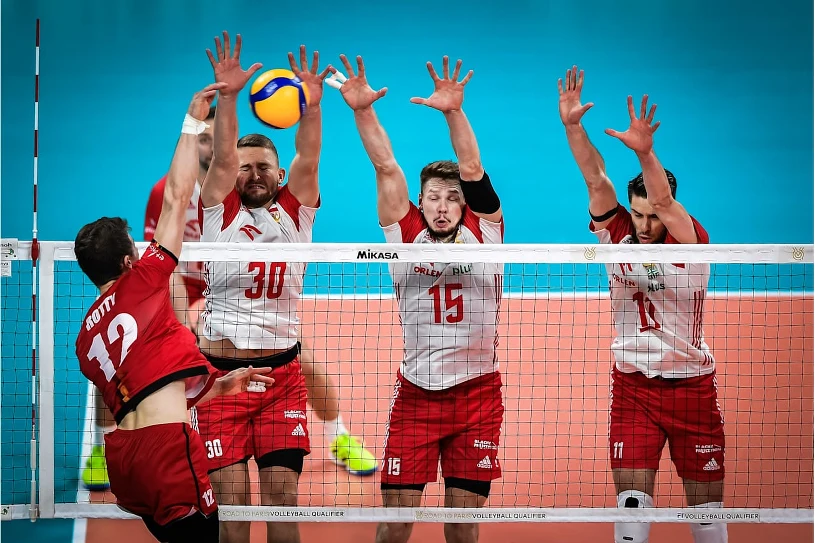
Poland's national volleyball team will play the second week of the Nations League at home in Gliwice. The highlight of the camp is the return of star outside hitter Wilfredo Leon to the national squad. Playing in front of a home crowd is expected to give the Polish side extra motivation during the competition.
Debt consolidation involves merging several loans or credit products into a single financial product with one monthly repayment. It simplifies personal budget management and can often reduce the total cost of servicing debt. The solution is especially useful for people simultaneously repaying a personal loan, credit card and overdraft facility.
Goalhanger, the production company linked to Gary Lineker, has revealed six creators selected for its three-month Accelerator Initiative program. The chosen participants work across entertainment, history, politics, finance and drama. They will receive investment, mentorship and access to Goalhanger's production resources throughout the program.
Manchester has been named the new home of the annual TV industry festival, replacing Edinburgh from next year onward. Organisers cited lower costs in Manchester as a key factor behind the move. The relocation marks a historic shift for one of Europe's most prominent television industry gatherings.
The RTR package for the Ford Mustang goes beyond a typical body kit and louder exhaust, though it comes at a significant price. The reviewer highlights how easy it is in the Mustang world to end up with a car built for show rather than driving pleasure. According to the review, the RTR package genuinely changes the driving character rather than just altering the car's appearance.
Hit gameshow "The Traitors" has been adapted into a social deduction game played entirely via WhatsApp, available in the UK and Ireland. Called "The Traitors: Anywhere," it was created by CityDays in partnership with All3Media International as an officially licensed product. Fans can now play as Traitors or Faithfuls and compete remotely with friends from home.
A quirky California property in the quaint town of Solvang that once served as Dolly Parton's private hideaway has been listed for just under $2 million. The distinctive estate features a windmill and an eccentric aesthetic. Solvang is a small town known for its Dutch-inspired architecture.
Around 20 people have drowned in France since the weekend as they sought relief from extreme heat in unguarded swimming spots, according to Reuters. The heatwave is also affecting the UK and Spain. Italy issued weather alerts for 12 cities, and some countries closed schools in response to the dangerous temperatures.
Entertainment Weekly reports that Microsoft is developing a movie adaptation of the 2018 pirate MMORPG "Sea of Thieves." The open-world game casts players as aspiring pirate legends and still has a dedicated fan base. Xbox content chief Matt Booty acknowledged the challenge of adapting the title, noting the game's story revolves around its community rather than fixed characters or plot.
Lithuanian parliament speaker Juozas Olekas criticised Poland and Ukraine for using overly harsh rhetoric toward each other as bilateral relations deepen in crisis. Lithuanian President Gitanas Nausėda's foreign policy adviser Asta Skaisgiryte announced that Lithuania is ready to mediate the escalating dispute between the two countries' presidents. She called on both sides to look to the future rather than escalate tensions.
Brazilian legend Thiago Silva, capped 113 times for his country, spent just six months at FC Porto before departing the club. The 41-year-old has no plans to retire, signing a contract with Fluminense – the club where he began his career. The veteran defender returns to Brazil to play for his boyhood side.
For decades, data center performance improvements came from shrinking transistors, with cooling treated as a background maintenance issue. Today, AI accelerators consume over 1,400 watts per chip in NVIDIA's current Blackwell generation — double the H100's 700W — with the upcoming Rubin platform set to push even higher. Thermal management has shifted from overhead to the primary architectural constraint limiting AI infrastructure performance.
For most of the last forty years, data center performance gains came from one place: smaller transistors. Moore's Law and Dennard scaling did the work. Each new generation of silicon delivered more performance at the same or lower power, and thermal was a maintenance problem, not a performance limiter. Cooling sat in the background. Operators measured it through PUE, optimized for it where convenient, and otherwise treated it as overhead.That world is over. Dennard scaling broke years ago, transistor efficiency gains are leveling off, and AI accelerator TDPs have climbed from 700 watts in the H100 generation to over 1,400 watts in current Blackwell deployments, with NVIDIA's upcoming Rubin platform expected to push further. Thermal is no longer something that happens after the architectural decisions. It is now the binding constraint on how much performance a chip can sustain, and it is becoming one of the most strategic choices an AI data center operator can make.Why this matters nowThe macro numbers explain why this matters now. Data centers already consume up to 4.5 percent of total U.S. electricity production, a figure projected to reach 12 percent by 2028. McKinsey estimates global data center spending could approach $7 trillion by 2030, and that data center power demand will reach 220 gigawatts in the same window. None of that capacity arrives quickly. New transmission lines and substations now take five to ten years to permit and build, which means operators cannot simply order more power when they need to scale.The result is a hard pressure to extract maximum performance from the power they already have under contract. That pressure is what is reshaping how the industry thinks about cooling.Cooling is no longer just an afterthoughtFor years, cooling was measured as an efficiency loss, captured through metrics like Power Usage Effectiveness (PUE) that quantified how much energy was burned on overhead before reaching the IT load. Today, the more meaningful metric is how much useful compute you extract per unit of power. NVIDIA's Jensen Huang now describes this as "performance per watt" or "tokens per watt" for AI workloads, and cooling plays a direct role in both halves of that equation.Direct-to-chip liquid cooling has become the new baseline because it removes heat far more effectively than air. But even direct-to-chip is being pushed to its limit by 1,000+ watt accelerators, and most current deployments still require facility water around 30 degrees Celsius to stay within ASHRAE W2 and W3 envelopes, which means chillers running for much of the year in warm climates.Better thermal management has effects on both sides of the tokens-per-watt equation. It reduces facility overhead, so more of the contracted power reaches the rack. And it allows chips to operate closer to their full thermal headroom, sustaining higher performance for longer.Those gains compound. Recent UCLA study has shown that combining a 17 percent improvement in facility efficiency with a 15 percent gain in server-level performance per watt from better thermal management translates to roughly 35 percent more tokens per watt within the same power envelope. In a 10 megawatt facility, that is more than a megawatt of additional usable compute, with no additional grid commitment.At GTC 2026, NVIDIA CEO Jensen Huang made this argument explicitly. He told the audience that beyond the silicon roadmap, infrastructure-level optimization across power and cooling represents another factor of two in performance still on the table. "There's no question in my mind there's a factor of two in here, and a factor of two at the scale we're talking about is gigantic," he said. That gain does not come from a smaller transistor. It comes from rethinking how power and thermal energy move through the rack. Recent UCLA study suggests that at least one third of that infrastructure-level gain is attributable specifically to cooling. Cooling is no longer a support function. It is a primary lever for performance.Water is becoming a hard constraintPower is not the only pressure point. Water is emerging as an equally critical and often more immediate constraint on data center expansion. Traditional cooling architectures often rely on evaporative processes that consume vast amounts of water. According to the Environmental and Energy Study Institute, large data centers may use up to 5 million gallons per day, comparable to the daily water use of a town of 10,000 to 50,000 people.This is drawing notice from regulators and communities in already water-stressed areas. The result is longer permitting cycles, higher project risk, and in some cases new developments paused entirely. States and municipalities are also implementing stricter reporting requirements and adjusting electricity rate structures specifically for data centers.Operators now have to factor water alongside power into site selection. Facilities that minimize energy waste and reduce or eliminate water consumption are better positioned to navigate this environment.The shift toward next-generation coolingIn response, the industry is entering a new phase of cooling innovation. Air cooling is no longer sufficient for high-density AI workloads. Liquid cooling has become the baseline, but within liquid cooling, not all approaches deliver the same efficiency or scalability.The next wave of innovation focuses on improving heat transfer at the source: removing thermal energy more effectively at the chip level while reducing system-wide overhead. Some of these approaches draw on heat transfer techniques refined in other high-density power industries such as nuclear power generation, where the challenge of moving large amounts of thermal energy from a constrained physical space has been studied for decades.The goal is straightforward. Better cooling enables higher rack densities, allows operation at higher facility water temperatures, and reduces or eliminates reliance on water-intensive heat rejection. Just as importantly, the next generation of cooling architectures is being designed to integrate with existing data center footprints, so operators can evolve their infrastructure rather than rebuild it from scratch.NVIDIA's Vera Rubin platform, announced at CES 2026, was a clear signal of where this is heading. Vera Rubin is designed for 45 degree Celsius supply water, which means dry coolers can do most of the heat rejection year-round and mechanical chillers become optional in most climates. That is a fundamental shift in how cooling infrastructure will be designed for the next decade.A defining moment for data center designThe data center industry is at an inflection point. AI compute demand is accelerating, and every resource needed to support it, power, water, physical space, is becoming harder to secure. Cooling sits at the intersection of all three.It determines how efficiently power is used, how much water is consumed, and ultimately, where infrastructure can be deployed. The operators that recognize this now will have a sustained advantage. How to keep data centers cool under AI workload pressure has become one of the most strategic decisions in modern infrastructure.We feature the best web hosting services: tested and reviewed.This article was produced as part of TechRadar Pro Perspectives, our channel to feature the best and brightest minds in the technology industry today.The views expressed here are those of the author and are not necessarily those of TechRadarPro or Future plc. If you are interested in contributing find out more here: https://www.techradar.com/pro/perspectives-how-to-submit
Portugal face Uzbekistan in a crucial World Cup group stage match after an unexpected points drop in their opener. Another slip could seriously jeopardize their chances of advancing to the knockout rounds. The match is seen as a must-not-lose encounter for Cristiano Ronaldo's side.
The euro has broken out of a local sideways trend, signalling further weakening of the Polish zloty. The US dollar reached its highest level since March, while the British pound is approaching 5 PLN. The zloty is depreciating against all major currencies.
Poland's Ministry of National Defence has joined the analysis of KGHM's planned potassium-magnesium salt mine in Puck County, Pomerania. The strategic raw materials project now carries a national security dimension with the ministry's involvement. The move signals growing recognition of domestic mineral resources as a defence matter.
The winning image of the Underwater Photographer of the Year 2026 competition has been announced. The contest annually recognises the best underwater photography from around the world. The provided source text does not include details about the photographer or a description of the winning image itself.
Podiatrist Karolina Nowek has warned in an Instagram reel that popular creams used to treat dry heels actually produce the opposite effect and damage the skin. She gives a firm "no" to their use, though the available source text does not name the specific ingredients or product types to avoid. Nowek recommends a different approach to heel care instead.
The Portugal vs Uzbekistan FIFA World Cup match is broadcast live on TVP2 and available online via the WP Pilot streaming app. Portugal enters the game under pressure after a disappointing result in their opening group fixture, needing a win to keep alive their knockout-stage hopes. The broadcast is free for viewers in Poland.
Poland will open the second tournament of the volleyball Nations League with a match against Belgium. The last time these teams met in 2023, Poland beat Belgium in the round of 16 at the European Championship, but the Belgians caused them real trouble in another prestigious competition that year. Belgium has recently shown it can compete with the world's best sides and will be a dangerous opponent.
Poland's housing market cooled sharply in May after an optimistic April, with new housing starts falling by over 3,000 — a 21% drop compared to the previous month. Despite the decline, it was still the best May in four years. Completed dwellings rose year-on-year, but weak earlier months mean the annual pace of completions is the slowest in eight years.
Comments
Loading…
Swipe up
⚡
You're all caught up
You've seen all the latest stories. Check back later for more.
















Comments
No comments yet — be the first to weigh in 👇
No comments yet. Be the first!